How should a beginner start on a rowing machine?
Row three times per week, leave at least one rest day between sessions and keep most work at a conversational effort. Start with ten to fifteen minutes, broken into short intervals. Add time before intensity. By week four, aim to row twenty minutes with stable technique and a consistent stroke rate.
Your first month should make rowing feel repeatable. It should not be a test of how much discomfort you can tolerate. This plan uses short sessions, simple rate targets and one technical focus at a time. Read the proper rowing machine form guide before session one.
What should you do before your first session?
Set the foot straps across the widest part of your shoes, sit tall and hold the handle with relaxed fingers. Check that the seat rolls freely and the chain or strap runs straight. Spend two minutes practising legs, body, arms on the drive and arms, body, legs on the recovery before starting the clock.
Do not chase a fast split while the sequence is new. Row lightly at 18 to 20 strokes per minute. The full rowing machine technique guide explains the catch, drive, finish and recovery, plus the four faults that coaches correct most often.
Put an air rower damper in the middle range. Damper position changes the flywheel feel, not a fixed difficulty level. Our drag factor guide explains why setting ten is not the beginner setting or the expert setting.
How hard and how often should a beginner row?
Row three times each week and keep two sessions easy. Use a simple effort scale from one to ten. Easy work sits around three or four, where you can speak in full sentences. The short firmer pieces in weeks three and four reach six, but your stroke should still look controlled.
Leave at least one day between rowing sessions during this plan. You can walk, cycle gently or do your usual activity on other days, but do not turn every day into another hard session. Consistency matters more than squeezing in extra work during the first month.
Stroke rate is not effort. You can push hard at 20 strokes per minute or paddle lightly at 26. Beginners often raise the rate when they tire, which shortens the stroke. Hold the requested rate first. Adjust pressure with the legs.
Week one: learn the movement
Complete three sessions of ten to twelve minutes. Keep every stroke easy enough to organise. Your only goals are a clean movement order, a calm recovery and a steady rate near 18 to 20. Finish each session feeling that you could repeat another interval with the same technique.
| Session | Work | Main focus |
|---|---|---|
| Session 1 | 5 x 2 minutes easy, 1 minute rest | Legs, body, arms |
| Session 2 | 3 x 3 minutes easy, 90 seconds rest | Arms away before knees bend |
| Session 3 | 2 x 5 minutes easy, 2 minutes rest | Relaxed grip and level handle |
Use the rests to reset the foot straps and rehearse five slow strokes. If the sequence becomes untidy, shorten the work interval rather than rowing faster to finish it.
Week two: build continuous time
Keep three sessions, but extend the longest continuous row to eight minutes. Stay at an easy effort and use 18 to 22 strokes per minute. The week is successful when the final minute looks like the first. Do not speed up merely because the intervals are longer.
| Session | Work | Main focus |
|---|---|---|
| Session 1 | 3 x 5 minutes easy, 90 seconds rest | Even pressure each stroke |
| Session 2 | 6 minutes, rest 2, then 6 minutes | Slow seat into the catch |
| Session 3 | 8 minutes continuous, then 4 easy | Stable rate from start to finish |
Check the rate once every minute, then look away from the monitor. Learn the rhythm by feel. The display confirms what you are doing; it should not dictate every stroke.
Week three: add controlled pressure
Introduce short pieces at a firm but controlled effort. Keep the rate capped so the extra speed comes from a stronger leg drive, not rushing. You should be able to complete every repetition at similar pace and return to easy rowing without losing the stroke sequence.
| Session | Work | Main focus |
|---|---|---|
| Session 1 | 15 minutes easy continuous | Patient recovery |
| Session 2 | 6 x 1 minute firm, 1 minute easy | Rate 22 to 24 on firm work |
| Session 3 | 3 x 6 minutes easy, 90 seconds rest | Same split across each piece |
Firm means six out of ten, not a sprint. If the last two repetitions are much slower or messier than the first two, reduce the pressure next time.
Week four: make it repeatable
The final week combines one twenty-minute row, one controlled interval session and one choice session. Hold the technique you built during the earlier weeks. This is not a test week. It proves that you can choose an effort, keep a rhythm and finish without the stroke falling apart.
| Session | Work | Main focus |
|---|---|---|
| Session 1 | 20 minutes easy continuous | Rate 20 to 22 throughout |
| Session 2 | 4 x 3 minutes firm, 2 minutes easy | Consistent split and long strokes |
| Session 3 | Repeat your favourite earlier session | Notice what now feels easier |
Record time, distance, average split and average rate after each session. Those four numbers create a useful baseline without turning the month into a race.
How do you keep good form as sessions get longer?
Choose one technical cue before each session and return to it when you tire. Trying to fix four movements at once usually makes the stroke stiff. Use legs first, loose hands, arms away or slow slide. If the cue stops working, reduce pressure for ten strokes and rebuild the sequence.
Fatigue usually shows first in the recovery. The knees rise before the hands clear them, the seat rushes forward or the shoulders tense. A calmer recovery gives you time to reach a balanced catch and produce the next drive with the legs.
- The handle travels in a mostly level line.
- The seat and handle start the drive together.
- The hands pass the knees before the knees bend.
- Your grip stays light enough to move the fingers.
What should good look like at the end of week four?
Good means you can row for twenty minutes at a conversational effort while holding a stable rate and recognisable stroke sequence. Your split may still move around. That is normal. The useful signs are control, repeatability and enough awareness to notice when you rush the slide or pull early with the arms.
You should also be able to complete four three-minute firm pieces without sprinting the first or fading badly on the last. The exact pace is personal. Compare your own repetitions, not your result with a trained rower or a number from social media.
Keep a simple log. Record the session, total time, distance, average split, average rate and one sentence about technique. Over the next month, look for steadier pacing at the same effort before you look for dramatic speed changes.
What should you do after the first four weeks?
Repeat week four with slightly longer easy rows, or move to a structured mix of easy distance and controlled intervals. Add only one change at a time. Five extra minutes, one extra repetition or a small pace increase is enough. Keep at least two easy sessions for each harder session.
Use the training pace calculator when you have a reliable benchmark. The erg pace calculator converts splits, watts and projected times. For more session choices, open the erg workout library.
If you are still deciding what to row on, read the Concept2, WaterRower and Hydrow comparison. Technique transfers between machines, but the resistance feel and monitor data differ.
Beginner rowing machine questions
Beginners usually need simple limits more than extra workouts. These answers set those limits for session length, stroke rate and progress. Use them with the four-week plan, but adjust a session when your technique becomes hard to control. Finishing a little early is better than practising rushed strokes.
How long should a beginner use a rowing machine?
Start with ten to fifteen minutes of total rowing, using rests when needed. Build towards twenty continuous minutes over four weeks. Session quality matters more than reaching a round number on the first day.
What stroke rate should a beginner use?
Use 18 to 22 strokes per minute for most easy work. That range leaves time to complete the drive sequence and control the recovery. Brief firm intervals can rise to 22 to 24.
Can a beginner row every day?
This plan uses three rowing sessions each week with a rest day between them. The spacing helps you return with enough focus to practise good movement instead of repeating tired technique.
From the RowHQ shop
Printable PDFs written for club rowers. Buy once, keep forever.
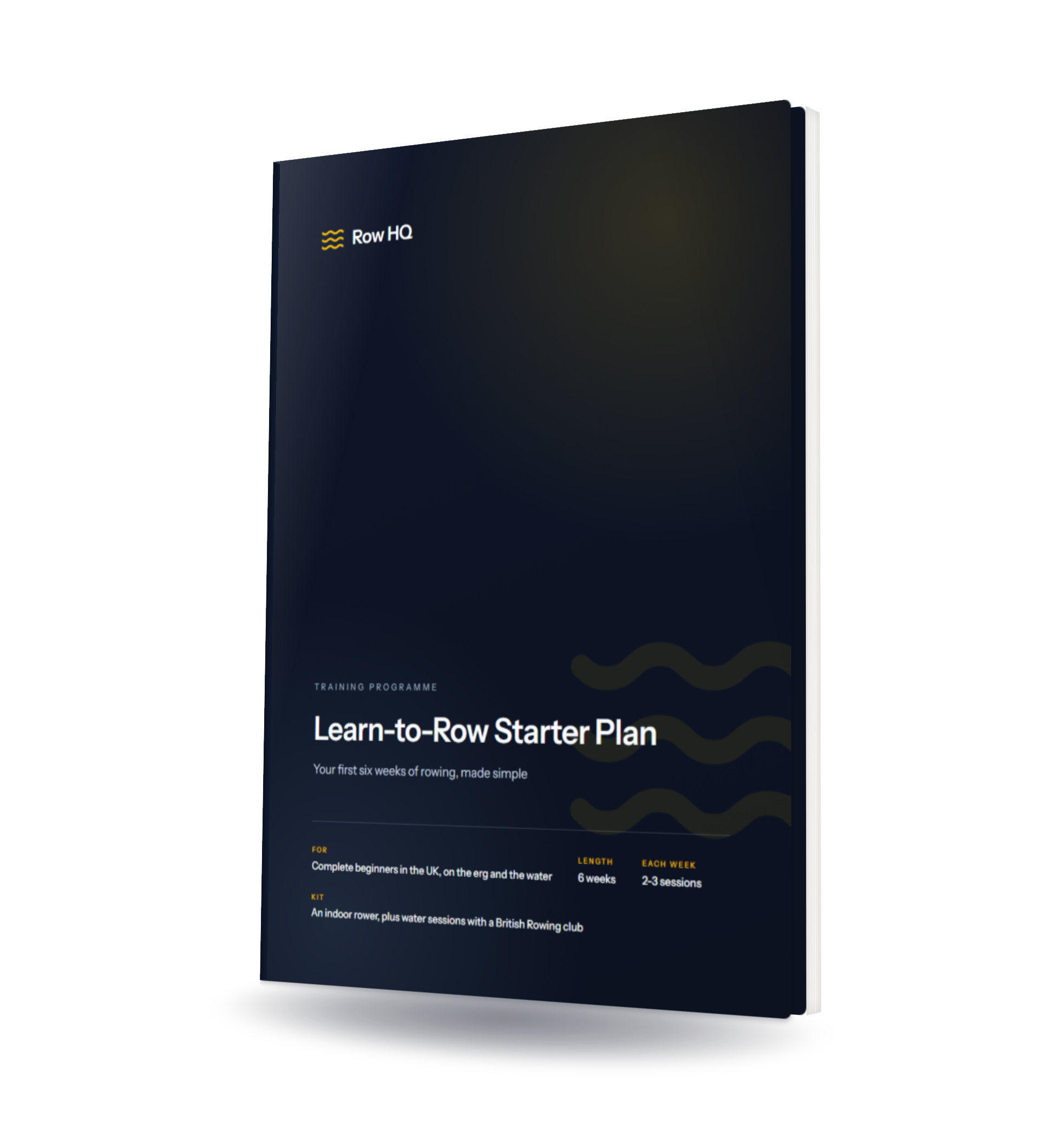
Learn-to-Row Starter Plan
A free 6-week introduction plan for brand-new rowers - on the water and on the erg.
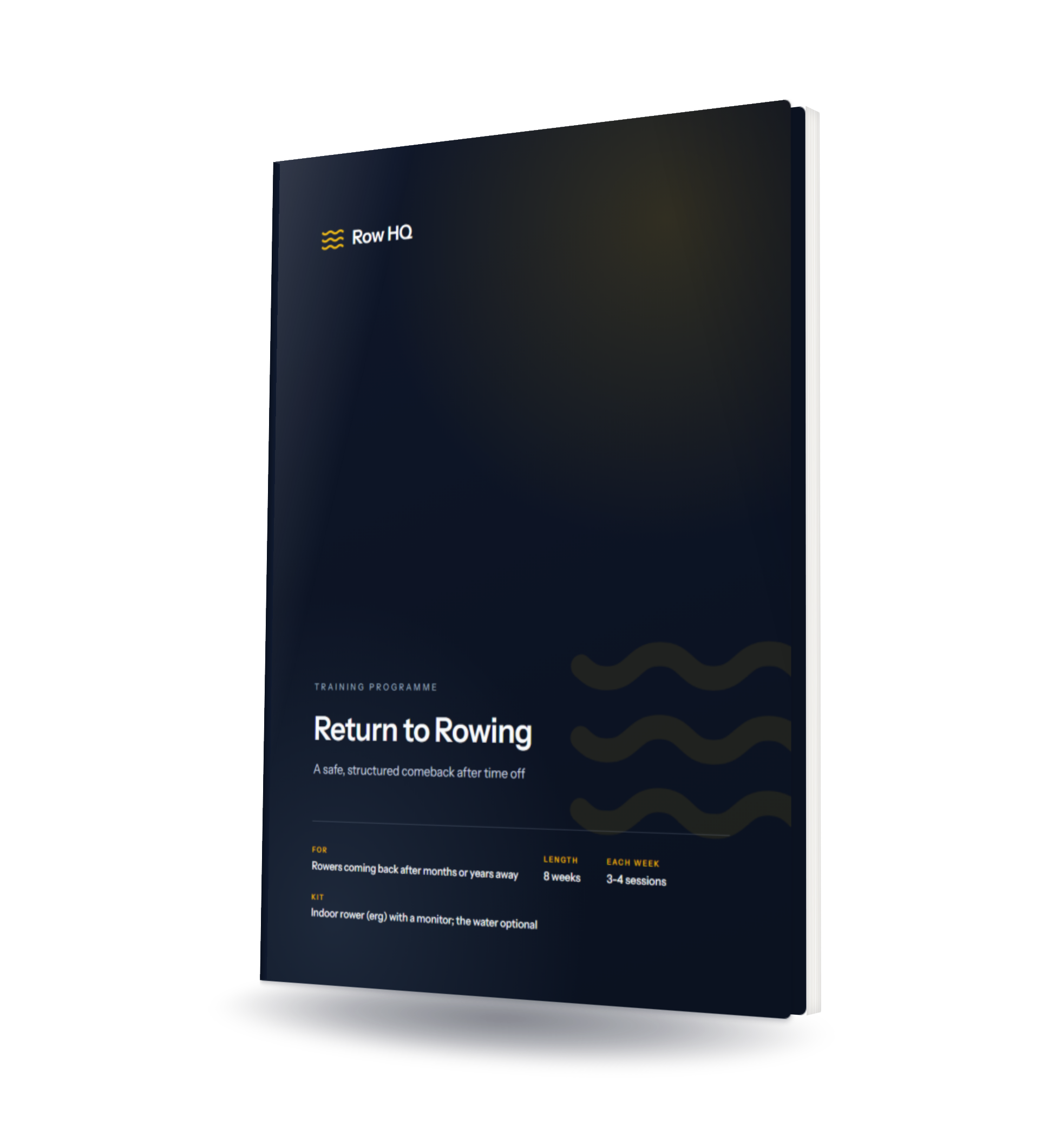
Return to Rowing
An 8-week comeback plan for rowers coming back after time off - rebuild safely, judged by effort not your old PB, so you come back for good.
Row HQ is rowing club software for organising members, sessions and crews.