Scull
A scull is one of the two short oars a sculler grips, one in each hand. Sweep rowing puts a single longer oar across the body. The four sculling craft are the single (1x), double (2x), quad (4x) and octuple (8x). Sculling is the bigger discipline at the masters end of Aussie rowing, the entry path for most schools and the boat class that produces the President's Cup and the Tom Bowen Cup at the national championships.
What is a Scull?
A scull is the shorter rowing oar paired in each hand of the sculler. Sculling is the half of the sport where every athlete drives two oars at once, sitting opposite sweep rowing where a single longer oar is held in both hands. The four sculling craft are the single (1x), double (2x), quadruple (4x) and octuple (8x). Australian sculling carries genuine pedigree, from Bobby Pearce taking single sculls gold at Amsterdam 1928 and Los Angeles 1932 to the modern Penrith production line.
Also called: Sculling, Sculling Oar, Scull Boat
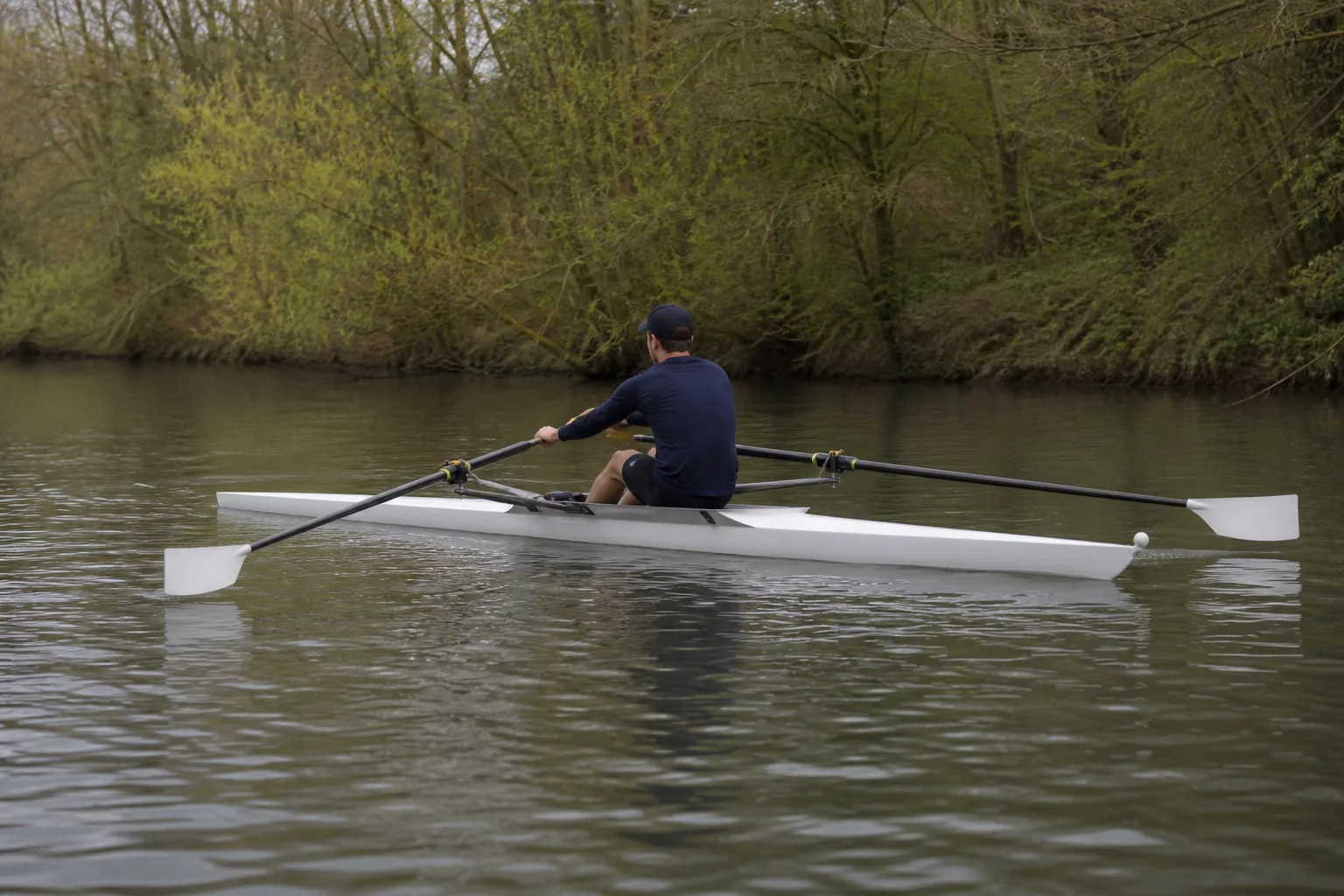
Sculling and sweep: the two halves of the sport
Every competitive rowing programme worldwide divides along the same line. Sculling is the discipline in which each athlete drives two oars, one to each side of the boat. Sweep is the discipline in which each athlete drives a single longer oar held in both hands, with bow-siders and stroke-siders alternating down the hull. The umbrella sport is rowing and both halves race side by side at the Olympics, the World Championships and across the Aussie season. Locally the calendar moves through the Australian Rowing Championships at Lake Barrington or West Lakes, the Head of the Yarra in late November, the King's Cup interstate eight, the Sydney International Regatta Centre at Penrith for the 1x finals, and the schoolgirl quad showcase at the Head of the Schoolgirls in Geelong. The elite pathway runs from school and club programmes through the state institutes and the AIS into Rowing Australia senior squads.
The mechanics dictate the rig. A sculling shell sits symmetrical: every seat carries a rigger on both sides at matched height, the athlete on the centreline, the body rotating equally either way through the stroke. A sweep shell sits asymmetrical: each seat has one rigger pushed out to a single side and the athlete's spine swings off the centreline to load that oar. The rowing shell entry covers the hull and rigging side in full.
The four sculling craft
- Single scull (1x): 8.2 metres long, one rower, two sculls, no rudder. The truest individual test the sport offers. Australian sculling pride runs through Bobby Pearce winning single sculls gold at Amsterdam 1928 and Los Angeles 1932 from a Sydney waterman background, then Stuart Mackenzie taking the Diamond Sculls at Henley six years on the bounce from 1957. The President's Cup goes to the winner of the men's 1x at the Australian Rowing Championships; the Tom Bowen Cup goes to the winning woman.
- Double scull (2x): 9.8 metres, two scullers each with their pair. The natural next boat after a few seasons in the single, and the class Peter Antonie and Stephen Hawkins took to Olympic gold at Barcelona in 1992. Schoolboy AGSV and GPS programmes lean on the 2x as the lead-in to crew sculling.
- Quadruple scull (4x): 12.5 metres, four scullers each with two oars, coxless at senior level. A 4x+ (with a coxswain) is the standard schoolgirl boat class at PLC, MLC, Loreto and most of the Head of the Schoolgirls field, and a recognised pre-1st-VIII proving ground in many schools.
- Octuple scull (8x): 17 metres, eight scullers plus a coxswain. Lives almost exclusively in junior and masters racing in Australia, used as a development or demonstration class rather than an Olympic event.
Sculling hulls run narrower than their sweep equivalents at the same crew size because the symmetrical pull needs less beam to settle. A double is quicker than a coxless pair across the 2k. A quad is quicker than a coxless four. Two oars per rower delivers more horsepower into the water per stroke than one oar can, which is why the sculling boats rate the speed records at every distance.
Sculls: what they are made of and what they measure
A modern scull runs 285 to 290 centimetres handle tip to blade tip. The build is the same as any rowing oar: a rubber-wrapped handle for the grip, a hollow carbon shaft, a sleeve and collar that sits in the gate of the oarlock, and a moulded blade at the working end. Croker on the NSW Central Coast is the brand most likely to be sitting on the racks at an Aussie shed, with Sykes (Geelong) next, then Concept2, Braca, Apex and Dreissigacker filling the rest of the stocks. Blade shapes split into the original Macon (the symmetrical tulip), the Big Blade (an asymmetric hatchet introduced in 1991 and now the default), and variants like the Vortex with surface ridges that grab the water on the catch.
A pair of sculls weighs in around 1.6 kilograms each, 3.2 kilograms for the set the sculler is holding. The inboard length, from handle butt to the back face of the collar, is set with a sliding button so a single oar can be rigged for a 175cm bow seat or a 195cm stroke seat without buying a second pair.
Why Aussie clubs start almost everyone in a scull
Walk into any boatshed on the Yarra, West Lakes, the Brisbane River or Sydney Harbour during a learn-to-row intake and the new athletes will be in a single or double scull, not an eight. Three reasons turn up in every coach's answer.
Balance. Two oars give the athlete a continuous correcting signal: tip to one side, push harder on the opposite handle, the hull rights itself. The brain learns the loop in a few sessions. A novice in a sweep four has to rely on the crew to steady the boat for them.
Symmetry. The body mirrors itself through the catch, drive and finish, so a coach can spot a fault on one side by comparing it to the other. A sweep rower locks into bow-side or stroke-side movement patterns that bake in if they are taught wrong.
Self-sufficiency. A single scull is a one-athlete launch. A masters sculler can swing past the shed at 5:30am, take a boat out on Sydney Harbour, log a 90-minute UT2 piece and be at work by 8. A sweep eight needs seven other rowers plus a cox and a coach in a tinny to leave the pontoon. The flexibility of training alone is what keeps adults in the sport past their first year.
How an Aussie club builds a sculling pathway
The standard pathway in a domestic Aussie club runs: novice block in stable wide-hulled trainer singles or doubles, club-grade single sculling and 2x crews through the first season, quads as the squad fills out, and a deliberate single sculling focus for those chasing state titles, the Australian Rowing Championships or the Murray Cup. Sculling at the masters end of the sport is bigger than sweep: there are usually more 1x and 2x entries at Australian Masters than 4- or 4+ entries. Session scheduling matters because a sculler picks their own launch slot, the safety boat coverage and the rower they crew up with, rather than turning up to a fixed eight.
Coaches managing a sculling squad need to know who is rigged for which boat, who has passed their Rowing Australia capsize drill and water-safety sign-off, and which scullers are due for a 1x trial. Row HQ's coach tools hold that against the athlete and feed straight into boat booking so the right sculler is in the right hull at the right tide.
Sculling FAQs
Is sculling the same thing as rowing?
Sculling is one of the two halves of rowing. The other half is sweep. A sculler grips an oar in each hand and drives them together; a sweep rower holds a longer single oar across the body with both hands and only pulls on one side of the boat. Both turn up at every Australian Rowing Championships, the Olympics and the World Champs. Sculling craft are the single (1x), double (2x), quadruple (4x) and octuple (8x). Sweep craft are the pair (2-), four (4-, 4+) and eight (8+). Plenty of Aussie programmes start novices in a single or double scull because the symmetrical pull is the most forgiving way to learn balance.
What separates a sculling stroke from a sweep stroke?
Geometry, mostly. The sculler sits on the centreline of the hull with a rigger on either side at matched height, pulling two short oars through a mirrored arc. The sweep rower sits offset on the seat, with a single rigger pushed out to the opposite side, swinging one long oar across the body. The sculling stroke runs lighter on the back and shoulders because the load splits between two arms; the sweep stroke loads one side of the trunk hard and rewards strong rotation. New rowers usually find sculling kinder to balance and sweep more obvious for power per stroke.
Which boats are sculled?
Four classes. The single scull (1x) is one athlete on two oars and is the boat that produces the President's Cup at the Australian Rowing Championships for the men, the Tom Bowen Cup for the women. The double scull (2x) is two scullers each with their own pair and is where many junior schoolgirl programmes (PLC, MLC, Loreto and similar) cut their teeth before stepping up to the coxed quad (4x+). The quadruple scull (4x) is four scullers running coxless at senior level. The octuple scull (8x) is eight scullers plus a coxswain, almost always a junior or masters development boat rather than an Olympic class.
How long is a sculling oar compared with a sweep oar?
A sculling oar (or scull) typically measures 285 to 290 centimetres end to end. A sweep oar runs 370 to 375 centimetres. The 80 to 90 centimetre gap is there because each sculling arm covers a shorter arc and the outboard load on one hand has to stay under what a forearm can hold for 220 strokes. Croker (Australian, made up on the Central Coast of New South Wales) and Sykes (Geelong) supply most of the local sheds, with Concept2, Braca and Dreissigacker filling the rest. Blade shapes (Macon, Big Blade, Vortex, Comp, Apex) change how the scull bites and releases the water.
Do Aussie clubs put beginners in a scull or a sweep boat first?
Almost always a scull, usually a wide-hulled trainer single or a stable double. The reasoning is the same in every shed from Mosman to Adelaide RC: two oars give the beginner a self-correcting signal when the boat tips, and the body works the same way on both sides so coaching cues land cleanly. Sweep rowing forces an early choice between bow side and stroke side and any bad habits picked up in those first months take years to scrub off. By the time a school sculler steps into a coxed four or an eight, they have already logged a couple of seasons of stroke shape in the 1x and 2x.
What does it mean to feather a scull?
Feathering is the wrist roll that flattens the blade out of the water during the recovery. Squaring is the roll back to vertical the moment before the next catch. In a sweep boat the inside hand does the work; in a sculling boat both hands feather independently, which is why scullers need clean wrist mobility on both sides. Most domestic Aussie programmes teach left over right on the recovery, with the left hand sliding above the right at the crossover. A handful pull right over left and the choice is largely stylistic, depending on the first coach in the shed. Beginners spend their early sessions on square blades so the catch comes first, the feather second.
Related
What is a Rowing Shell?
A rowing shell is the racing hull a crew sits inside - long, knife-thin, and laminated from carbon fibre over a foam or...
Rowing Boat Types
Aussie rowing runs on eight standard racing shells: the single (1x), double (2x), pair (2-), quad (4x), straight four (4...
The Coxswain: Steering, Race Plan and Crew Direction
The coxswain is the person in the stern of a rowing boat steering the line, calling the race plan and managing the crew...
What Is a Regatta in Australian Rowing?
In Australian rowing, a regatta is a sprint side-by-side meet on a flat-water buoyed course, every crew starting on the...
What is Catching a Crab?
A crab is the moment a blade gets pinned under the surface while the hull keeps tracking forward. Forty kilos of moving...
Feathering: The Wrist Roll That Sits Between Drives
Feathering is the wrist roll that rotates the spoon 90 degrees between drives - parallel to the water through the recove...
From the RowHQ shop
Printable PDFs written for club rowers. Buy once, keep forever.
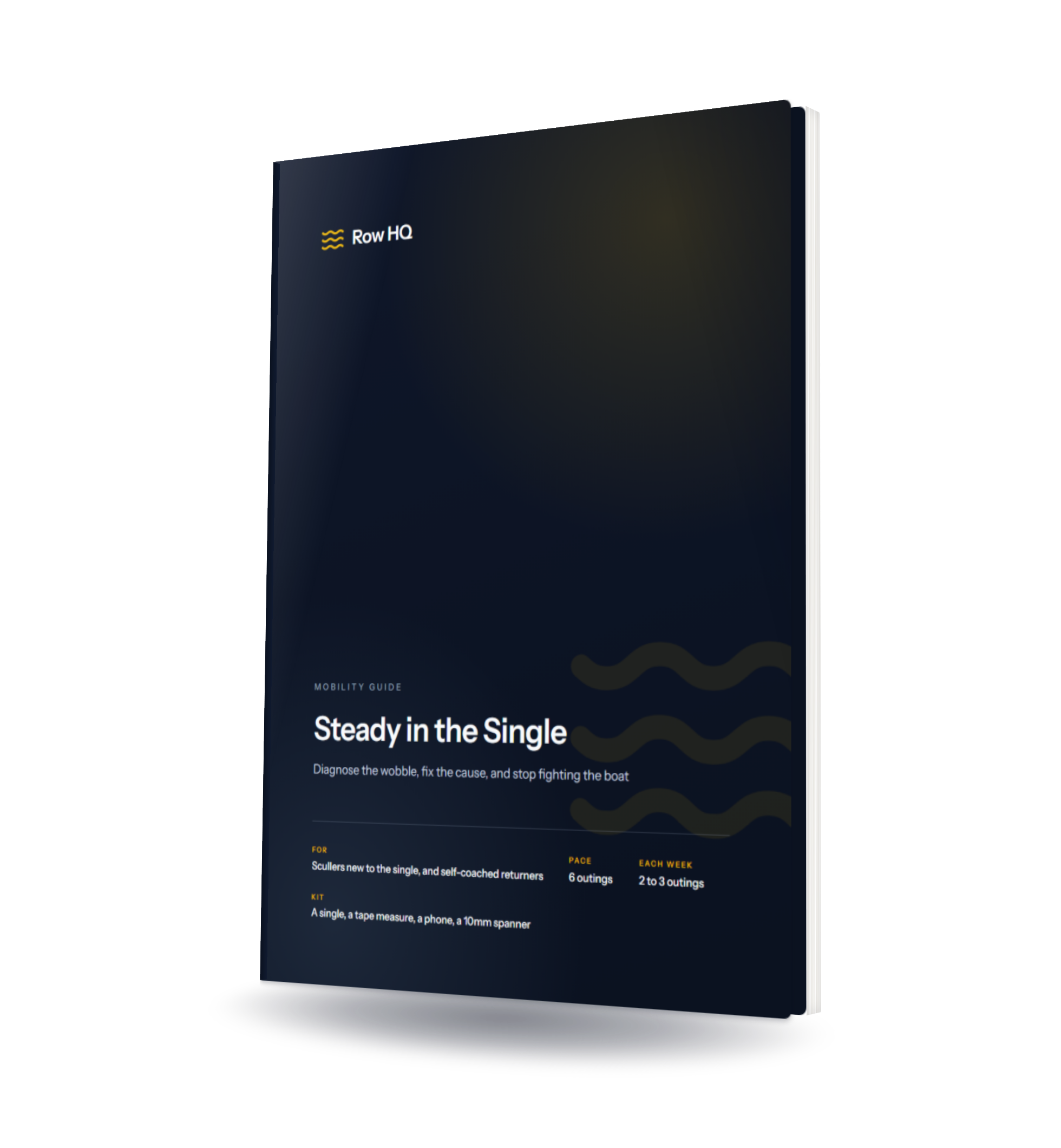
Steady in the Single
Why you cannot balance a single, diagnosed properly - find out when in the stroke the boat goes down, check whether the rigging is doing it, then drill the actual cause.
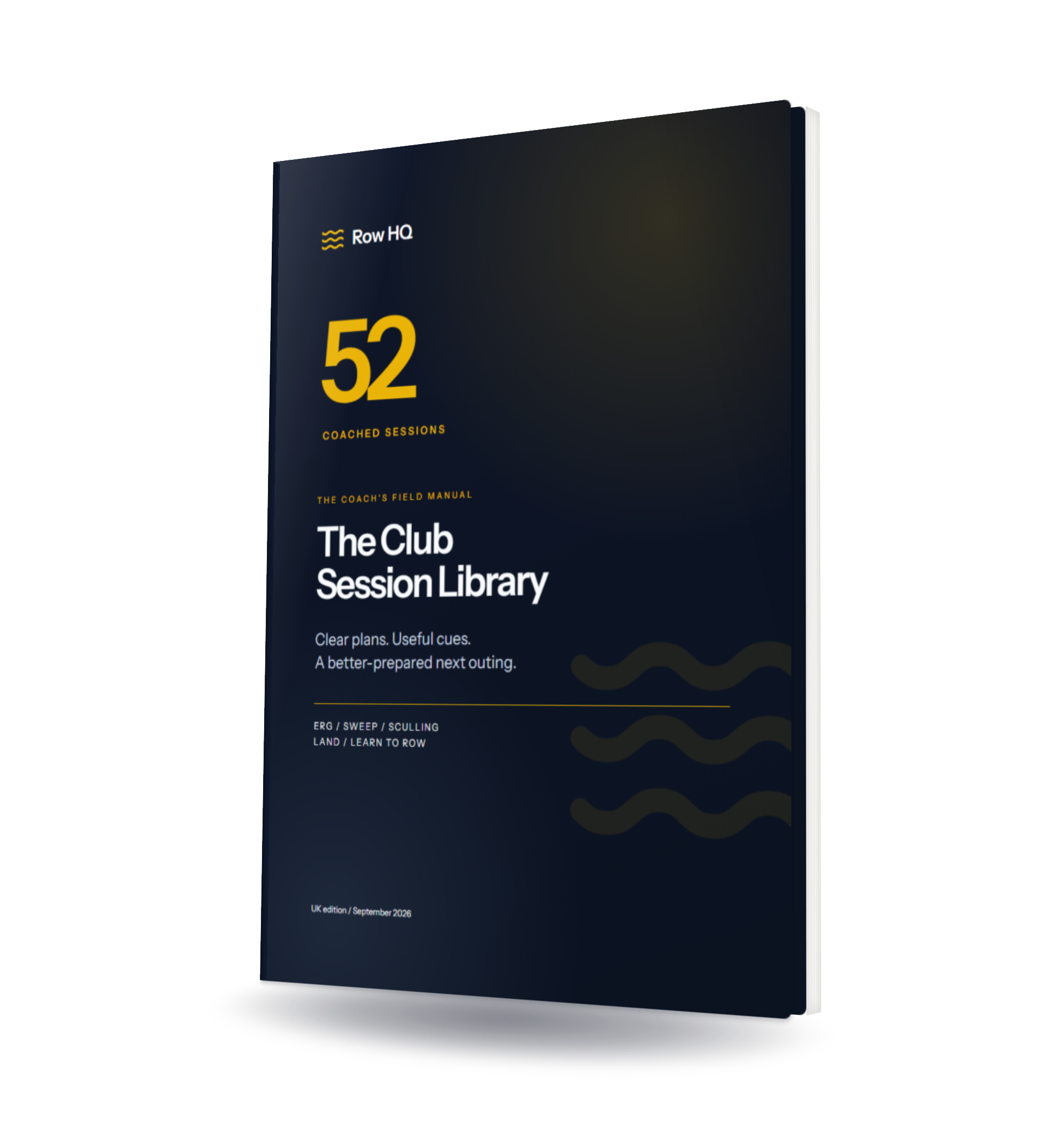
The Club Session Library
52 rowing sessions for club coaches, with an illustrated coaching PDF, editable CSV plans, two seasonal blocks and a printable coaching cheat sheet.
Keep learning
Scullers move through tubs, singles, doubles and quads as their balance and boat handling improve. Clubs can track those boat permissions and session bookings with rowing club management software. More rowing language is covered in the rowing glossary.
Run sculling sessions without the WhatsApp scramble.
Row HQ writes boat bookings, single-scull sign-out, safety boat rosters and Rowing Australia qualifications into one place. Built by rowers, in daily use at Oundle Town Rowing Club.