How do you use a rowing machine correctly?
Push with your legs first, swing your body after the legs are nearly straight, then draw the handle to your lower ribs. Recover in reverse: arms away, body forward, then bend the knees. Keep the handle moving level, sit tall and make the recovery slower than the drive.
A rowing machine rewards order, not frantic effort. Most beginners pull with their arms too soon and rush back toward the flywheel. Learn the sequence at a low stroke rate first. If you are completely new, use this technique guide alongside our four-week beginner rowing plan.
What is the correct rowing machine technique?
A rowing stroke has four linked parts: catch, drive, finish and recovery. The drive creates speed through the legs, body and arms. The recovery sends those movements back in reverse order. Good form keeps the chain level and gives each part enough space instead of blending everything into one hurried pull.
Think of the stroke as a repeated sequence, not a single heave. The seat and handle move together at first. The seat then stops while the body opens and the arms finish. On the way forward, the hands clear the knees before the seat starts rolling.
- Catch: shins near vertical, arms long and body leaning slightly forward.
- Drive: press the footplate, open the body, then draw the arms.
- Finish: legs long, handle at the lower ribs and elbows behind you.
- Recovery: arms away, body forward, then knees bend.
How should you sit at the catch?
At the catch, sit tall with long arms, relaxed shoulders and shins close to vertical. Lean forward from the hips rather than rounding your back. Keep your heels connected to the footplate where your mobility allows, and stop rolling before your knees crowd your chest or your seat reaches your ankles.
The catch is a position you pass through, not a place to pause and tense. Your hands stay loose around the handle. Your head remains neutral. The chain should point straight into the machine. If your shins travel beyond vertical, you have compressed too far and made the first push less stable.
Use this cue: tall body, long arms, quiet hands. Then change direction with the feet. Do not snatch the handle to start the stroke.
How does the drive sequence work?
The drive order is legs, body, arms. Press through the footplate while the arms stay straight and the body angle stays set. As the legs approach straight, swing the body from a slight forward lean to a slight backward lean. Draw the handle in only after that body swing has begun.
The first part should feel like standing up against the footplate. Keep the handle and seat linked so your legs move the flywheel. Opening the back early takes pressure away from the legs. Bending the arms early makes smaller muscles do work that the legs should handle.
Say "legs, body, arms" quietly on each drive. At a steady 18 to 22 strokes per minute, you have time to feel the handover between each part.
What should the finish and recovery look like?
Finish with long legs, a small backward body angle and the handle drawn lightly to the lower ribs. Keep the wrists flat and elbows travelling behind you. Start the recovery by sending the hands away, hinge the body forward from the hips, then let the knees bend once the handle has passed them.
Do not lean back as far as you can. A small body swing is enough. Excess layback lengthens the stroke without adding useful pressure, and it makes the recovery harder to organize. The handle should touch near the bottom of the sternum, not the neck or lap.
The recovery controls rhythm. Let it take longer than the drive. Straighten the arms promptly, set the forward body angle, then roll toward the catch without pulling yourself forward with the toes. The seat should approach the flywheel calmly, ready for the next leg push.
Which drills improve proper rowing machine form?
Use short drills to isolate one part of the stroke, then return to full rowing and keep the same feeling. Row lightly enough to notice the sequence. Two or three minutes of deliberate practice near the start of a session usually teaches more than trying to correct technique while rowing hard.
Arms-only into arms and body
Sit at the finish with long legs. Row ten strokes using only the arms, then ten adding the body swing. Keep the handle level and the shoulders relaxed.
Pause after hands away
Pause for one count after straightening the arms on each recovery. This teaches the hands to clear the knees before the seat moves forward.
Legs-only from the catch
Take ten short strokes with straight arms and a fixed body angle. Feel the feet move the seat and handle together before returning to full strokes.
Finish each drill with one minute of normal strokes. Keep the new movement while removing the pause or restriction. That transfer is the point of the drill.
What are the most common rowing machine form mistakes?
The main faults are bending the arms early, shooting the slide, opening the back too soon and gripping the handle too hard. All four break the stroke sequence. Correct them at low pressure and a low rate, where you can feel which body part moves first instead of chasing a fast split.
Early arm bend
Your elbows bend as soon as the drive begins. Keep the arms long until the legs are nearly down. Picture the arms as straps connecting your body to the handle.
Shooting the slide
The seat moves back while the handle barely moves. Match the seat and handle speed at the start. Reduce the pressure until you can keep them connected.
Opening the back too soon
Your shoulders swing behind the hips before the legs have delivered their push. Hold the forward body angle through the first half of the leg drive.
Gripping too hard
A tight fist raises tension through the forearms and shoulders. Hook the fingers around the handle, keep the thumbs underneath and let the wrists stay flat.
What damper setting should you use?
The damper changes how much air reaches an air rower flywheel. It changes the feel of each stroke, not a fixed difficulty level. A high setting makes the flywheel slow more between strokes and feel heavier at the catch. You can still row gently at ten or hard at three.
Start in the middle range and prioritize clean movement. On a Concept2, drag factor is the useful measurement because it reflects the flywheel deceleration on that machine. Dust and air conditions can make the same damper number feel different. Use our drag factor calculator and guide to understand the reading.
Do not put the lever on ten because you want a harder workout. Create intensity by pushing more firmly while holding the stroke sequence. The setting should let you connect the legs without making the catch feel stuck.
What should your first rowing machine session be?
Row for ten minutes at an easy, conversational effort. After two gentle minutes, alternate one minute of normal rowing with one minute focused on a single cue. Use legs first, arms away, slow slide and loose hands as your four cues. Stop the session while your technique still feels organized.
Keep the rate around 18 to 22 strokes per minute. The split does not matter yet. Your first target is ten minutes of repeatable movement. The rowing machine plan for beginners turns that start into four weeks of specific sessions.
If the sequence falls apart, reduce the pressure before reducing the range. Calm full strokes teach more than short, frantic ones.
Which numbers matter on the rowing monitor?
Watch stroke rate, elapsed time and your 500m split. Stroke rate tells you how often you take a stroke. Split estimates the time needed to cover 500 meters at the current pace. Beginners should hold a steady rate and let the split improve naturally as the drive becomes more connected.
Do not compare your first split with another person. Body size, experience and machine type all affect the number. When you want to translate a steady split into watts or predicted times, use the erg pace calculator.
Once the stroke feels reliable, the training pace calculator can set effort bands. The erg workout library gives you sessions for each band.
Rowing machine technique questions
These quick answers cover the points beginners ask most often after learning the stroke sequence. Treat them as checks, not extra rules to hold in your head at once. Pick one cue for each session, row lightly and let the correct movement become familiar before adding more pressure.
Should your knees go between your arms?
Your arms travel outside your knees as you approach the catch. The hands should already have passed the knees before they bend, so there is no need to lift the handle or squeeze the knees together.
Should your heels lift at the catch?
A small heel lift is normal if your ankle mobility requires it. Keep pressure through the balls of the feet and reconnect the heels as the drive develops. Do not force extra compression just to keep them down.
How fast should the handle move?
The handle accelerates through the drive and returns smoothly on the recovery. Avoid yanking it at the catch or slowing it before the finish. A clean stroke feels like one continuous build of speed.
From the RowHQ shop
Printable PDFs written for club rowers. Buy once, keep forever.
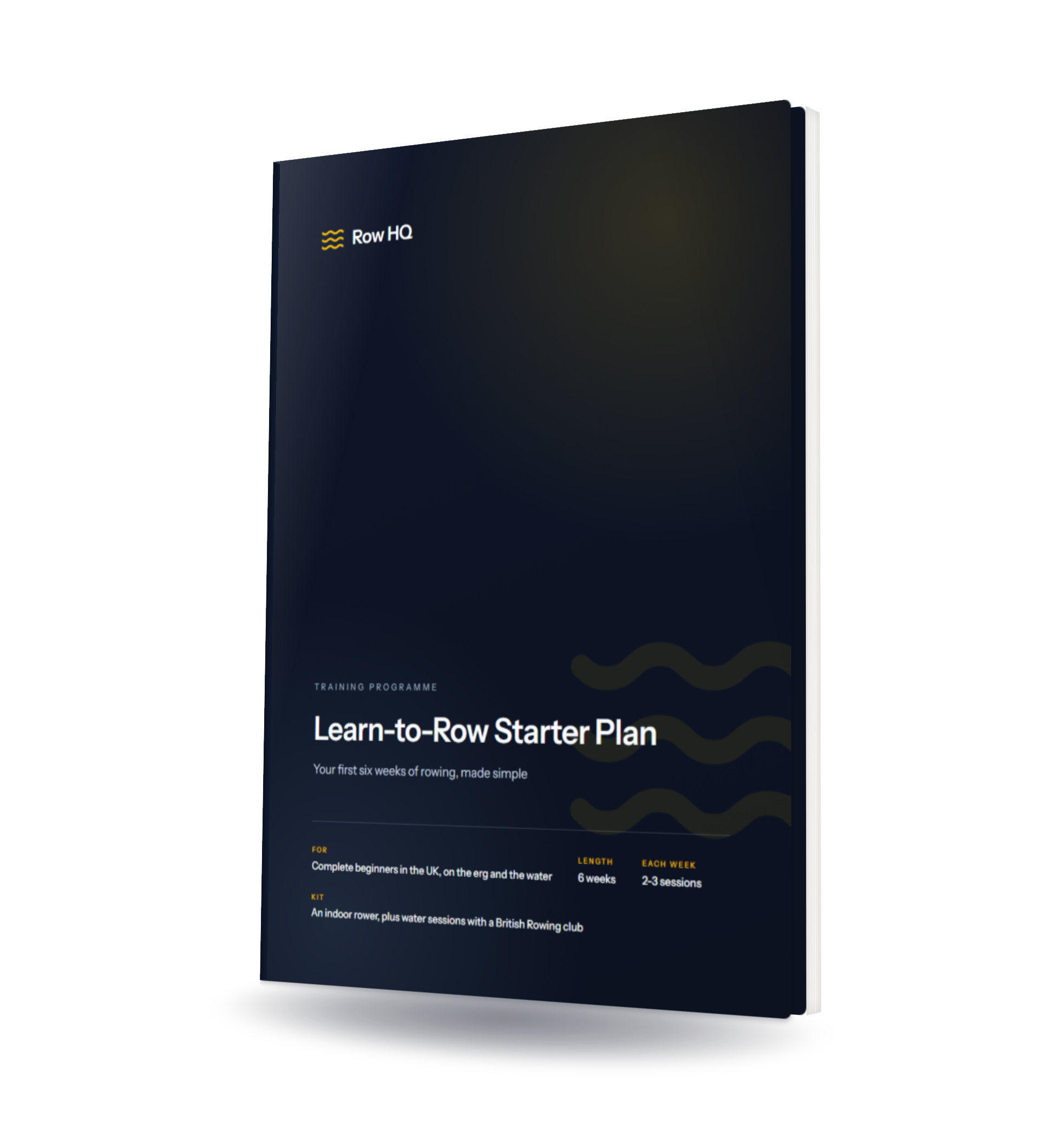
Learn-to-Row Starter Plan
A free 6-week introduction plan for brand-new rowers - on the water and on the erg.
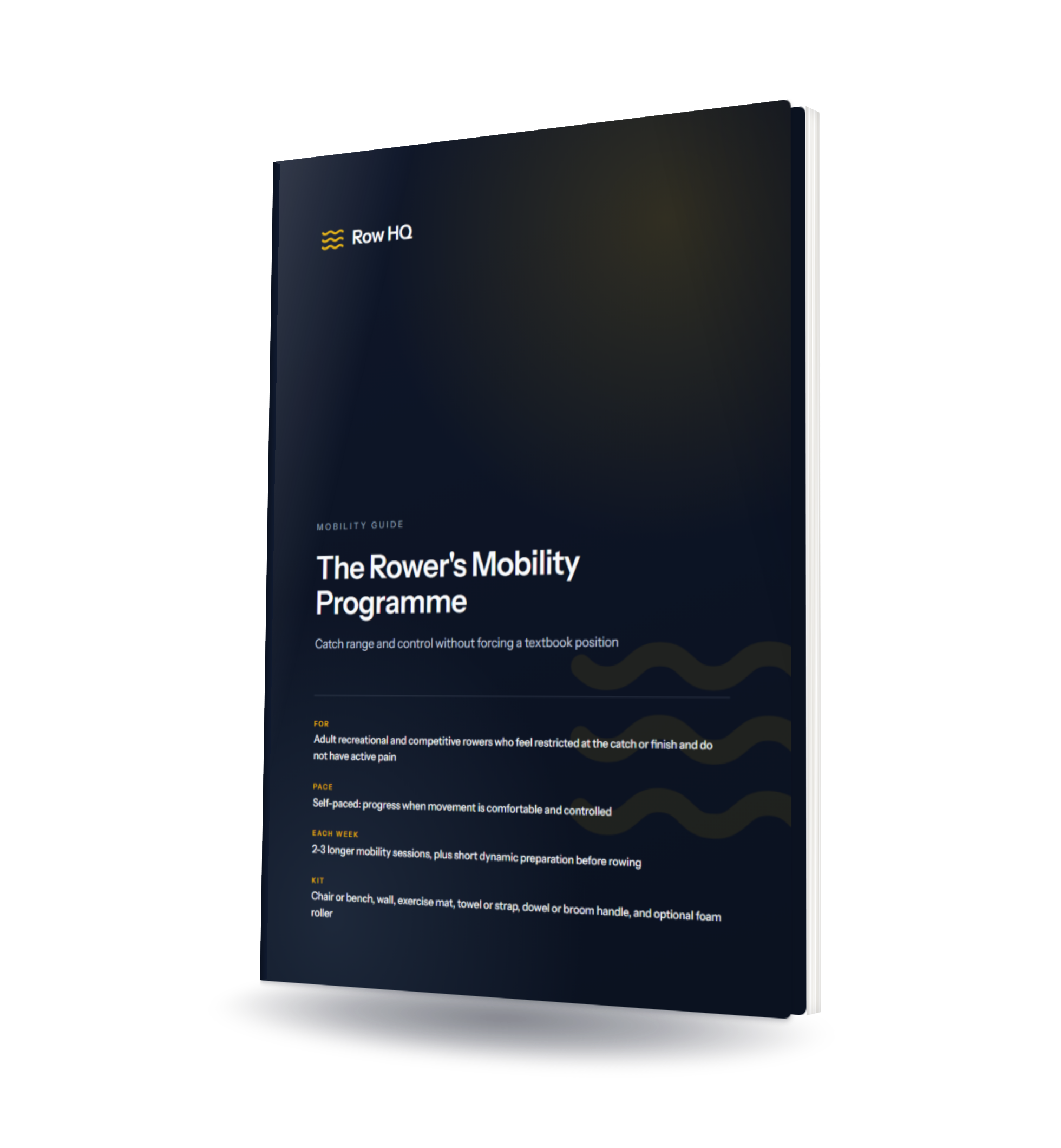
The Rower's Mobility Programme
A physio-informed mobility system for rowers who feel restricted at the catch or finish - self-screen the cause, target the right area, and build range you can actually row with.
Row HQ is rowing program software for organizing athletes, practices and lineups.