Head Race
A head race is a time-trial style rowing race. Boats start one at a time at 10 to 15 second intervals over a long river course of 4,000m to 7,000m, and the fastest aggregate time wins. Head races are the autumn and winter format of British rowing and contrast with the side-by-side sprint racing of summer regattas.
What is a Head Race?
A head race is a time-trial style rowing race in which boats start sequentially at 10 to 15 second intervals and race against the clock over 4,000m to 7,000m on a river course. Aggregate times decide the winner. Head races are run in autumn and winter and contrast with side-by-side regatta racing.
Also called: Head, Long Distance Rowing Race
How a head race works
Crews are seeded in advance, usually based on last year's finishing time or a published division order. Boats marshal in start order on the river upstream of the start line, sometimes stretching a mile back. Marshals call crews forward in groups, each crew rolls towards the line at a steady cruising rate, picks up to full racing pressure, and crosses the line under power.
Timing chips or video timing record the exact moment each boat crosses the start. The crew races the full course flat out, navigating bends, bridges and other crews. Crossing the finish line stops the clock. Aggregate times within each division determine medals and pennants.
Overtaking happens on the outside of bends. The faster crew calls a clear command, and the slower crew gives way to the inside of the river. Heads on the Tideway also have right-of-way conventions for crews going in opposite directions during the race.
Distance and course
Most UK head races run between 4,000m and 7,000m. The exact distance depends on the river:
- Tideway championship course: 6,779m from Mortlake to Putney, run in reverse for the Head of the River Race and most other tideway heads.
- Boston Head: approximately 5km on the Witham, the traditional autumn opener.
- School and junior heads: 3,000m to 5,000m, often run on shorter river stretches.
- Head of the Charles: 4,800m on the Charles River in Boston, the largest head race in the world.
The course is rarely a perfect straight line. Tideway heads run with the tide on a winding river through six bridges. Steering matters - a crew that picks the right line through bends and bridges saves seconds over a crew that does not. Coxes earn their place on head day.
The biggest head races
Head racing is one of the marquee parts of the British rowing calendar. Managing entries, marshalling logistics and the day-of communications takes weeks for clubs running large squads.
United Kingdom
Head of the River Race (HORR) on the Tideway is the championship eights head, run in March on the championship course (Mortlake to Putney, 6,779m). Eights Head of the River, Fours Head of the River, Pairs Head, Schools Head of the River, Womens Head and Veterans Head all run on the same Tideway course at different points in the autumn-winter season. Boston Head on the Witham (Lincolnshire) is the traditional autumn opener. Henley Boat Races and the Henley Fours and Eights Head bring head racing to the summer course. Local heads at Bedford, Burway, Hampton, Cambridge, Durham and Worcester fill the calendar through the season.
United States
The Head of the Charles Regatta in Boston (October) is the largest head race in the world with around 11,000 rowers across 80+ events. Head of the Schuylkill in Philadelphia, Foot of the Charles at the start of the spring season, and Head of the Hooch on the Tennessee River are other major American head races.
Australia
Head of the Yarra in Melbourne is the headline Australian head race, run over approximately 8.6km - the longest senior head race on the international calendar. Riverview Gold Cup on the Lane Cove River in Sydney is a major schools head, and the SA Head of the River, Tasmanian Head of the River and Head of the Brisbane round out the calendar.
Strategy and pacing
Head races test sustained pace, not bursts. Crews that go out too hard at the start blow up by 3km and slow dramatically through the second half. The classic head race pacing model is a controlled start (high rate, controlled pressure) for the first 90 seconds, settle to race pace for the long middle section, and a sustained push from the last 1,000m to the line.
Steering is just as important as pacing. A crew on the racing line through a bend gains seconds on a crew that drifts wide. Coxes plan the line through every bridge and bend in advance, often walking the course or studying GPS tracks from previous years.
For coxes and coaches, crew lineup tools and training pace planning matter more in head racing than in any other format - the entire winter's work is tested over 20 minutes.
Equipment
Head racing equipment is mostly the same as regatta racing. Eights, fours, pairs and quads all race. The differences are practical: in winter conditions crews carry warmer kit, longer cox covers, sometimes weather covers on coxless boat speakers. Bow numbers are the larger A4-sized stickers required for video timing.
Cox boxes (NK CoxBox, Coxmate GPS) are standard in coxed boats, often with GPS to verify rate and split through the race. Steering wires are checked, rudders are aligned, and tracks are run cleaner than usual to handle the long pieces.
How clubs prepare for a head race
Head race entry is the start of a fortnight of logistics. Crew composition has to be locked, entries submitted through British Rowing's BROE portal or the host club's entry system, marshalling order checked against the published draw, boat trailers loaded, weather plans prepared.
For the club admin running this, Row HQ's events module handles entry tracking, crew assignments from the squad's coach tools, transport rotas, and the member portal notifications that tell rowers when the trailer leaves and where the marshalling area is. Oundle Town RC uses Row HQ for head race weekends.
Find head races in our competition calendar - the autumn and winter Tideway races, regional heads, and club-organised time trials across the British calendar.
Origin and history
Head racing in its modern form was invented in 1925 by Steve Fairbairn, the influential Cambridge coach. Fairbairn proposed a long time trial on the Tideway as a winter alternative to the Henley summer regatta tradition - a format that would test endurance and crew-wide rhythm rather than short-course speed. The first Head of the River Race ran in March 1926. The format spread quickly across British rowing, and head racing has been a winter staple ever since. The Head of the Charles, founded in 1965 in Boston, exported the format to American collegiate rowing.
Head race FAQs
What is the difference between a head race and a regatta?
A head race is a time trial - boats start one at a time at 10 to 15 second intervals on a long river course (4 to 7km), and the fastest aggregate time wins. A regatta is a series of side-by-side sprint races on a 1,000m or 2,000m course where the fastest boat across the line wins. Head races are held through autumn and winter, regattas through spring and summer. Most British clubs race in both formats across the year.
How long is a head race?
Most UK head races run between 4,000m and 7,000m. The Head of the River Race on the Tideway is 6,779m (the championship course from Mortlake to Putney). The Boston Head is around 6km. School and junior head races are typically shorter, often 3,000m to 5,000m. Head races take 18 to 25 minutes for an eight depending on conditions, course and water flow.
Why are head races run in autumn and winter?
Head races test endurance, steering and a long aerobic base - the qualities clubs build through autumn and winter training. Regattas test top-end speed, tactics and racing in lanes, which clubs sharpen for the summer season. Splitting the year this way matches British river conditions too: rivers run high and crowded in winter (where time-trial starts work better than 6-lane buoyed courses), and summer water is calm enough to set up multi-lane sprint courses.
What are the most famous head races?
The Head of the Charles in Boston is the biggest head race in the world with around 11,000 athletes across 80+ events. In the UK, the Head of the River Race on the Tideway is the senior eights championship; the Schools Head, the Veterans Head, the Womens Head and the Pairs Head all run on the same course. The Boston Head on the Witham is the autumn opener for many clubs. Eights Head of the River and Fours Head of the River cap the calendar.
How does a head race start work?
Crews marshal in start order based on the previous year's result or pre-race seeding. The marshalling area can stretch a mile upstream of the start line. Marshals call crews forward in groups; each crew rolls towards the start at a steady pace, picks up to race speed, and crosses the line under power. Timing chips or video timing record the exact moment each boat crosses the start and finish lines. Crews pass slower boats by overtaking on the outside of bends.
Related
What is a Regatta?
A regatta is a series of boat races held at a single venue over one or more days. In rowing, a regatta typically feature...
What is a Coxswain?
A coxswain (cox) is the person who sits in the stern of a rowing boat steering, calling commands and managing race strat...
What is Stroke Rate?
Stroke rate is the number of strokes per minute (spm) a rowing crew rates. Typical rates range from 18 spm in steady-sta...
What is the Stroke Seat?
The stroke seat is the rower closest to the stern of the boat - the seat that sets the rate and rhythm for the entire cr...
From the RowHQ shop
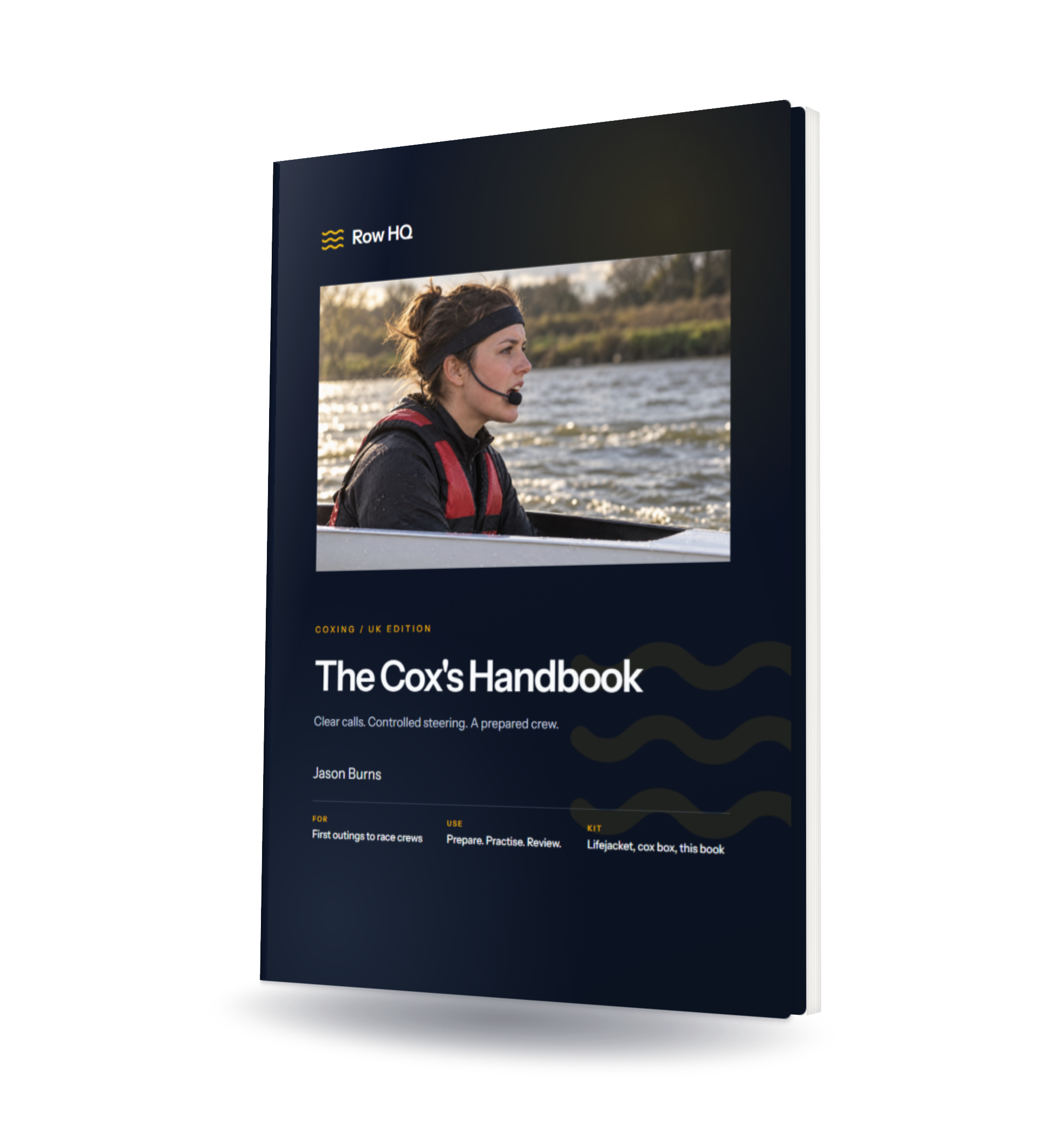
Printable PDFs written for club rowers. Buy once, keep forever.
Keep learning
A head race brings start order, boat allocation and marshalling details together before anyone reaches the river. rowing club software for UK clubs keeps those plans visible to crews and coaches. Use the rowing glossary to check the terms that shape race day.
Head race day is hard. The admin around it doesn't have to be.
Row HQ handles head race entries, crew assignments, marshalling lists and trailer logistics in one place. Built by rowers, used at Oundle Town Rowing Club.