Ergometer
An ergometer (erg) is an indoor rowing machine that measures the power a rower produces. The Concept2 RowErg has been the standard in competitive rowing since the mid-1980s. Its monitor shows split, watts, calories, distance, time and stroke rate. Rowers use it to train when they cannot get on the water and to test their fitness against documented standards.
What is an Ergometer?
An ergometer (erg) is an indoor rowing machine that measures the work a rower does. The dominant model in competitive rowing is the Concept2 RowErg, which uses a flywheel and a damper to simulate the resistance of moving a boat through water. The on-board monitor shows split, watts, calories, distance, time and stroke rate.
Also called: Erg, Rowing Ergometer, Indoor Rower, Rowing Machine
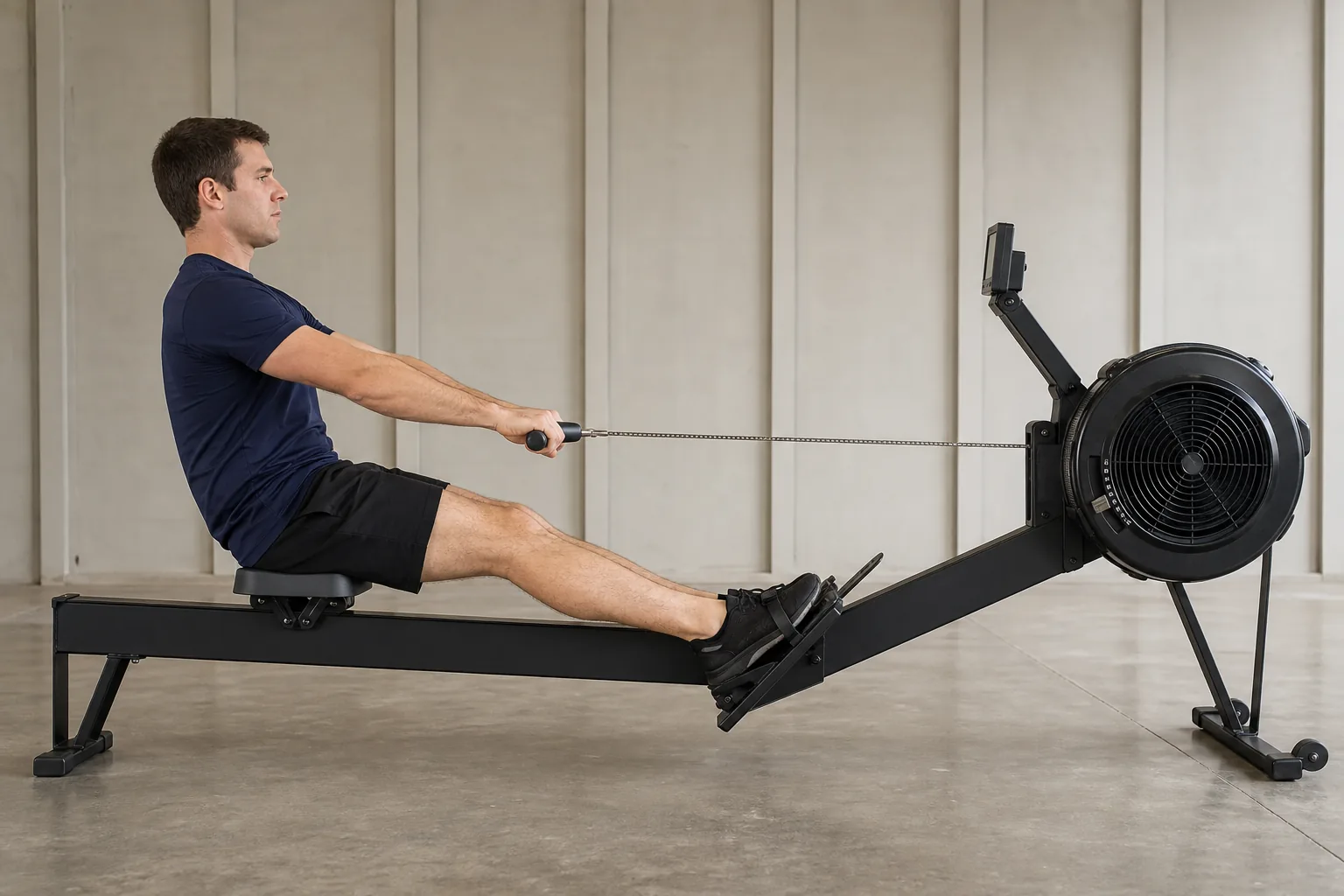
Ergometer, erg, indoor rower: same thing
The three terms describe the same machine. "Ergometer" is the technical name (from Greek ergon, meaning work) and gets used in coaching and physiology contexts. "Erg" is the everyday short form rowers use - "we did 60 minutes on the erg" or "her 2k erg is 7:15". "Indoor rower" or "rowing machine" is what the wider fitness market calls it. They all refer to the same piece of kit: a sliding seat, a footplate, a handle on a chain, and a flywheel that resists the pull.
How an ergometer works
Every stroke pulls the handle, which spins the flywheel. The flywheel meets resistance from air (Concept2), water (WaterRower), magnets (Hydrow), or a combination. Sensors measure how fast the flywheel decelerates between strokes, calculate the work done, and convert it into metres rowed. The monitor displays this conversion in real time as split, watts, distance and calories.
On a Concept2, the resistance you feel comes from the damper lever on the side of the flywheel cage - settings 1 (low resistance, fast acceleration) to 10 (high resistance, slow acceleration). The damper changes the feel of the stroke but not the score. What matters for performance is the drag factor, which the monitor measures in the More Options menu and adjusts for damper position and air density. Use the erg pace calculator to convert any split into watts, calories and predicted race times.
The Concept2 standard
The Concept2 RowErg (formerly Model D and Model E) has been the dominant ergometer in rowing since the mid-1980s. It is the machine used at the World Rowing Indoor Championships, the C.R.A.S.H.-B Sprints in Boston, the British Indoor Rowing Championships, the Australian Indoor Rowing Championships and almost every national federation's testing protocol. Its longevity comes from a simple, repairable design and a calibration that has stayed consistent for decades, which lets coaches compare scores across years and between athletes anywhere in the world.
Other manufacturers (WaterRower, Hydrow, NordicTrack, Echelon) make rowing machines for the home fitness market, but they do not standardise to the Concept2's calibration. A 2k personal best on a WaterRower is not directly comparable to a 2k personal best on a Concept2.
What the readouts mean
- 500m split: the time it would take to row 500m at the current pace. A 1:45 split means you would cover 500m in 1 minute 45 seconds. This is the primary pacing metric in rowing.
- Watts: instantaneous power output. Concept2 uses watts = 2.80 / (split_seconds / 500)^3. A 1:45 split is roughly 268 watts; a 1:30 split is roughly 425 watts.
- Calories per hour: approximately watts x 4 plus 300 for basal metabolism. Useful for fitness tracking but not a precise measure of exertion.
- Stroke rate: strokes per minute. UT2 (low aerobic) sits at 18 to 20, UT1 at 20 to 24, threshold at 26 to 28, race pace at 32 to 38.
- Distance: metres of work, calculated from flywheel deceleration, not literal distance.
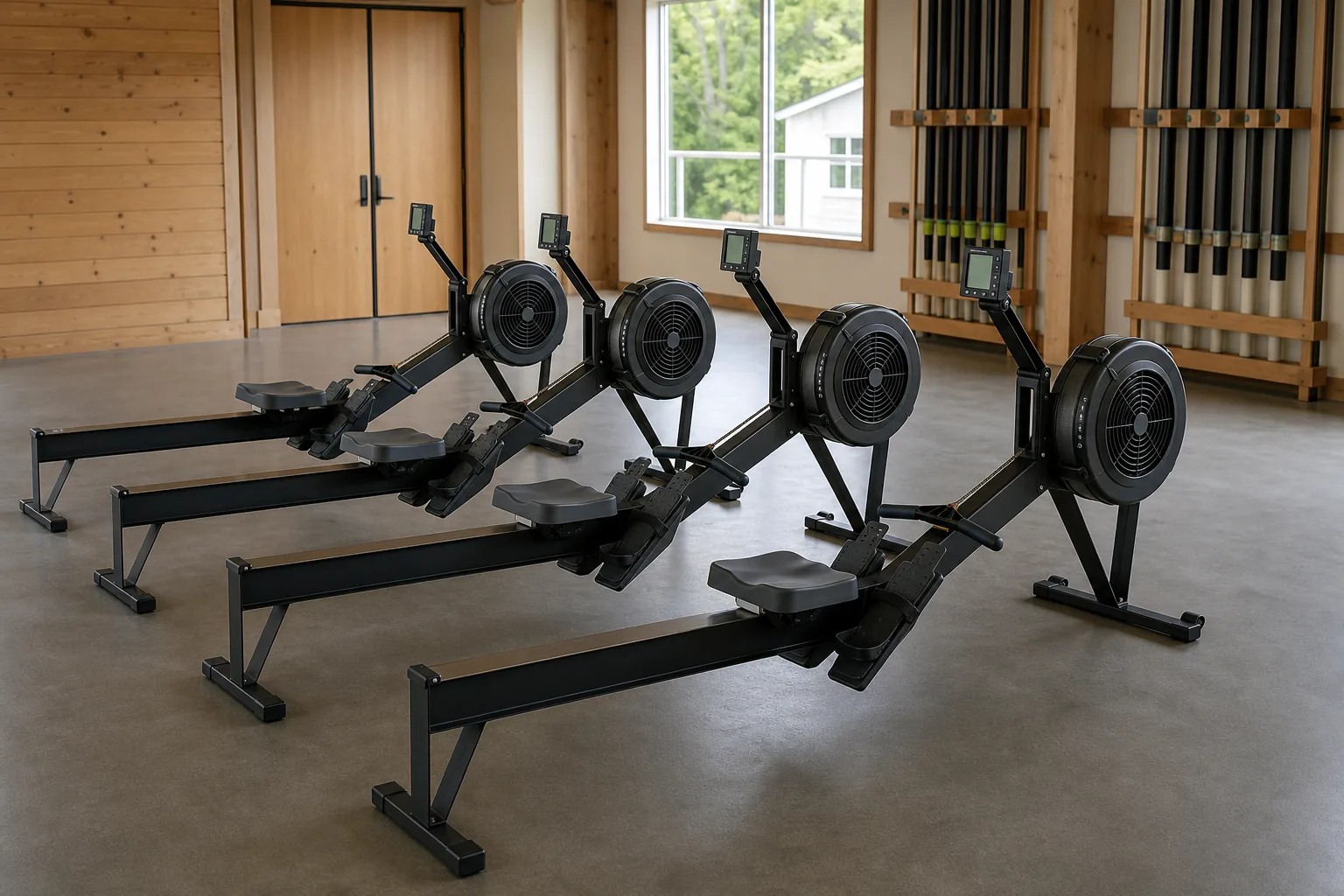
How rowing clubs use ergometers
The erg has three main jobs in a rowing club. First, it lets the squad train when the river is unsafe or unavailable - cold, dark, flooded, frozen or simply when the boats are out for maintenance. Second, it gives coaches a controlled environment to measure individual fitness through documented tests (the 2k, the 5k, the 30-minute and the 60-minute are the standard pieces). Third, it forms part of crew selection alongside seat-racing and on-water assessment.
Erg scores feed into the squad management system. Recording every test, tracking improvements over time, and comparing rowers against age and weight standards is the kind of data work that makes selection decisions defensible. Row HQ's coach tools store erg scores against each rower's profile so coaches can see fitness trajectory across a season.
Erg testing protocols
Standard ergometer test pieces in competitive rowing:
- 2,000m (2k): the gold-standard fitness test, mirroring the Olympic race distance. Maximum effort, typically 6 to 8 minutes for elite men, 7 to 9 minutes for elite women.
- 5,000m (5k): aerobic test, 17 to 22 minutes for most senior rowers.
- 30 minutes: distance covered in 30 minutes at sustainable threshold pace. Used to gauge endurance.
- 60 minutes: longer aerobic test, typically rowed at UT1 or UT2 pace.
- 4 x 2,000m or 8 x 500m intervals: race-specific power and recovery testing.
Each protocol is logged with the rower's body weight at test (lighter rowers face a power-to-weight disadvantage that the World Rowing weight-adjusted formula corrects for) and the drag factor used.
Indoor rowing as a sport in its own right
Indoor rowing has grown into a competitive sport beyond its origins as a boat-rower's training tool. The C.R.A.S.H.-B Sprints in Boston (since 1982) is the original indoor 2k championship and still draws over 2,000 entries a year. The British Indoor Rowing Championships at Lee Valley, the European Indoor Rowing Championships, and the World Rowing Indoor Championships now run alongside Concept2's online challenges and the regional indoor circuits. Many CrossFit boxes and gyms run their own ergometer leagues, broadening participation well beyond traditional rowing clubs.
Ergometer FAQs
Is an ergometer the same as a rowing machine?
Yes. In rowing, ergometer (or erg) is the technical term for what most gyms call a rowing machine. The two words mean the same piece of equipment. Competitive rowers use 'erg' almost exclusively, while the wider fitness market says 'rowing machine'. The dominant make in competitive rowing is the Concept2 RowErg, which has been the standard since the mid-1980s and is the machine used at every world championship indoor rowing event.
What does an ergometer measure?
An ergometer measures the work the rower does on each stroke and converts it into a set of readouts: 500m split (the time it would take to row 500m at the current pace), watts (instantaneous power output), calories per hour, distance covered, elapsed time, and stroke rate. Concept2 uses the formula watts = 2.80 / (split_seconds / 500)^3 to relate split to power. Calories per hour is approximately watts x 4 plus 300 for basal metabolism. The monitor displays all of these in real time and stores the workout.
What is a good 2k erg time?
Senior men typically target sub-7:00 for a 2k erg test (1:45 split or faster), with sub-6:30 being elite (1:37 split). Senior women target sub-8:00 (2:00 split), with sub-7:15 being elite (1:48 split). Junior under-19 targets are 6:30 to 7:00 for boys and 7:30 to 8:00 for girls. Masters times scale with age category - World Rowing publishes age-adjusted standards. Use the erg pace calculator to convert any 2k time to its equivalent split, watts and predicted longer-distance times.
How does the erg measure distance without moving?
The erg measures distance through the flywheel. Each stroke pulls a chain that spins a flywheel against air or water resistance. Sensors track how fast the flywheel is spinning between strokes, calculate the work done per stroke, and convert that work into 'metres rowed' as if the rower were moving a boat. The drag factor (a measurement of how the flywheel decelerates) lets the monitor adjust the conversion based on the damper setting and air density. The metres displayed are not literal distance - they are a unit of work converted to metres-equivalent.
What damper setting should I use on an erg?
Most rowers train at damper 3 to 5 on a Concept2, not 10. The damper changes how it feels (5 feels like a heavier boat, 1 feels like a racing single) but it does not change the score. What matters is the drag factor, which the monitor displays in the More Options menu. Lightweight men typically target a drag factor of 110 to 130, heavyweight men 130 to 150, lightweight women 105 to 120, heavyweight women 120 to 135. World Indoor Rowing Championships are typically rowed at drag factors below 130.
Can ergometer scores predict on-water speed?
Loosely. The erg measures the rower's power output in a fixed environment, while on-water speed depends on power, technique, boat balance, crew synchronisation, water conditions, and steering. A faster ergometer score typically means a faster rower in the boat, but it is not a one-to-one conversion. Crew selection committees use erg scores as one input alongside seat-racing, on-water timed pieces and coach assessment. Watch out for rowers who pull strong erg scores but cannot translate that power into boat speed - and vice versa.
Related
What is a Regatta?
A regatta is a series of boat races held at a single venue over one or more days. In rowing, a regatta typically feature...
What is a Coxswain?
A coxswain (cox) is the person who sits in the stern of a rowing boat steering, calling commands and managing race strat...
What is a Scull?
A scull is a rowing oar held in one hand. Sculling rowers hold two sculls, one in each hand. This is the difference from...
What is Stroke Rate?
Stroke rate is the number of strokes per minute (spm) a rowing crew rates. Typical rates range from 18 spm in steady-sta...
From the RowHQ shop
Printable PDFs written for club rowers. Buy once, keep forever.

Learn-to-Row Starter Plan
A free 6-week introduction plan for brand-new rowers - on the water and on the erg.
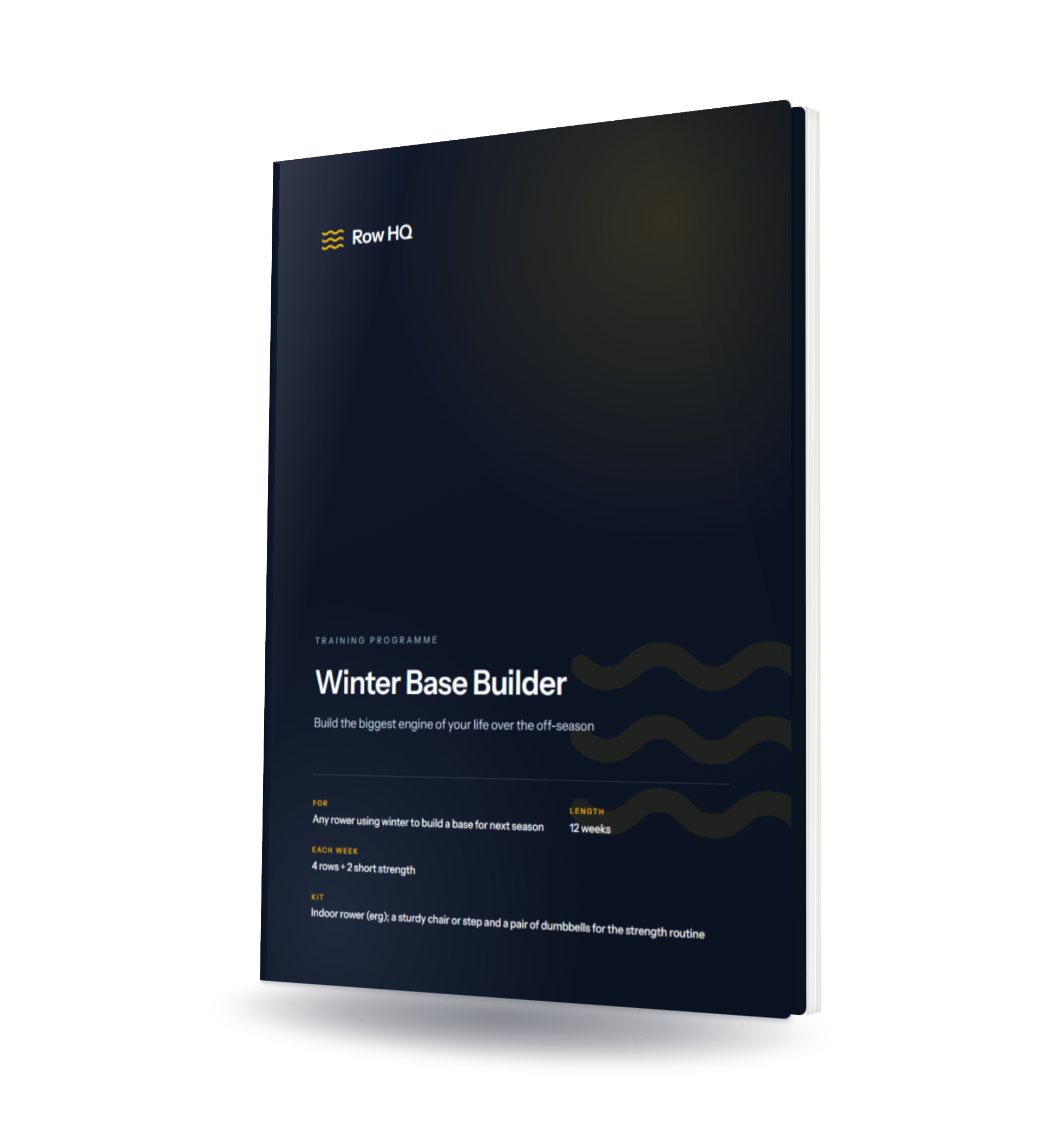
Winter Base Builder
Build the biggest engine of your life over the off-season - 12 weeks of mostly-easy volume plus a strength routine, so you arrive at spring fast.
Keep learning
Erg scores become useful when coaches can see how each rower is progressing across a season. club management software for rowing clubs keeps those test results with the member record instead of scattered across sheets. Use the rowing glossary to explore the language used around training and racing.
Track every erg score in one place.
Row HQ logs erg tests against every rower's profile, plots fitness trajectory across the season, and feeds the data into crew selection. Built by rowers, used at Oundle Town Rowing Club.