Scull
A scull is a rowing oar held in one hand. Sculling rowers hold two sculls, one in each hand. This is the difference from sweep rowing, where each rower holds a single oar with both hands. The four sculling boats are the single (1x), double (2x), quad (4x) and octuple (8x). Most rowers learn to scull first because the symmetry of two oars is easier for balance.
What is a Scull?
A scull is a rowing oar designed to be used as one of a pair, with each rower holding two sculls (one in each hand). Sculling is the form of rowing where every rower uses two oars, as opposed to sweep rowing where each rower uses a single oar. The four sculling boats are the single (1x), double (2x), quad (4x), and octuple (8x).
Also called: Sculling, Sculling Oar, Scull Boat
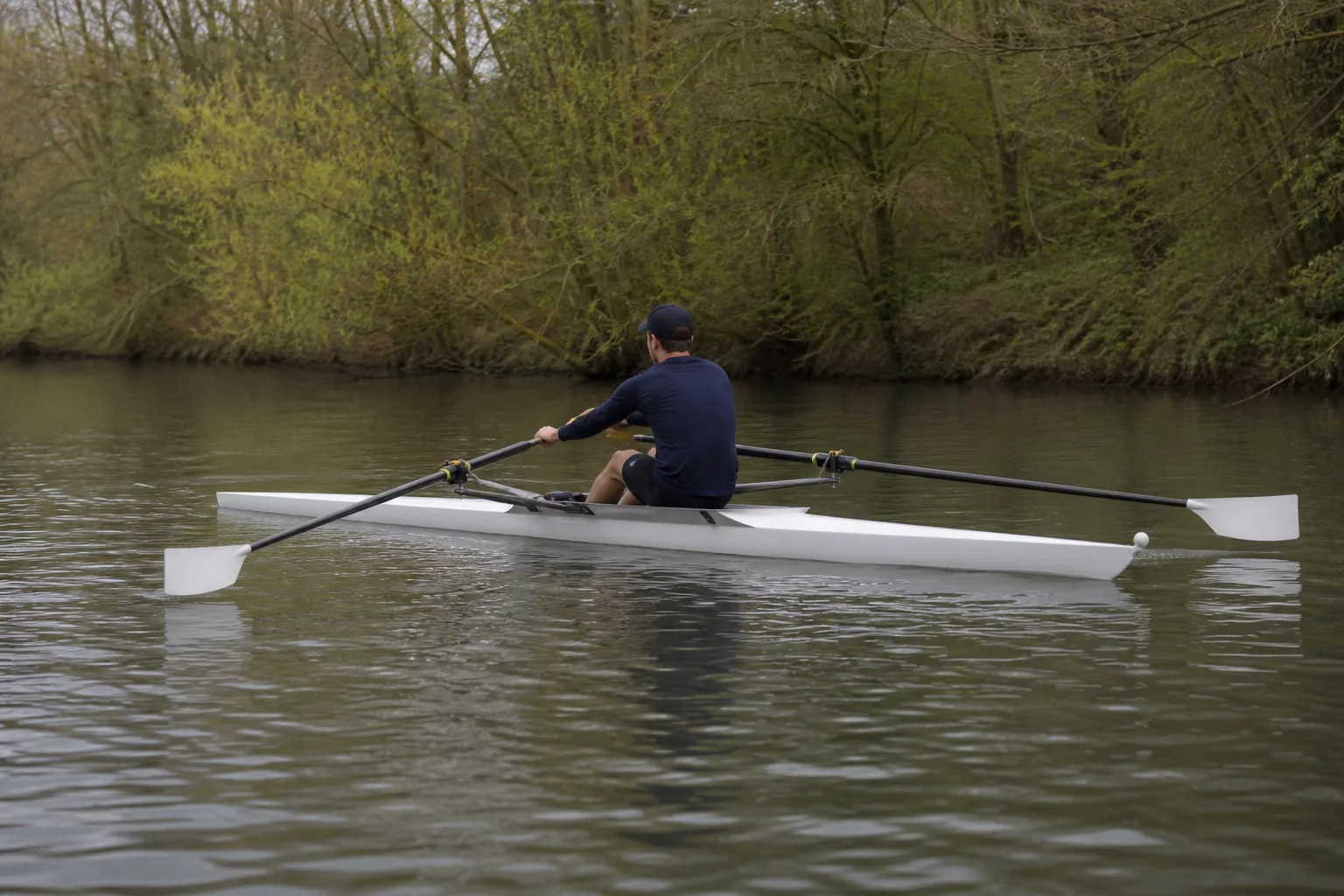
Sculling vs sweep: the two disciplines of rowing
All competitive rowing splits into two disciplines. Sculling, where every rower in the boat uses two oars (one in each hand). And sweep rowing, where every rower uses a single oar with both hands, alternating which side of the boat they row on. The umbrella sport is "rowing" - both disciplines race at the Olympics, the World Championships and every regatta in between. In Britain the calendar runs through Henley Royal Regatta, the Wingfield Sculls on the Tideway and the National Schools Regatta at Dorney.
The mechanical difference matters: sculling is symmetric (the rower's body rotates equally side to side), while sweep is asymmetric (the rower commits to one side). The rigging follows: sculling boats have a rigger on each side per rower; sweep boats have alternating riggers down the length of the boat. See the rowing shell entry for the full breakdown of hull and rigging differences.
The four sculling boats
- Single scull (1x): 8.2m long, one rower, two sculls. The classic test of individual rowing skill. Hardest to balance; most direct feedback for technique. The Diamond Sculls at Henley is the world's best-known single-sculls trophy.
- Double scull (2x): 9.8m long, two rowers each with two sculls. The standard learn-to-scull boat after singles, and a regatta event in its own right.
- Quadruple scull (4x): 12.5m long, four rowers each with two sculls. Often abbreviated "quad". Fast crew boat. Coxless at senior level.
- Octuple scull (8x): 17m long, eight rowers each with two sculls plus a cox. Mostly raced at junior, masters and developmental level. Not an Olympic event.
Sculling boats are typically narrower than equivalent sweep boats because the symmetric oar load needs less hull width to balance against. A double scull is faster than a pair, a quad is faster than a coxless four, because two oars per rower transfers more power into the water than one.
Sculling oars (sculls): anatomy and dimensions
A standard sculling oar is around 285cm to 290cm long. It has the same parts as any rowing oar: a handle (where the rower grips), a shaft (the hollow carbon tube), a sleeve and collar (the wear surface that sits in the oarlock), and a blade at the far end (the bit that catches water). The principal manufacturers are Concept2, Croker, Braca, Apex and Dreissigacker. Blade shapes vary - Macon (the original tulip shape), Big Blade (the dominant modern shape), Vortex (with surface ridges to grip the water) - and each suits different rowing styles.
Sculls weigh around 1.6kg per pair (3.2kg total per rower). The inboard length (handle to oarlock) is adjustable for crew rigging. Most clubs rig their fleet so the same oars can fit different rowers by sliding a button along the sleeve.
Why most rowers learn to scull first
Junior programmes, learn-to-row courses and university freshers' weeks almost always start in sculling boats. There are three reasons.
First, balance. Holding one oar in each hand means the boat self-corrects: if you put more weight on one side, the rower instinctively pushes harder on the opposite oar to recover. Beginners pick up balance in sculling far faster than in sweep.
Second, symmetry. The body moves the same way on both sides through the stroke, which makes technique faults easier to spot and easier to fix. A sweep rower develops side-specific habits that can take years to undo if learned wrong.
Third, scalability. A single scull is a one-person boat - the rower can train alone any time the river is clear. Sweep boats need a crew of four or eight to launch, plus a cox in some cases. The flexibility of "I can go for a row this evening on my own" is what gets new rowers through their first six months.
How clubs structure sculling pathways
A typical UK rowing club sculling pathway runs: novice course in tubs (very stable wide singles), then graduating to club-level singles and doubles, then quads as crew rowing develops, and finally specialising in single sculling for those who want to pursue it competitively. Session scheduling matters because singles and doubles training is largely individual - rowers book the boat, the timeslot and the safety boat coverage themselves rather than being assigned to a fixed crew.
For coaches, tracking which scullers are progressing, who's ready for which boat, and who has done their British Rowing capsize and water safety qualifications all sits in Row HQ's coach tools. Pairing this with boat booking means the right rower is always in the right boat at the right time.
Sculling FAQs
What is the difference between sculling and rowing?
Sculling and sweep rowing are the two disciplines of rowing. In sculling, every rower uses two oars, one in each hand. In sweep rowing, every rower uses a single oar held in both hands, with rowers alternating sides down the boat. Both are 'rowing' - the umbrella sport. Sculling boats are the single (1x), double (2x), quad (4x) and octuple (8x). Sweep boats are the pair (2-), four (4-, 4+) and eight (8+). Most rowers learn to scull first because the symmetry of two oars is easier for balance.
How is sculling different from sweep rowing?
Sculling rowers hold two sculls, one in each hand, with the boat rigged symmetrically (both oars at the same height and angle). Sweep rowers hold one oar in both hands and the boat is rigged asymmetrically (the rower's seat is set off-centre to the rigger side). Sculling is generally considered easier to learn (symmetric balance) but harder to perfect (more moving parts). Sweep is harder to learn (you must commit to one side) but offers a different rhythm and feels more directly powerful per stroke.
What boats use sculls?
Four boat classes use sculls. The single scull (1x) carries one rower with two sculls. The double scull (2x) carries two rowers each with two sculls. The quadruple scull (4x) carries four rowers each with two sculls. The octuple scull (8x) carries eight rowers each with two sculls and is mostly raced at junior and masters level. Sculling boats are typically narrower than equivalent sweep boats because the symmetric oar load needs less hull width to balance against.
How long is a sculling oar?
A standard sculling oar is around 285cm to 290cm long, around 30cm shorter than a sweep oar (which is typically 370cm to 376cm). The shorter length matches the smaller arc each scull travels through and the lower outboard load on a sculler's body. Manufacturers like Concept2 and Croker make sculls with adjustable inboard length so clubs can rig the same oar for taller and shorter rowers. Blade shapes (Macon, Big Blade, Vortex, Comp, Apex) determine how the scull catches and releases water.
Is sculling easier to learn than sweep rowing?
Most coaches recommend learning to scull first. The symmetry of holding one oar in each hand makes balance more intuitive and gives the beginner immediate feedback if they're rowing one side harder than the other. Sweep rowing requires committing to one side (bow side or stroke side), and beginners often develop technique faults that take years to undo. Many junior programmes teach sculling exclusively for the first 18 months, then introduce sweep once the rower has solid balance, blade control and stroke shape. Singles and doubles are the standard learn-to-row boats.
What is a 'feathered scull'?
Feathering is the rotation of the scull blade during the recovery phase, turning the blade flat (parallel to the water) to reduce wind resistance and avoid catching the surface. The rower turns the handle with their fingers as the hand comes away from the body, then squares the blade (turning it back vertical) just before the next catch. Feathering happens in both sculling and sweep, but in sculling each hand feathers independently which is one reason sculling rewards good wrist mobility. Beginners are often taught to row "square blades" (without feathering) to learn the catch first.
Related
What is a Rowing Shell?
A rowing shell is a long, narrow racing boat used in competitive rowing. Modern shells are made of carbon fibre or fibre...
Rowing Boat Types
There are eight standard racing rowing boats: the single (1x), double (2x), pair (2-), quad (4x), coxless four (4-), cox...
What is a Coxswain?
A coxswain (cox) is the person who sits in the stern of a rowing boat steering, calling commands and managing race strat...
What is a Regatta?
A regatta is a series of boat races held at a single venue over one or more days. In rowing, a regatta typically feature...
What is Catching a Crab?
Catching a crab is when a rower's blade gets stuck in the water mid-stroke. The boat is still moving, so the moving wate...
What is Feathering in Rowing?
Feathering is the action of rotating the oar 90 degrees during the recovery so the blade is parallel to the water rather...
Keep learning
Sculling pathways depend on clear boat access, capsize sign-offs and coaches knowing which shell suits each rower. Clubs can keep those details in club management software for rowing clubs instead of splitting them across booking sheets and notebooks. Explore the rowing glossary for the language used around the boathouse.
Run sculling sessions without the spreadsheet.
Row HQ handles boat bookings, sculling sign-out, safety boat coverage and rower qualifications in one place. Built by rowers, used at Oundle Town Rowing Club.