Run the Practice. Don't Let It Run You.
A boatshed full of athletes, one coach, twenty minutes to get on the water before the nor'wester picks up. Get the structure right and the session looks easy.
The honest answer in 30 seconds
A Kiwi school day typically runs AM on the water at first light and PM on the ergs after school. Each block needs a fixed start time, a published warm-up, a single boats-off-the-rack window, a defined main set, and a cool-down that gets boats washed and back on the trailer before the next squad arrives. Publish the structure the night before, hand each cox the briefing sheet, and lock the lineup so the coach is not rebuilding it on the jetty. Through the pre-Maadi build at Lake Karapiro or Lake Ruataniwha, the schools that protect this rhythm (Hamilton Boys', Saint Kentigern, Christ's College, St Andrew's, St Bede's) get more useful metres on the clock and lose fewer sessions to weather and chaos. The lineup data feeds straight into crew selection.
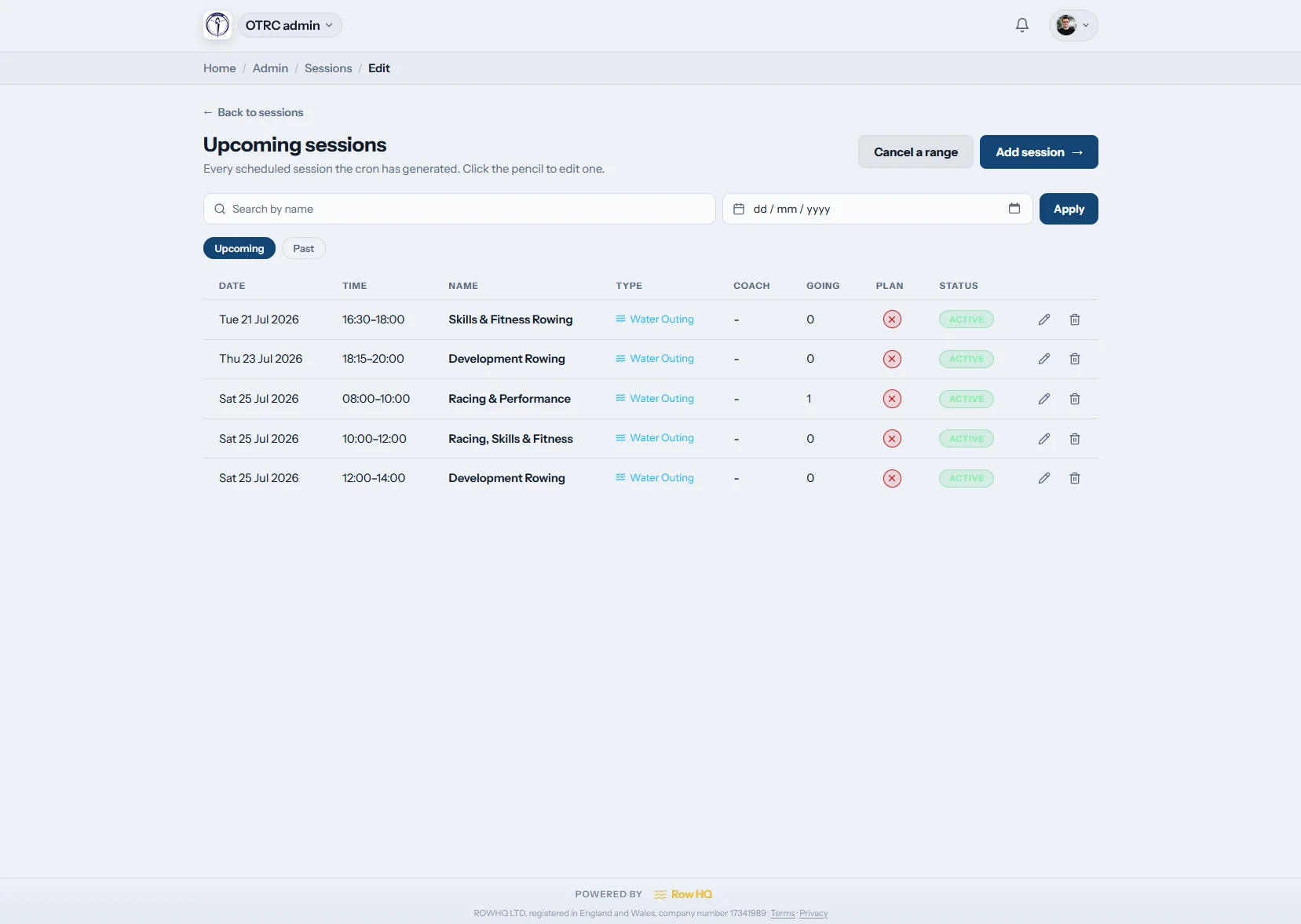
An AM water session that pushes off seven minutes late costs a Kiwi squad twenty good metres of warm-up and the back end of the main set. A PM erg session that runs over by ten minutes pushes the next squad off the rowers. Row HQ's training session management tools were built around the way New Zealand programmes actually run the day: first light on the water, classroom in between, ergs after the bell.
How do you structure a rowing practice properly?
Pin down the bones the night before. Boats off the rack at 05:50. Push off 06:00. Twenty minutes of paddle warm-up upriver. Main set across the next thirty-five minutes. Cool-down paddle back. Boats washed, blades stacked, trailer loaded by 07:25. The cox briefing happens on the way down to the dock, not at it. Through the pre-Maadi block at Karapiro the same template runs every morning so athletes know the rhythm without being told.
How Row HQ holds the session together
The session module mirrors the way a Kiwi practice actually unfolds. Coaches set the bones once. Athletes confirm before the lights-out cut-off. Coxswains open their phones on the walk down to the jetty and read the brief. The coach steps onto the launch with the lineup already locked.
The Three Slots in a Kiwi Squad Week
A New Zealand season has a winter-heavy erg block and a summer-heavy water block, with land circuits sitting in between to hold strength through both. Row HQ handles the three side by side so a coach can see the week as one shape rather than three separate plans:
-
AM Water Sessions: First-light sessions on the Waikato, the Avon or out at Karapiro with boat allocation, cox-and-crew briefings and launch driver assigned before athletes arrive at the boatshed.
-
PM Erg Sessions: After-school RowErg blocks with rower numbers allocated and the prescribed piece written against each athlete. Through a Karapiro winter the erg session carries the aerobic load. See how to get more out of the squad erg data.
-
Land and Strength: Circuits and weights blocks scheduled into the same week with floor capacity caps and equipment requirements logged alongside the water and erg work.
Scheduling That Matches the Week
A New Zealand squad timetable is a recurring beast. Roll the same shape forward, edit the exceptions, and stop rebuilding the calendar every Sunday night:
- Set the recurring weekly pattern (AM water Tue-Fri-Sat, PM erg Mon-Wed-Thu, land Fri PM) and let it roll
- Cap each session to the boatshed's actual fleet capacity so eights are not double-booked
- Assign the launch driver, coxswain and assistant coach for every block with one tap
- Lock confirmations by 21:00 the night before so the lineup is final before lights-out
- Filter the view by squad (1st VIII, U17, novices) so each group sees only its own week
How does attendance get marked at the boatshed?
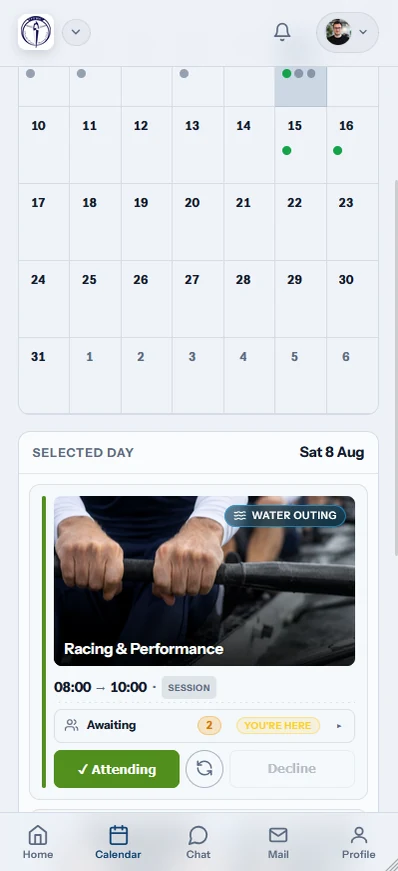
Athletes confirm the night before from their phones. The cox walks down to the jetty with the live attendance sheet open and ticks anyone present as they hand out the cox boxes. The coach sees the final list from the launch before the boats push off. After the session the same tap closes the loop on who actually rowed, so the weekly metres total is right by Friday rather than reconstructed from memory at the end of term.
The Night Before
Athletes log availability through the app or member portal before the 21:00 cut-off. The coach assigns boats, sets cox and stroke for each crew, then publishes the session plan with target rates and the warm-up sequence. Coxswains read it on the walk down the jetty so the brief on the dock is a confirmation rather than a first read. Standard structure for crew planning across a Karapiro build.
On the Water
Boats off the rack at the set time. Warm-up paddle held at the prescribed rate. Main set runs to the clock on the launch. Cool-down timed back from the next squad's push-off so the dock is clear when they arrive. The cox notes any kit issues on the phone in transit back so nothing is lost between the jetty and the boatshed door.
Boats Off, Trailer On
A published wash order keeps the dock moving. Boats washed, blades stacked, riggers checked, trailer loaded for the next regatta if it is a Friday. The session data flows into the admin dashboard so the head coach sees weekly metres, average rate, and which athletes are missing blocks before it becomes a selection-night surprise.
Why Session Structure Matters
Honest Practice Record
When selection comes around the conversation runs off real attendance through the Maadi build rather than memory and goodwill.
Protected Warm-Up
A session that pushes off on time keeps the warm-up intact. A clipped warm-up costs the back end of the main set and quietly raises injury risk through a heavy winter block.
Weather Contingency
Lake Ruataniwha's nor'westers and the southerlies through the Waikato Gorge mean half a Kiwi season is weather-dependent. A clear plan B (rowers in the shed, prescribed pieces ready) means a blown-out morning is a different session, not a missed one.
Dock Turnover
One squad off the dock as the next walks down. The whole programme moves faster when the cool-down is timed back from the next push-off.
What changes in practice
When a Kiwi programme tightens up the session structure, the wins land in the boatshed before they show up on the results sheet:
What clubs notice after switching
Sessions push off when the timetable says they should
Cox reads the plan on the walk down rather than on the jetty
Boats washed, racks clear, next squad on the water without overlap
The bit of feedback coaches come back with most often is the dock. Boats off on time, brief already read, lineup locked. The launch driver is not still wiring up the radio when the warm-up starts. Read more in our OTRC case study, and try our free erg pace calculator for setting realistic targets through a winter erg block.
Tighter Session, Better Outcome
A session that runs on time produces a usable training record. Run the same shape across a Rowing NZ season and you end up with a clean dataset for selection nights, a calmer boatshed, and a squad that knows what it is doing when it walks through the doors. Give athletes a self-service portal for their own check-in and the coach stops being a switchboard operator.
The blocks compound. A clean warm-up sets up a clean main set. A clean main set sets up a clean cool-down. A clean cool-down sets up the next squad. The boatshed becomes a system rather than a scramble.
Rolling It Out Mid-Season
Switching session management mid-season does not mean breaking the rhythm. The team works alongside you to:
- Build session templates that match the existing AM water / PM erg / weekend pattern
- Import the squad list so cox, stroke and bow seats are pre-populated
- Run a thirty-minute walk-through with the head coach, assistant coaches and senior coxswains
- Sit on the dock for a week of mornings if that is what the boatshed needs to bed it in
Most clubs have the system running across the squad inside a week. Check our pricing plans in NZD, or visit the FAQ for the common questions. You can also get started straight away.
Want the short version? Row HQ does all of this out of the box, with session planning wired into the rest of the club's admin.
- The Row HQ Team
From the RowHQ shop
Printable PDFs written for club rowers. Buy once, keep forever.

Sources & references
- Row HQ training session management — Row HQ
- Row HQ coach tools — Row HQ
- Row HQ member portal — Row HQ
- Row HQ admin dashboard — Row HQ
- Row HQ boat booking — Row HQ
- Oundle Town Rowing Club case study — Row HQ
- Why clubs are moving off spreadsheets — Row HQ
- Rowing New Zealand - Club development resources — Rowing NZ
- Rowing New Zealand - Coaching pathways — Rowing NZ
- NZSSRA - Maadi Cup and secondary schools regatta information — NZSSRA
- Rowing New Zealand - Safe sport and wellbeing guidelines — Rowing NZ
- Water Safety New Zealand - On-water safety guidance — Water Safety NZ