Scull
A scull is an oar held in one hand. Every sculler pulls two of them, one in each fist, which is the line that separates sculling from sweep rowing. Sweep rowers grip a single longer oar with both hands and are locked to either side of the boat. The four sculling classes are the 1x, 2x, 4x and 8x. Aotearoa has produced some of the most decorated scullers in the sport: Mahe Drysdale won Olympic single sculls gold in London 2012 and again in Rio 2016, Robbie Manson set the M1x world record at the 2017 World Cup in Poznan, and the Evers-Swindell twins, Caroline and Georgina, won back-to-back W2x double gold at Athens 2004 and Beijing 2008.
What is a Scull?
A scull is an oar built to be used as one of a pair, with the rower gripping two of them at once (one in each hand). Sculling is the branch of rowing in which every athlete in the boat pulls two oars; sweep rowing is the other branch, where each athlete handles a single oar with both hands. Four boat classes are rigged for sculls: the single (1x), the double (2x), the quad (4x) and the octuple (8x).
Also called: Sculling, Sculling Oar, Scull Boat
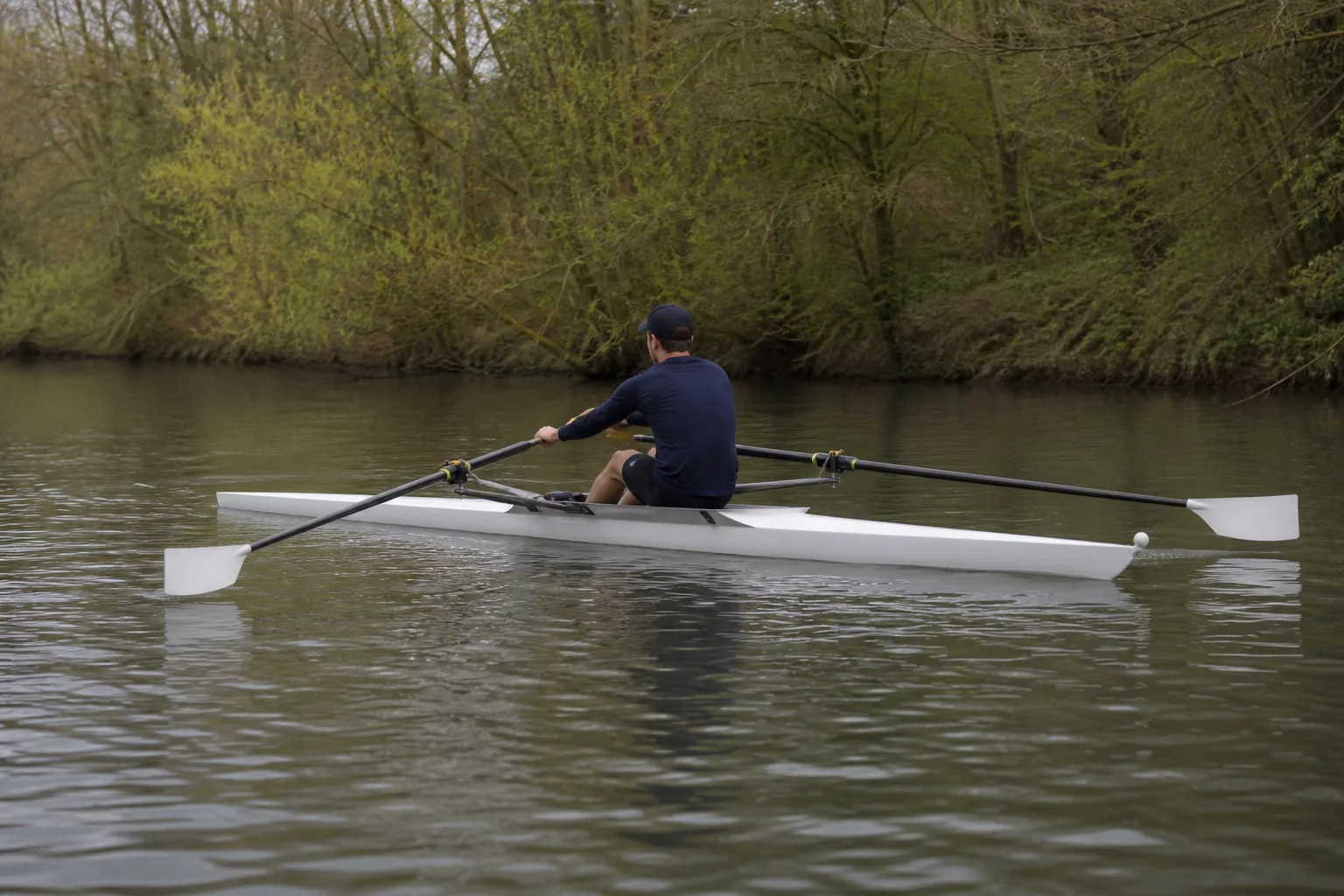
Sculling vs sweep: the two disciplines of rowing
Competitive rowing breaks cleanly into two branches. Branch one is sculling: every seat carries two oars, gripped one per hand, with the rower working both sides of the boat at the same time. Branch two is sweep: every seat carries a single oar held in both hands, with rowers alternating bow and stroke sides down the length of the shell. Both branches sit under the same governing bodies and both feature at World Rowing Championships and the Olympics. Across Aotearoa the sculling calendar runs through Maadi Cup heats and finals at Lake Karapiro or Lake Ruataniwha (the two venues rotate the regatta), the Bond Cup for NZURA university crews, the NZ Championships and a long winter of club racing on Lake Hood, the Avon and the Waikato.
Symmetry is what physically separates the two. A sculler is loaded identically on both sides through every stroke; a sweep rower is loaded entirely to one side. Rigging mirrors the geometry: a sculling shell carries a rigger pin on each gunwale at every seat, while a sweep shell alternates riggers down the boat. The full breakdown of hull construction, beam, rigging geometry and how each shell type handles is in the rowing shell entry.
The four sculling boats
- Single scull (1x): 8.2m long, one rower, two oars. No teammates to mask a flaw and nowhere to hide a missed catch. Hardest of the four to keep level. Mahe Drysdale and Robbie Manson built reputations in this boat that put New Zealand on the global single sculls map for the better part of a decade.
- Double scull (2x): 9.8m long, two rowers, four oars between them. The standard step up after a rower has spent time in singles, and the boat the Evers-Swindell twins drove to back-to-back Olympic gold in 2004 and 2008.
- Quadruple scull (4x): 12.5m long, four rowers, eight oars. The fastest sculling boat at senior level, regularly trading times with the men's eight over an Olympic 2k course. Coxless above junior age.
- Octuple scull (8x): 17m long, eight rowers each with two oars, plus a cox. Most often raced at school, junior and masters level in NZ. Does not feature on the Olympic programme.
The reason a sculling hull sits narrower than the matching sweep equivalent is that the load comes onto both gunwales at the same time and at the same magnitude. Less beam is needed to resist roll. The same physics is why a 2x runs faster than a coxless pair and a 4x outruns a coxless four over the Olympic 2k: putting two oars in the water per athlete moves more water per stroke than putting one oar in.
Sculling oars (sculls): anatomy and dimensions
A typical sculling oar measures 285cm to 290cm overall and carries five named sections. The handle (the wood or rubber grip end), the shaft (the hollow carbon-fibre tube that does the work), the sleeve (the polymer wear surface), the collar or button (the moveable stop that sits against the oarlock), and the blade (the wide spoon-shaped section that engages the water). Concept2 sculls dominate NZ boatsheds, with Croker and Braca regularly fitted on faster club and national-squad fleets. Blade shape changes the feel of the connection: the Macon (the original tulip profile from the 1950s) loads gently, the Big Blade (the modern hatchet shape that took over in the early 1990s) loads sharply with a quicker release, and the Vortex carries ridges along the back face that help the blade grip the water at the catch.
A pair of sculls comes in at about 1.6kg, which means 3.2kg total per rower. Inboard length, the distance from the handle butt to the oarlock face, is set by sliding the collar along the sleeve and clamping it down. Most clubs in NZ keep one set of club-grade sculls and rig them for different rowers from session to session by moving the button rather than buying separate oars per athlete.
Why most rowers learn to scull first
Walk into any learn-to-row intake at a New Zealand club, school programme or university rowing club and the rowers will be in sculling boats. Three reasons explain why this is the standard pathway.
One: balance is self-correcting. Two oars in the water give the novice an automatic response. Lean too far port and the starboard oar bites the water harder than the port one, prompting the rower to push the starboard side away and restore the boat to level. Balance fundamentals arrive faster in a single scull than in any sweep boat.
Two: the body moves the same on both sides. Both arms do the same work, both legs do the same drive, both shoulders rotate the same distance. Faults are easy to see and easy to fix because the comparison is built into every stroke. A sweep rower who develops a bow-side habit in their first season can carry that habit for years before a coach finally drills it out.
Three: a single scull is a one-person craft. The athlete books the boat, the lake slot and the safety launch coverage and rows on their own schedule. Sweep boats require a crew of four or eight to physically launch (plus a cox for coxed events), which means waiting on everyone else. That independence is what keeps a new sculler engaged through a winter on Karapiro, the Waitemata Harbour, Lake Hood or any of Aotearoa's training waters.
How clubs structure sculling pathways
A NZ rowing club sculling pathway typically runs novice intake in stable training singles and tubs, graduation to club-grade single sculls and doubles, then quads as race-side experience accumulates. Athletes targeting single sculls competitively work toward NZ Champs trials and Bond Cup selection if they are at university. Session scheduling sits at the heart of any sculling programme because singles and doubles are largely booked by the rowers themselves rather than allocated to fixed crews, which means the boatshed needs a booking system that scales without a coach manually arbitrating every clash.
For the coaching staff, watching which scullers are ready to step up a boat class, which ones have signed off their Rowing NZ capsize drill and water safety paperwork, and which need a refresher before the next regatta all sits in Row HQ\'s coach tools. Wired up to boat booking, the boatshed always has the right rower in the right shell with the right qualifications attached.
Sculling FAQs
What is the difference between sculling and rowing?
The word rowing covers both branches of the sport. Sculling is one of them. A sculler grips two oars at once, one per hand, and works both sides of the boat simultaneously. A sweep rower works one long oar in both hands and is locked to either bow side or stroke side for the whole piece. The four sculling classes are the 1x, 2x, 4x and 8x. Sweep classes are the pair (2-), the four (4-, 4+) and the eight (8+). In Aotearoa, novices almost always pick up the sculling motion first because two oars share the balance load across the body rather than concentrating it on one side.
How is sculling different from sweep rowing?
Two structural differences drive everything else. A sculling shell is rigged with mirrored hardware: identical pin height, identical pitch, identical work either side of the seat. A sweep shell is rigged off-centre, with the seat shifted toward the rigger pin and the oar coming off only one gunwale. That means a sculler moves through a symmetric stroke arc while a sweep rower rotates the torso toward one side and braces the opposite shoulder. Picking up sculling tends to be quicker because balance is forgiving when both hands carry weight, but cleaning it up to international standard takes time because every catch demands independent timing from each wrist.
What boats use sculls?
Four classes. The single scull (1x) carries one athlete with two oars and is the most exposed event on any regatta course. The double scull (2x) seats two scullers, each with their own pair of oars. The quad (4x) puts four scullers together and ranks among the quickest hulls on the water at any World Rowing regatta. The octuple (8x) carries eight scullers plus a cox and is mainly seen in junior, school and masters racing in New Zealand and elsewhere. Sculling hulls run narrower than the sweep equivalents because the load on each gunwale is the same, so less beam is needed to keep the boat sitting level.
How long is a sculling oar?
A sculling oar usually measures somewhere from 285cm to 290cm overall, about 30cm shy of a sweep oar (370cm to 376cm is the typical range). The reason is mechanical: each scull travels a tighter arc and carries half the load of a sweep oar, so the lever length is sized accordingly. Concept2 is the dominant manufacturer in NZ boatsheds, with Croker and Braca turning up on faster club fleets. The button collar can slide along the sleeve to alter inboard length, which is how a single pair of sculls is rigged for tall and short rowers without buying new kit. Blade profile (Macon, Big Blade, Vortex, Comp, Apex) shapes the feel of the catch and the cleanness of the finish.
Is sculling easier to learn than sweep rowing?
Almost every coaching pathway in Aotearoa puts the novice into a sculling boat first. The reason is that two oars give a beginner a self-correcting feedback loop. Tip the boat one way and the off-side oar grabs the water harder, nudging the shell back upright before the rower has consciously thought about it. Sweep rowing offers no such margin. Decide at the start of a session that you are a bow-side rower and the boat will quietly bake in any flaw on that side until a coach drills it out. School learn-to-row weeks at clubs like Hamilton Boys' and Saint Kentigern stay in single sculls and stable tubs until the basic catch is reliable, and only move into sweep boats once the rower has clean blade work to bring across.
What is a 'feathered scull'?
Feathering describes the wrist rotation that flattens the blade during the recovery, lying it horizontal so it slices through wind and avoids snagging chop on the way forward. Coming out of the finish the rower rolls each handle with the fingers, drops the wrist a fraction, then squares back to vertical in the back half of the slide ready for the catch. In sculling the two hands work this entirely independently of one another, which is why grip pressure and wrist mobility matter so much. New rowers at any NZ club typically learn square-blade rowing first so they can focus on a clean catch and finish before adding the feather, then layer it in once the stroke shape is solid.
Related
What is a Rowing Shell?
A rowing shell is the racing hull itself - the long, slender boat racked along the walls of every NZ boatshed from Rowin...
Rowing Boat Types
World Rowing recognises eight standard racing shells, and you will see every one of them on the Karapiro race lane durin...
The Coxswain: Steering, Strategy and the Other Voice in the Boat
A coxswain (cox) is the non-rowing crew member in the stern of a coxed shell who steers, calls the race plan and holds t...
What is a Regatta?
A regatta is the side-by-side sprint format of rowing. Crews race in buoyed lanes over 2,000 metres (1,000 metres for ma...
What is Catching a Crab?
A buried blade. The hull keeps running, the oar does not, and the handle gets hammered back into the rower's chest. The...
Feathering: The Quarter-Turn Between Strokes
Feathering is the quarter-turn rotation of the oar between strokes - blade square during the drive, blade flat during th...
From the RowHQ shop
Printable PDFs written for club rowers. Buy once, keep forever.
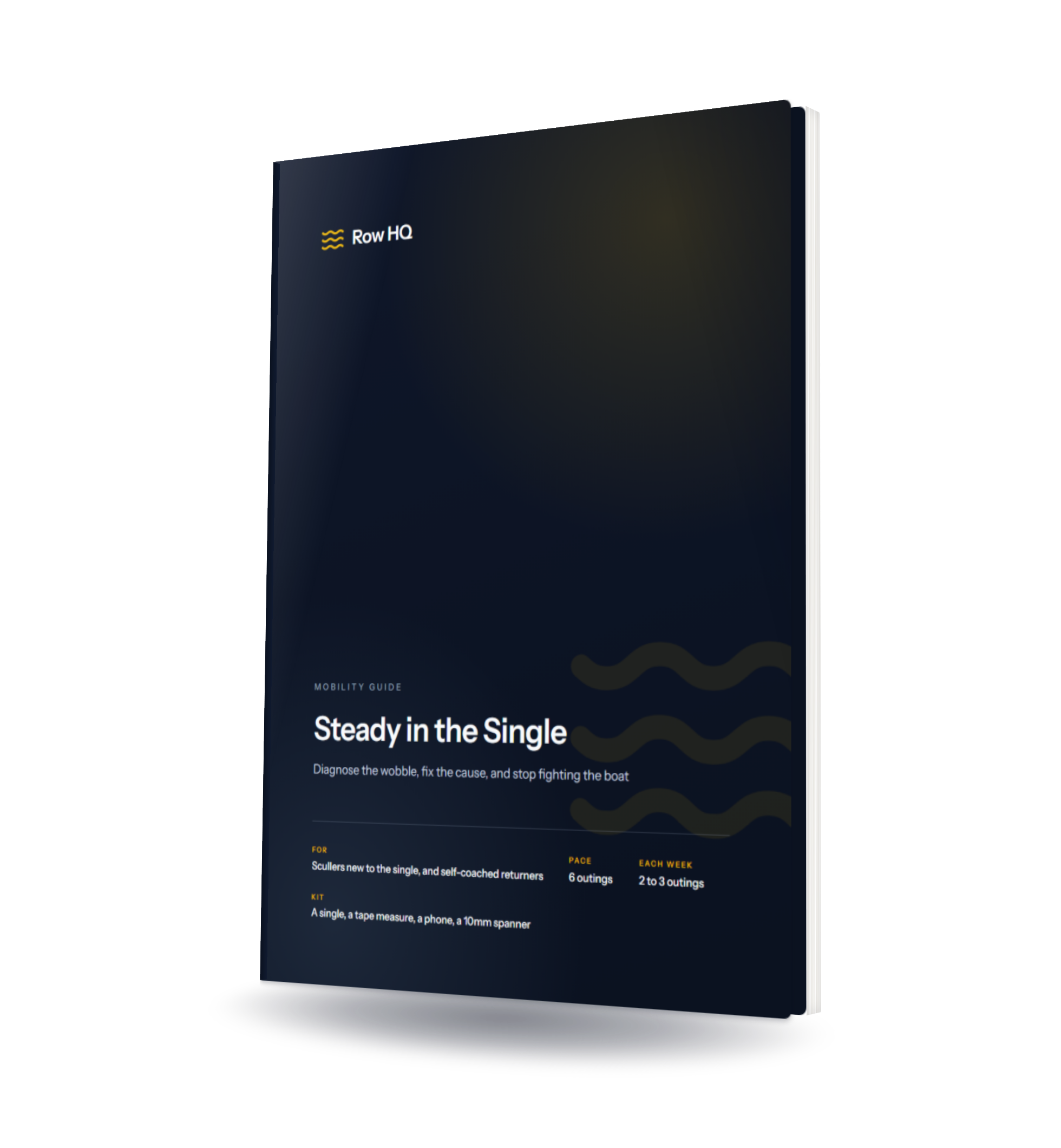
Steady in the Single
Why you cannot balance a single, diagnosed properly - find out when in the stroke the boat goes down, check whether the rigging is doing it, then drill the actual cause.
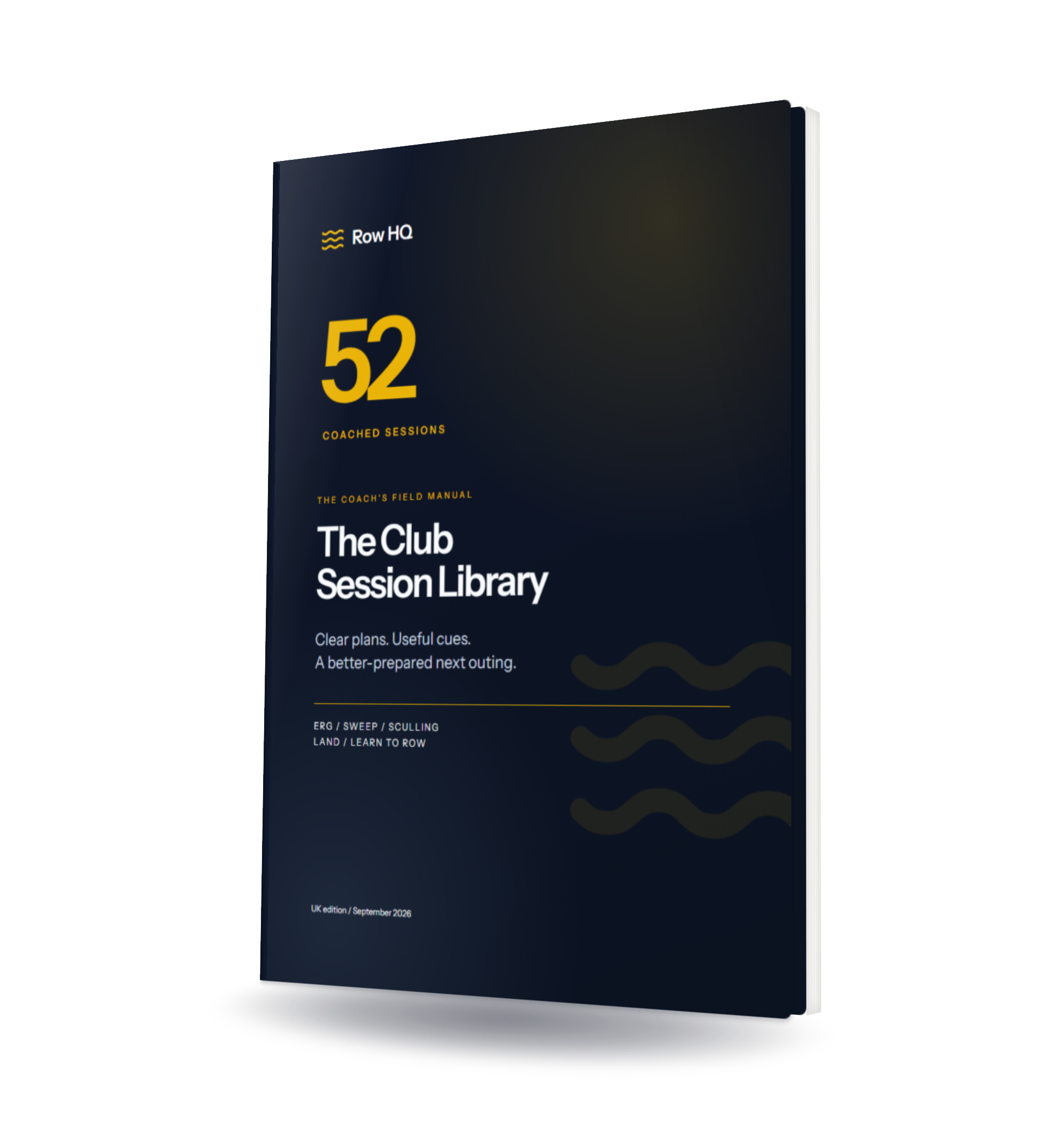
The Club Session Library
52 rowing sessions for club coaches, with an illustrated coaching PDF, editable CSV plans, two seasonal blocks and a printable coaching cheat sheet.
Keep learning
A good sculling pathway matches each rower with suitable water, coaching and a boat they are cleared to use. rowing club management software helps clubs keep those decisions with the booking record. Read the rowing glossary for more language from training and regatta days.
Run sculling sessions without the spreadsheet.
Row HQ handles boat bookings, sculling sign-out, safety boat coverage and rower qualifications in one place. Built by rowers, used at Oundle Town Rowing Club.