The honest answer in 30 seconds
Four numbers carry a Kiwi squad through a season on the Concept2 PM5: 2k time, 500m split, watts and stroke rate. Run a monthly 2k at a fixed drag factor (110-130 for most senior athletes is the Rowing NZ convention), capture bodyweight and a one-line note on how the piece felt, and read the trend across the build to Maadi or the Bond Cup. The Rowing NZ high-performance pathway and the British Rowing PT Testing Protocols both anchor on Concept2, so a Kiwi club score lines up against the same scale Karapiro athletes are working off. Everything else the PM5 spits out is noise once those four are clean.
Every credible NZ rowing programme leans on the erg to benchmark engines, watch progress over the winter base block and surface athletes worth a closer look. Club coaching is no different. Pair a steady testing routine with somewhere proper to store the scores and a squad coach can put the numbers behind training calls instead of running on gut feel, whether the boatshed is on Lake Karapiro, the Avon, the Waitemata or the Otago harbour.
Why ergo testing matters
A Concept2 erg cancels out the variables that warp on-water times: wind off the gorge, sloppy rigging, the crew you happen to have drawn that morning. The score reflects the athlete and the work, full stop. A regular testing routine pulls its weight in three ways:
-
Benchmarking: Set a baseline a coach can defend in front of the squad, then place athletes objectively for crew selection and training-group banding.
-
Progress tracking: Watch the curve move across the winter block, into the spring regattas and through the Maadi taper, then adjust training volume and emphasis on real evidence.
-
Goal setting: Give every athlete a sharp, written number to chase. "Get fitter" becomes "crack 7:10 on the 2k by South Island Champs."
A quick scale check on the dataset Kiwi crews are joining when they log a score. Across 2025 the Concept2 Logbook recorded:
The four metrics that matter
Not every figure on the PM5 deserves squad attention. Knowing which four to track (and what they actually tell a coach) is the line between coaching off data and drowning in it. Every number below is read straight off the Concept2 PM5, the monitor every Kiwi school, club and university programme runs on (background in our ergometer glossary entry):
Key ergo metrics explained
2k time
The benchmark every Kiwi programme orbits. A 2,000m piece reads peak aerobic capacity, lactate tolerance and how an athlete handles being hurt. Log it to the tenth.
500m split
Average pace across each 500m chunk. Splits expose where the piece was won or lost: a sandbagged opening, a 3rd-500 slump, a hero finish papering over a soft middle.
Watts
The raw power figure on the flywheel. Watts compare cleanly across the squad regardless of body weight band and feed straight into Rowing NZ-style aerobic zone targets.
Stroke rate
Strokes per minute. Set rate against split and the picture clears up fast: who is producing pace efficiently and who is muscling a high-rate erg to cover a soft engine.
It's the best all-round fitness machine in the world, and suitable for anybody, not just international athletes. No matter how hard I tried, I could never beat it. It never broke and it never let me down.
How Row HQ makes ergo tracking easy
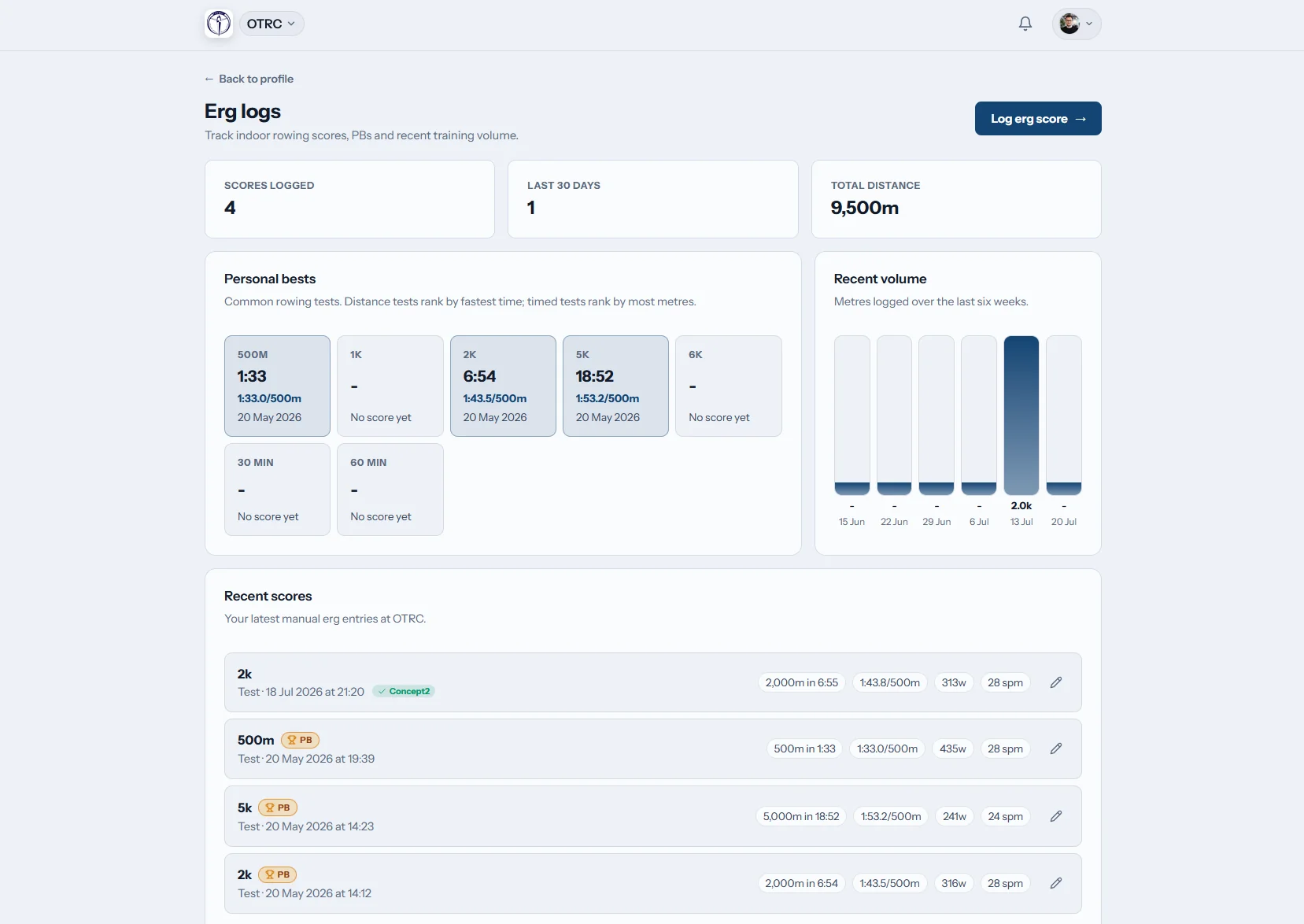
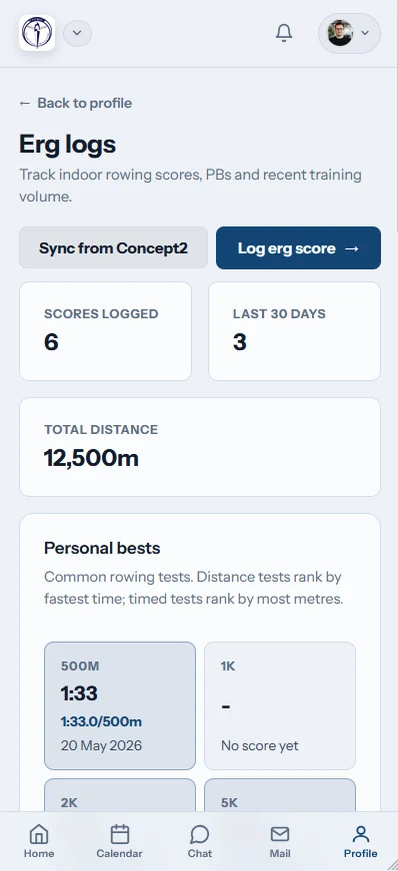
Logging the score is the easy bit. Organising every athlete's history, comparing across squads and turning the file into a coaching decision is where most NZ clubs fall over. Row HQ's built-in ergo log, part of our coach toolkit, takes raw PM5 scores and gives a coach something useful by Monday morning. Athletes drop scores in via the member portal or a CSV import; a direct Concept2 Logbook sync is on the short-term roadmap so the data flows in untouched.
-
Easy logging: Athletes file scores straight from a phone or laptop through the member portal in seconds. No more clipboard sheets pinned to the boatshed door or the shared-spreadsheet routine half the country is still running.
-
Historical data: Every score sits against the right athlete forever. Pull a six-month curve, a Maadi-build window or a multi-season arc on demand to see what training actually moved the needle.
-
Coach review: Coaches see the whole squad rolled up through the admin dashboard, which turns selection night and the weekly training plan into a data-backed conversation rather than a stand-up argument.
-
Personal bests: PBs are caught automatically, recognised in the feed and made visible to the athlete. Every member can pull their own history from the member portal without bothering the coach.
Using data to motivate and improve
A spreadsheet on its own does nothing. The behaviours a coach builds around the data are what convert numbers into faster boats. The patterns that work inside a Kiwi squad:
- Celebrate progress: A two-second drop on a 2k is real work. Recognise honest improvement, not just whoever happens to sit top of the squad rankings.
- Create healthy competition: Squad leaderboards and Year-group ladders tap straight into the competitive streak that gets athletes onto the erg at 5:30am. The practice tracking tools wire that back into on-water sessions so the picture stays joined up.
- Identify weaknesses: Splits ballooning on the third 500? Watts soft despite a clean stroke? The numbers point a coach at exactly what the next block of sessions needs to fix.
- Track training load: Read ergo progress against weekly volume and zone mix. Programmes that overcook the AT work pre-Maadi see it in the data before they see it in the boat.
Real progress: sample athlete journey
2k baseline
14s improvement
New PB
5.7% faster
Five tips for effective ergo testing
A testing routine is only worth anything if conditions stay constant. The moment the setup drifts, comparability collapses and the trend line lies to you. The habits Kiwi programmes use to keep the data honest:
- Standardise test conditions: Same slot in the week, same warm-up, same drag-factor target. Anything else introduces noise that the squad will spend months arguing about. Use our drag factor calculator to set every athlete up the same way every session.
- Test regularly: A monthly 2k gives enough data points to read a curve without burning athletes out. Slot in 500m, 6k or 30-minute pieces around it for context.
- Record everything: Beyond the headline time, capture splits, stroke rate, body weight, sleep the night before and how the athlete rated the effort. Context is what makes the raw number coachable.
- Create a supportive environment: A 2k test is one of the hardest things in the sport. Build a squad culture that respects the effort, not only the result on the monitor.
- Review and discuss: Block ten minutes with each athlete after every test to read the data together, set the next target and shape the personal training plan around it. The 2k prediction calculator is useful for back-solving a goal from a recent long piece.
The moment an athlete can see their own curve in black and white - not just feel that they have improved - the way they show up to training changes. The data hands them something concrete to push against. Coaches at Oundle Town Rowing Club walked exactly the same path.
The bottom line
Ergo data is not a replacement for a coach who knows the squad. It is the evidence base behind the calls a coach already wants to make. Objective numbers sharpen decisions through the coach toolkit, give every athlete a clear read on where they sit and make squad-wide improvement visible to everyone in the boatshed.
Row HQ takes the recording and organising off the coach's plate. No more lost spreadsheets, no more scribbled sticky notes, no more begging the captain for last term's scores. Need a single split converted? Try our free erg pace calculator to read watts, calories and projected splits across every test distance Kiwi squads run. Step through the screenshot gallery to see the ergo log in action, look over our pricing, or get started today. Still have questions? The FAQ covers the common ones.
The erg log is just one part of Row HQ. The sessions, squads and selection lists the data flows into live there too.
- The Row HQ Team
Sources & references
- Rowing New Zealand - High Performance Pathway and Testing Standards — Rowing NZ
- Crew selection in rowing (coach perspective on erg-test weighting) — British Rowing Plus
- Concept2 PM5 monitor service and reference — Concept2
- Concept2 Online Logbook — Concept2
- Concept2 2025 Year in Review (141,735 new athletes, 79.7B m logged, 210+ countries) — Concept2 (accessed May 17, 2026)
- New 2k world record 5:35.8 (Josh Dunkley-Smith) — Concept2
- Trends in indoor rowing records — World Rowing
- Why Sir Steve Redgrave uses the Concept2 rower — Fitness Etc
- Row HQ erg pace calculator (split to watts, calories, predicted times) — Row HQ
- Row HQ 2k prediction calculator (extrapolate from shorter pieces) — Row HQ
- Row HQ drag factor calculator (set athletes per-session) — Row HQ
Related articles
From the RowHQ shop
Printable PDFs written for club rowers. Buy once, keep forever.
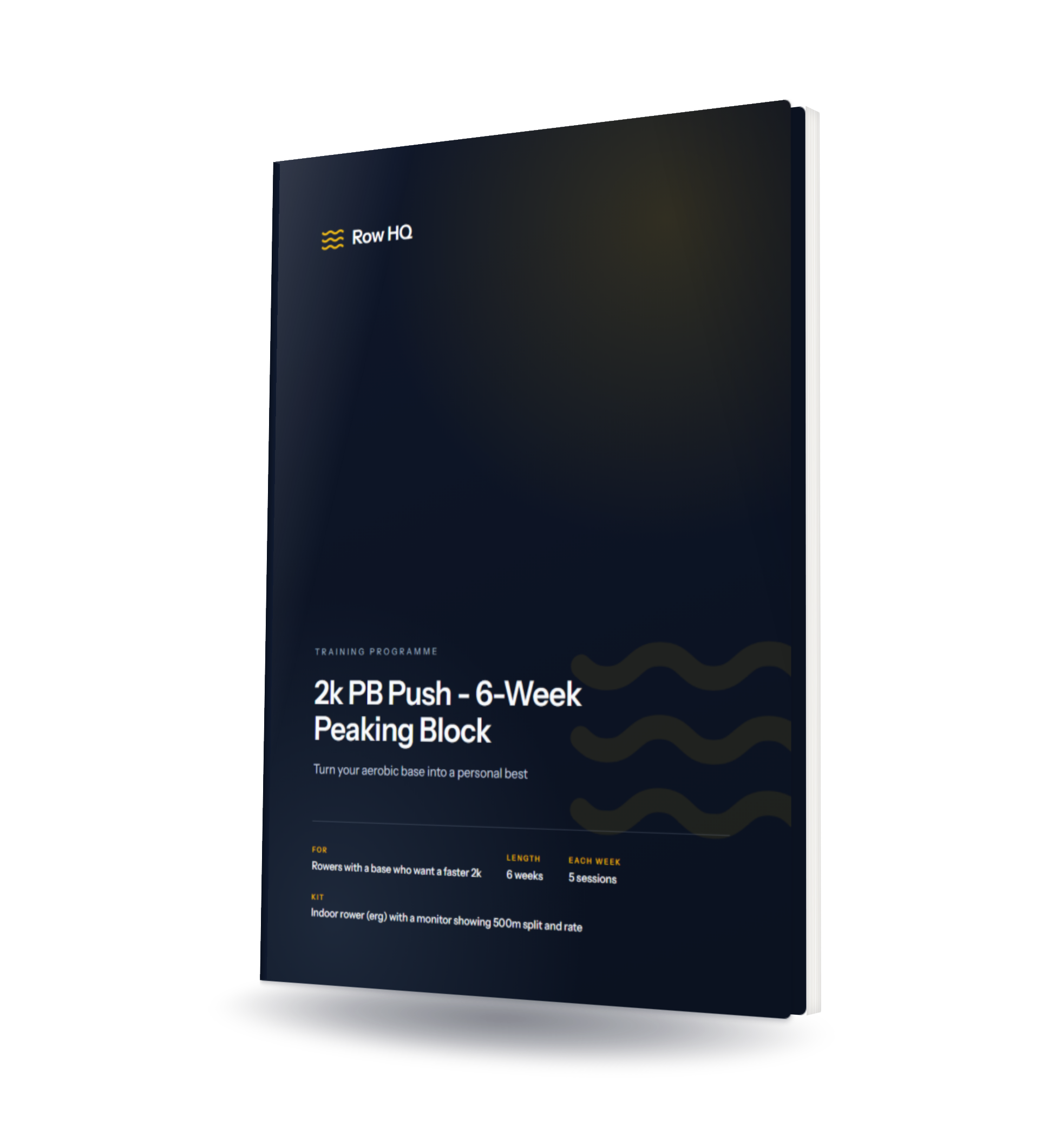
2k PB Push - 6-Week Peaking Block
Six weeks that turn an existing aerobic base into a 2k personal best - race-specific work, a proper taper, every pace scaled to your own time.
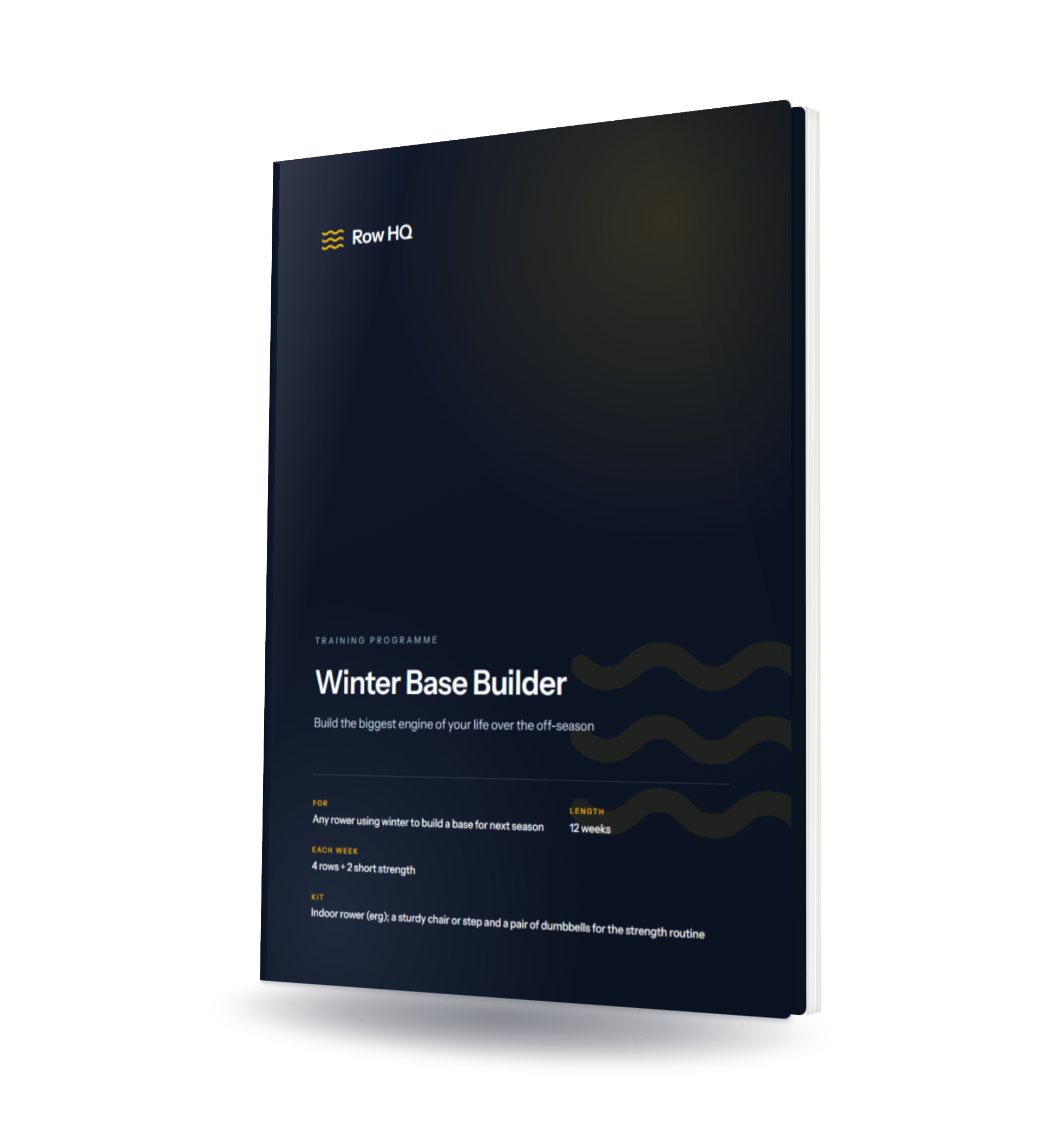
Winter Base Builder
Build the biggest engine of your life over the off-season - 12 weeks of mostly-easy volume plus a strength routine, so you arrive at spring fast.

The Club Session Library
52 rowing sessions for club coaches, with an illustrated coaching PDF, editable CSV plans, two seasonal blocks and a printable coaching cheat sheet.