The honest answer in 30 seconds
Confirm availability before you open a spreadsheet, build crews from a shortlist rather than the whole squad, and lean on last week's lineup as the starting point for this week's. Use the 2k erg as one data point - it correlates with on-water finishing position at r ~ 0.72-0.78 in international sculling (Mikulic et al. 2009) - but back it up with seat racing and on-water time trials. Announce calls in writing the night before, not in front of the squad. The rest of this article shows how to wire that workflow together so Sunday-evening planning takes 15 minutes instead of two hours.
The Art of Crew Selection
Good crews come from a mix of data and instinct. Here's how to use both to pick lineups faster.
Crew selection is the most political call a club makes, and the one that eats the most coach time. I have been on both sides of it - waiting in the boathouse to see if I had made the lineup as a university and masters rower, and now watching captains and coaches at my own club in Oundle take the heat for the tough ones. Between availability messages, skill assessments, and half-remembered notes about who rows well together, coaches can burn hours on admin that should be spent coaching. Row HQ's coach tools were built to change that. Here is how to speed it up without cutting corners.
How do coaches pick rowing crews fast?
Confirm availability before opening a single spreadsheet, score each rower on the two or three attributes that matter for the session, then build crews from a shortlist rather than the whole squad. A coach with current availability and last-week's notes can lock in lineups in fifteen minutes instead of an evening of WhatsApp.
The Challenges Coaches Face
Crew selection means juggling availability, ability, personality and physical compatibility at once. Most coaches do it from memory, scattered notes, and last-minute adjustments. These are the common problems.
Manual Tracking Chaos
Spreadsheets, paper lists, and WhatsApp messages scattered across multiple devices. Information gets lost, outdated, or duplicated, leading to confusion and errors. There is a better alternative to spreadsheets.
Availability Nightmares
Chasing down availability from dozens of rowers via text, email, or in-person conversations. Last-minute cancellations force complete crew reorganisation minutes before a session. A proper member portal lets rowers update availability themselves.
Memory Overload
Holding all of it in your head: which combinations work, who has personality clashes, who's coming back from injury, who needs development time. It is a heavy mental load.
All of this eats into time that could be spent actually coaching - working on technique, planning progressions, or just being present with your athletes. We cover the scheduling side in more detail in our guide to streamlining training sessions.
How does Row HQ help with crew selection?
Row HQ's crew assignment feature pulls confirmed availability, recent erg scores, and previous lineups into one drag-and-drop view. Coaches build the boat from the shortlist instead of re-typing names from a spreadsheet, see which combinations rowed well last week, and publish the lineup with one tap so the squad gets a notification straight away.
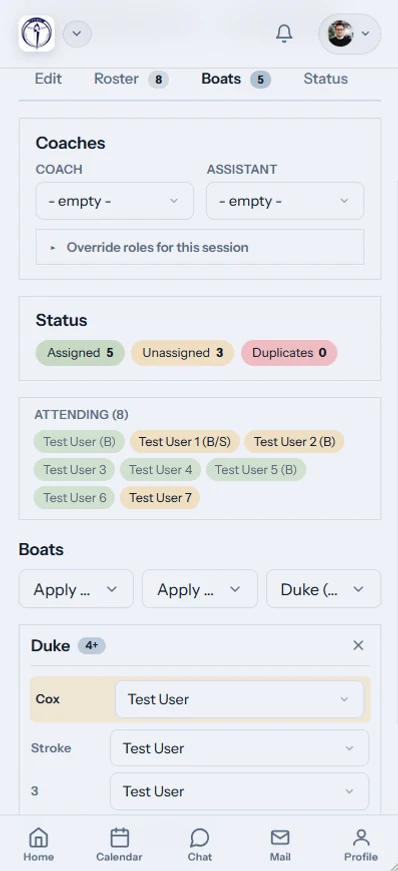
Drag-and-Drop Simplicity
Build crews by dragging rowers into boat positions. Availability is visible on each name (green available, amber tentative, unavailable greyed out), so you stop cross-referencing lists or sending "are you coming?" messages. Take a look at the screenshot gallery to see it in action.
Saved Crew Setups
Found a combination that works? Save it. Row HQ stores crew configurations and recalls them in one click for the next session. Useful for your A crew for regattas, and just as useful for the development eight you are slowly building.
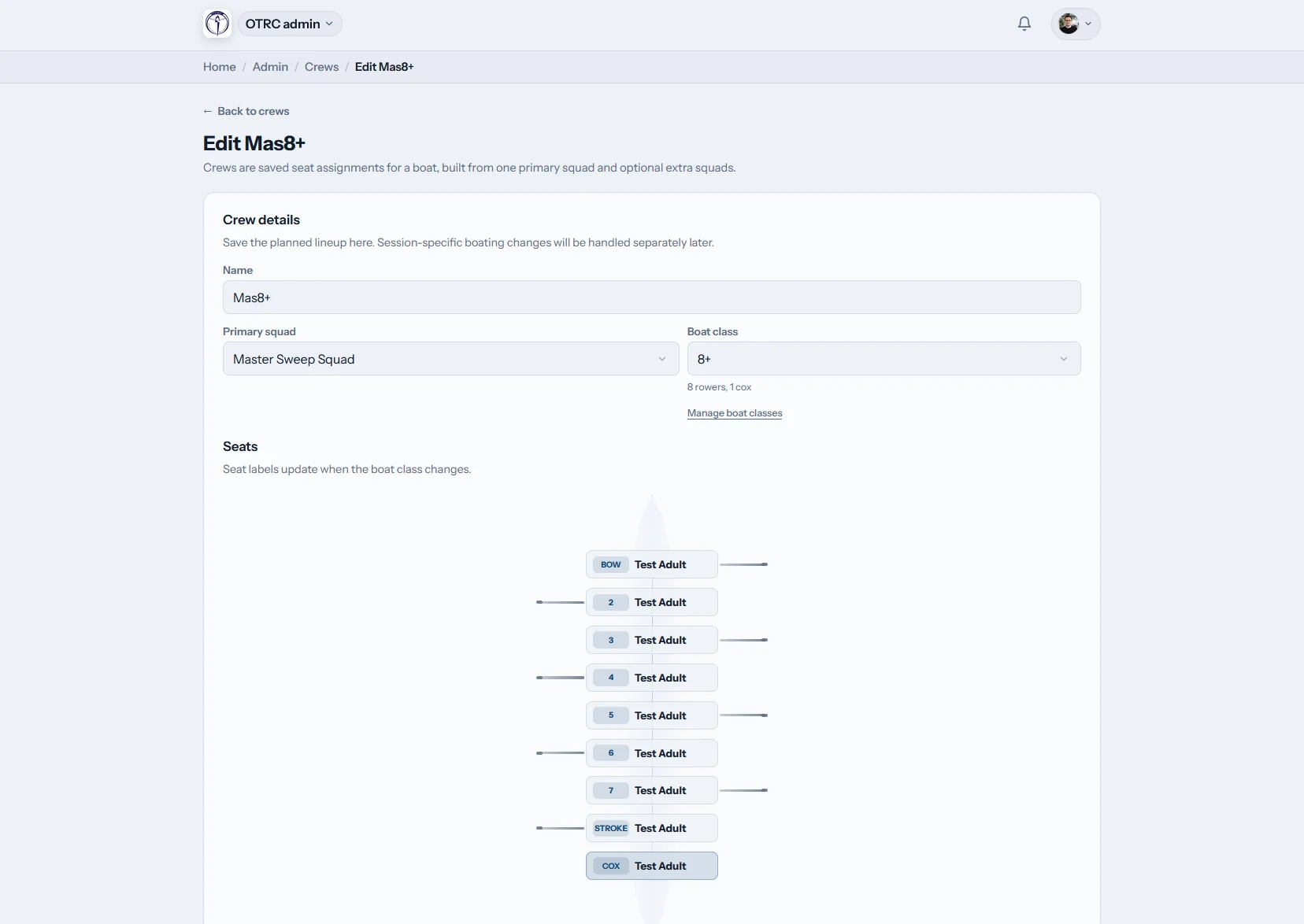
Precise Seat Assignments
Every seat matters in rowing. Row HQ lets you assign specific seat positions - bow, stroke, engine room - with member preferences and capabilities clearly visible. Track who can cox, who prefers stroke side, and who's working on developing their bow-side technique.
Tips for Effective Crew Selection
Tools speed crew selection up. They do not replace coaching judgement. A few principles that consistently produce lineups that perform:
-
Balance Experience Levels: Mix experienced rowers with developing athletes. Strong mentorship within a boat accelerates learning and builds team cohesion.
-
Plan Around Availability Patterns: Some members consistently can't make Tuesday evenings; others are weekend warriors. Build your core crews around consistent attendees. Attendance tracking makes these patterns visible.
-
Use Historical Data: Track which combinations have worked well over time. Row HQ stores your crew history, making it easy to identify patterns and successful pairings. Combining this with ergo metrics gives you an even clearer picture.
-
Consider Physical Compatibility: Similar heights in the middle of the boat, strong rhythm-setters at stroke, reliable steady hands at bow. These fundamentals still matter.
-
Communicate Selections Clearly: Row HQ automatically notifies members of their crew assignments, eliminating the "I didn't know I was in that boat" confusion.
Some rowers will never ever get how hard it is for coaches to make that selection, how much stress it causes you. You really are trying to do the right thing, you're not trying to do someone over.
The Benefits of Digital Crew Management
What changes when you go digital
Less time spent piecing together crews each week
Availability is visible upfront, reducing last-minute scrambles
Every crew combination is recorded and searchable
Beyond the time saved, digital crew management changes how coaches make selection decisions:
- Time Reclaimed: Spend less time on admin and more time doing what you love - coaching athletes and improving performance.
- Better Communication: Automatic notifications keep everyone informed. No more miscommunication about who's in which boat.
- Historical Intelligence: Build on past successes with complete records of every crew combination you've tried.
- Faster Adaptations: When plans change, reorganise crews in seconds, not minutes.
The typical feedback from coaches is that Sunday evening crew planning, which used to take an hour or more, now takes about 15 minutes. When someone drops out, the system shows who's available to fill in straight away. See what coaches at Oundle Town Rowing Club had to say about it, and use our free erg pace calculator when crunching individual splits during selection.
Putting It All Together
Crew selection is more than filling seats. It is building combinations that let athletes grow, compete and enjoy their time on the water. What I have seen actually work at clubs that get this right is the same thing every time: do the thinking the night before with the data in front of you, post the lineup in writing, and let the conversations happen after, not in the boathouse with everyone watching. Get the admin out of the way and you can focus on the coaching that actually moves the boat.
The principles stay the same at any club size: know your athletes, track what works, communicate clearly, and keep learning from your own selections. Check our pricing page for a plan that fits your club, or the FAQ for questions.
Key Takeaways
- Manual crew selection methods waste valuable coaching time and increase the risk of errors
- Drag-and-drop interfaces and saved setups dramatically speed up the selection process
- Balance experience levels and plan around consistent availability patterns
- Historical data helps identify successful combinations for future events
- Clear, automated communication eliminates confusion about assignments
- Ready to see it for yourself? Get started with Row HQ today
Sources & references
- Crew selection in rowing (coach interviews: Jamie Leighton, Rob Dauncey, Tom Mapp, Beth Rodford) — British Rowing Plus (accessed May 17, 2026)
- British Rowing PT Testing Protocols (November 2022) — British Rowing
- Relationship between 2000-m rowing ergometer performance times and World Rowing Championships rankings in elite-standard rowers (Mikulic et al., 2009) — Journal of Sports Sciences
- Physiological responses to ergometer and on-water incremental rowing tests (Vogler, Rice and Gore, 2010) — International Journal of Sports Physiology and Performance
- The Evaluation of Physical Performance in Rowing Ergometer: A Systematic Review (2025) — Journal of Functional Morphology and Kinesiology (MDPI)
- British Rowing - Coach Education and Resources — British Rowing
- USRowing - Coach Education — USRowing
- Row HQ coach tools (lineup builder, ergo tracking, saved crew cards) — Row HQ
- Row HQ training sessions feature (attendance, availability, scheduling) — Row HQ
- Row HQ member portal (athlete self-service availability and preferences) — Row HQ
Happy coaching!
- The Row HQ Team