The honest answer in 30 seconds
Get availability confirmed before you touch the spreadsheet. Build from a shortlist, not from the whole squad. Anchor this week on last week's working lineup. Treat the 2k erg as one data point - it correlates with on-water finishing position at roughly r 0.72 to 0.78 in international sculling (Mikulic et al. 2009) - and back it up with seat racing on the Lee or at Inniscarra and on-water time trials. Send the lineup in writing the night before, never on the slip with the squad standing around. Everything below shows how to wire that workflow together so Sunday-night planning at an Irish club takes fifteen minutes instead of two hours.
The Art of Crew Selection
Strong crews come from a mix of trial data and coaching judgement. Here's how to use both to build lineups faster and with more conviction.
Selection is the most politically charged call any rowing club ever makes, and the one that consumes the most coach time. I have sat on both sides of it - as a university and masters rower waiting to hear whether I had made the lineup, and now watching coaches at Irish clubs absorb the heat for the tough calls. At places like Commercial RC, Garda RC, Neptune RC or the Skibbereen senior squad, the inputs pile up fast: erg scores from the Concept2 logbook, availability buried in three WhatsApp groups, seat racing notes scribbled on the launch deck, the question of which J18 has earned a step up. Coaches end up burning hours on admin that should be spent in the launch. Row HQ's coach tools were built to fix that. Here is how to compress the routine without sacrificing the quality of the decision.
How do coaches pick rowing crews fast?
Lock availability before opening anything else. Score each rower on the two or three attributes that matter for the session. Build crews from a shortlist rather than re-evaluating the whole squad from scratch every week. An Irish coach with current availability data and last week's notes can have lineups locked in fifteen minutes rather than another evening of WhatsApp ping-pong.
The Challenges Coaches Face
Building a crew means holding availability, technical level, physical compatibility and interpersonal chemistry in the same head at the same time. Most coaches do that from memory, scattered notes on a phone and whatever messages have come in since the last outing. The failure modes are predictable.
Manual Tracking Chaos
Availability sits in a WhatsApp thread. Erg scores live in a spreadsheet on the captain's laptop. Last week's lineup is a photo on the senior coach's phone. None of it sits in one place, and any piece can go stale overnight. There is a better workflow than the spreadsheet routine.
Availability Nightmares
Chasing availability from twenty-plus rowers before every outing - by text, at the boathouse, in a group chat - eats time even when people respond promptly. A last-minute dropout on a Saturday morning at Inniscarra, on the Lee or up at Lough Erne means reshuffling boats with ten minutes on the clock. A member portal where rowers manage their own status changes the dynamic completely.
Memory Overload
Carrying the full picture in your head - which pairings work, who had a fall-out last month, who is three weeks back from a rib injury, which J18 has been pushing for the stroke seat at Trinity Colours Race trials - is a real cognitive load that compounds across a long Irish season.
Every hour on these tasks is an hour not spent coaching, not spent planning the next block of sessions, not spent simply being present at the club. The scheduling angle on this is unpacked further in our guide to running training sessions efficiently.
How does Row HQ help with crew selection?
Row HQ's crew assignment tool pulls confirmed availability, recent erg scores and saved lineups into one drag-and-drop view. Instead of rebuilding from a spreadsheet or scrolling a WhatsApp backlog, coaches construct the boat from a filtered shortlist, see which combinations rowed together last week, and push the lineup to the squad in a single tap - triggering immediate notifications to every member in the crew.
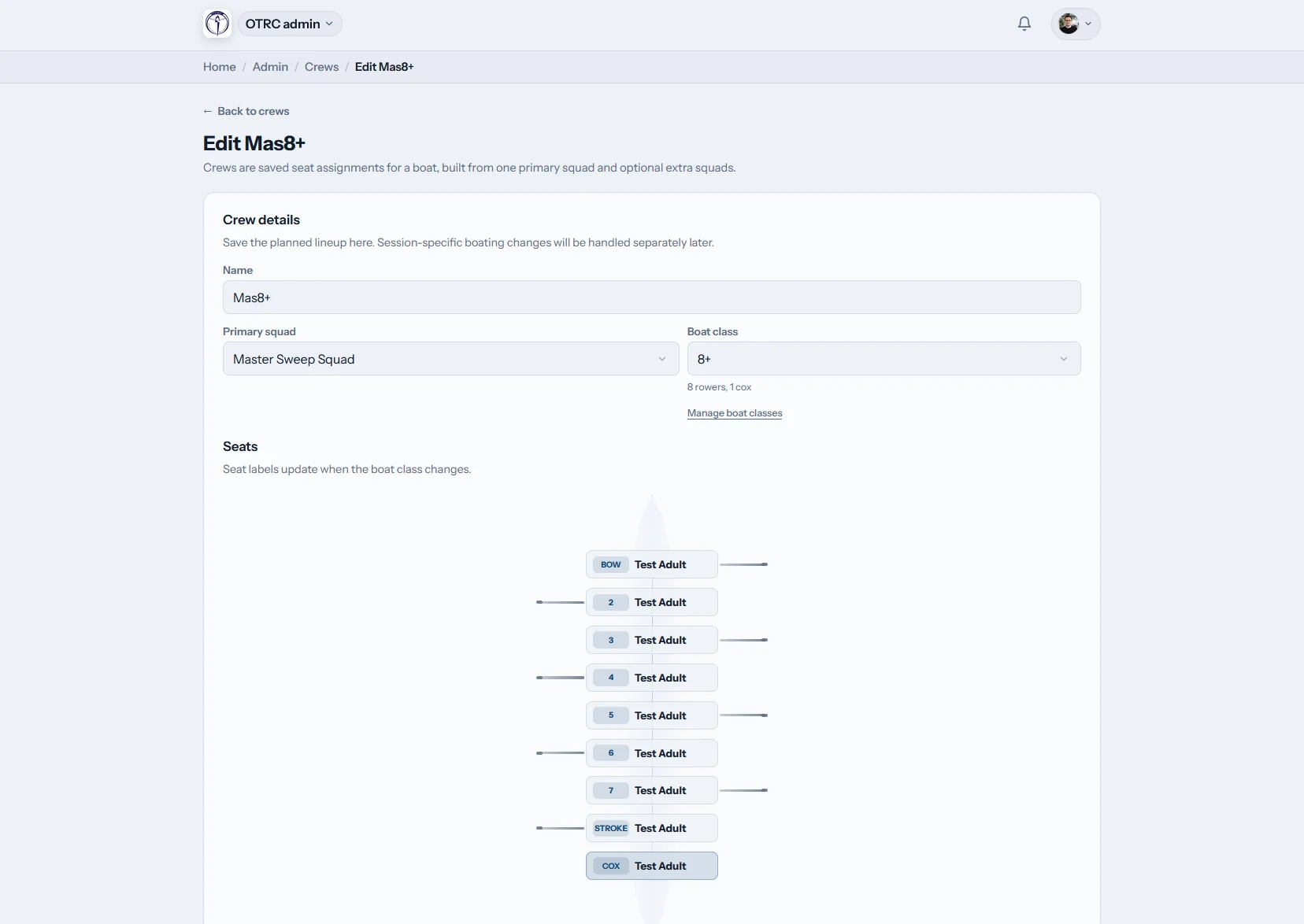
Drag-and-Drop Simplicity
Seat a rower by dragging the name into the position. Availability status is on the name - green confirmed, amber tentative, greyed out for unavailable - so the cross-referencing stops and the "are you coming Saturday?" messages stop alongside it. Have a look at the interface in the screenshot gallery.
Saved Crew Setups
Found a combination that clicks? Save it. Row HQ stores crew configurations and recalls them in a click the following week. Useful for the senior eight you are building toward Irish Champs at Inniscarra, and equally useful for the development quad you are slowly assembling across the season. Coaches at UCD and at Skibbereen use the same pattern for their J16 development boats - reuse the lineup that worked, change only what needs changing.
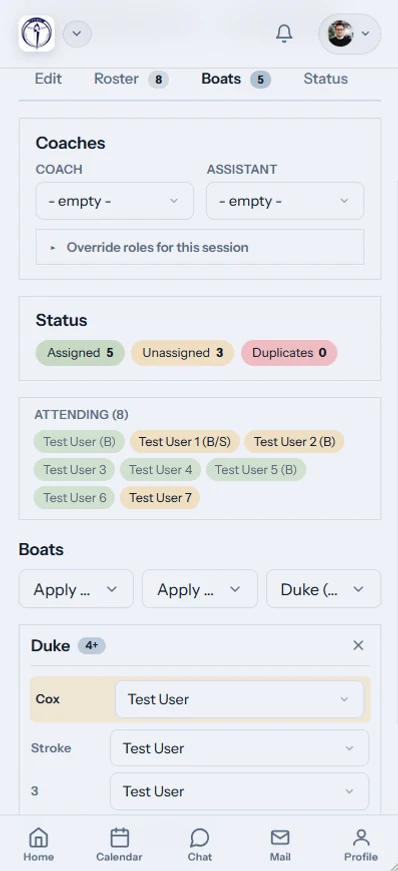
Precise Seat Assignments
Every seat carries weight. Row HQ lets you assign each rower to a specific spot - bow, stroke, engine room - with member preferences and capabilities visible on screen as you build. Track who is certified to cox, who prefers stroke side, who has been working on their bow-side catch through the winter erg block.
Tips for Effective Crew Selection
Software removes the friction. Coaching judgement fills the seats. A few principles that consistently produce boats that move at Irish club and university level:
-
Balance Experience Levels: Seat an experienced rower next to a developer wherever the boat allows. A composed senior holding rhythm through a chop on the Lee or down the Shannon teaches more in one water session than a month of slip-side drills. The Skibbereen senior squad has been running this pattern with their Junior 18s for decades, and the medal record speaks for itself.
-
Plan Around Availability Patterns: Some members reliably miss Tuesday evenings. Others are weekend-only. Build the stable combinations around the people who show up consistently. Attendance tracking across a full season makes the patterns impossible to ignore.
-
Use Historical Data: If a pairing rowed well two months back before a Castleconnell training block, it deserves another look before the next comparable outing. Row HQ stores crew history so the patterns surface without anyone having to reconstruct them from memory. Add erg metrics and the picture sharpens considerably - particularly when seat-racing decisions are tight.
-
Consider Physical Compatibility: Heights matched through the middle of the boat. A reliable composed rhythm-setter at stroke. Experienced hands at bow. These structural principles have not shifted and they apply equally at a Garda RC masters eight on the Liffey and a NUIG senior four at Lough Allen.
-
Communicate Selections Clearly: Row HQ pushes lineup notifications to every member of the crew the moment you publish. The "I didn't know I was in that boat" call on Saturday morning stops.
Some rowers will never ever get how hard it is for coaches to make that selection, how much stress it causes you. You really are trying to do the right thing, you're not trying to do someone over.
The Benefits of Digital Crew Management
What changes when you go digital
Less time spent piecing together crews each week
Availability is visible upfront, reducing last-minute scrambles
Every crew combination is recorded and searchable
The time recovered is what coaches notice first. The second-order effect is how the quality of the decision itself changes:
- Time Reclaimed: Planning shifts from a Sunday-evening slog to a focused fifteen-minute review. The recovered time funnels back into technique work, session design and one-to-one conversations with rowers.
- Better Communication: Lineups push out as automatic notifications the second they are published. No misread message, no member who missed the group chat, no morning-of phone call.
- Historical Intelligence: Every combination tried gets recorded. When Irish Champs at Inniscarra is around the corner and you want to reconstruct what worked at the last comparable regatta, the data is sitting right there.
- Faster Adaptations: A late withdrawal reshuffles in seconds. The coach edits the boat in the app, notifications go out immediately to everyone affected.
What coaches feed back most consistently is that Sunday-night planning - which used to swallow an hour or more cross-referencing messages and notes - now wraps in fifteen minutes flat. A last-minute dropout surfaces who is available to step in without a single extra message being sent. Read what coaches at Oundle Town Rowing Club took from the switch, and pull our free erg pace calculator when working through individual splits in seat-racing decisions.
Putting It All Together
Selection is not seat-filling. It is building an environment where rowers improve, race well at Inniscarra and around the country, and want to come back for another season. Every Irish club that gets this right operates from the same foundation: the thinking happens privately the night before with real data in front of the coach, the lineup goes out in writing, and any follow-up conversations happen quietly afterwards - never negotiated on the slip with the entire squad standing around. Pull the admin bottleneck out and the coaching quality that was buried under it becomes visible.
The principles hold at every club size, from a small recreational programme on Lough Allen to a competitive senior squad in Cork, Limerick or Dublin: know your members, record what works, communicate the call cleanly, keep refining. See our pricing page for the plan that fits your club, or the FAQ for anything else.
Key Takeaways
- Chasing availability manually and building lineups from memory burns coaching time that should be spent in the launch
- Drag-and-drop crew building and saved configurations compress Sunday-night planning from an hour to fifteen minutes
- Seat experienced and developing rowers together; anchor this week's lineup in what worked last week
- Crew history surfaces the combinations worth revisiting ahead of major regattas like Irish Champs at Inniscarra
- Publishing in one tap with automatic notifications removes the Saturday-morning confusion about who is in which boat
- Ready to cut the selection grind? Get started with Row HQ today
From the RowHQ shop
Printable PDFs written for club rowers. Buy once, keep forever.
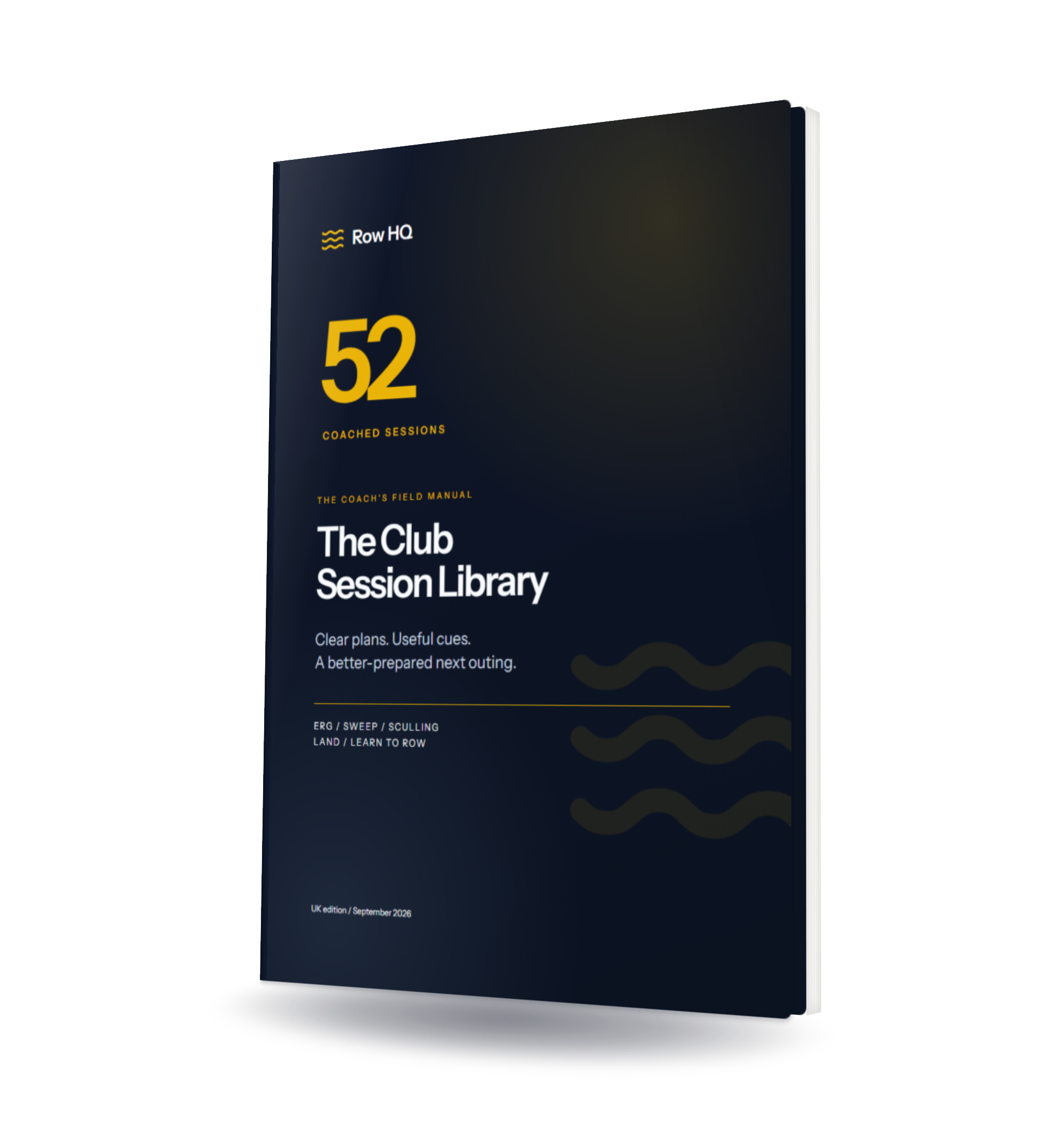
The Club Session Library
52 rowing sessions for club coaches, with an illustrated coaching PDF, editable CSV plans, two seasonal blocks and a printable coaching cheat sheet.
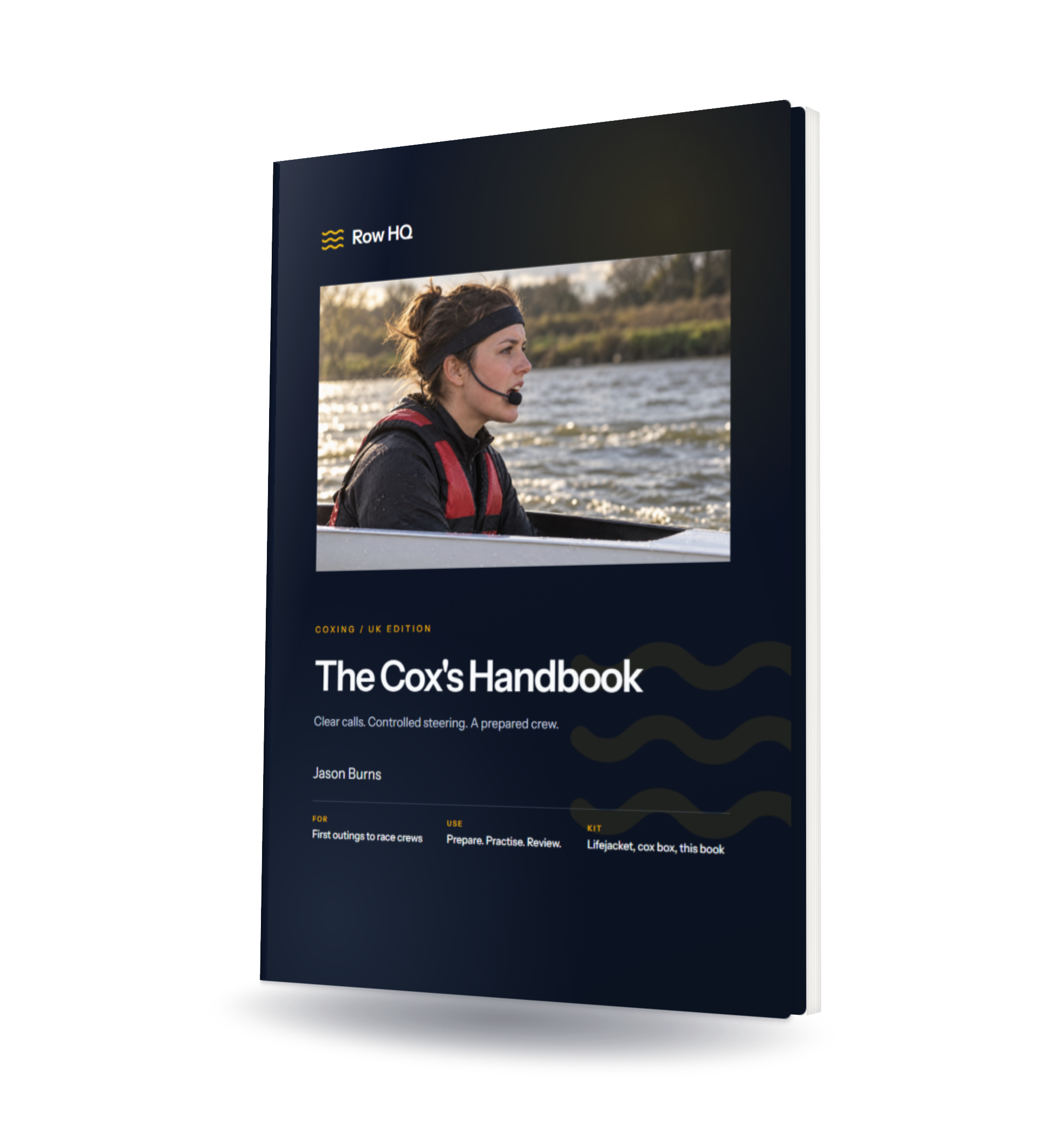
The Cox's Handbook
Practical calls, steering, session drills and race plans for new and improving coxes. Includes five printable worksheets.
Sources & references
- Crew selection in rowing (coach interviews: Jamie Leighton, Rob Dauncey, Tom Mapp, Beth Rodford) — British Rowing Plus (accessed May 17, 2026)
- British Rowing PT Testing Protocols (November 2022) — British Rowing
- Relationship between 2000-m rowing ergometer performance times and World Rowing Championships rankings in elite-standard rowers (Mikulic et al., 2009) — Journal of Sports Sciences
- Physiological responses to ergometer and on-water incremental rowing tests (Vogler, Rice and Gore, 2010) — International Journal of Sports Physiology and Performance
- The Evaluation of Physical Performance in Rowing Ergometer: A Systematic Review (2025) — Journal of Functional Morphology and Kinesiology (MDPI)
- Rowing Ireland - Coaching and Athlete Development — Rowing Ireland
- USRowing - Coach Education — USRowing
- Row HQ coach tools (lineup builder, ergo tracking, saved crew cards) — Row HQ
- Row HQ training sessions feature (attendance, availability, scheduling) — Row HQ
- Row HQ member portal (member self-service availability and preferences) — Row HQ
Good luck on the water.
- The Row HQ Team