Short answer
Aussie crew selection runs on three legs: a current 2k ergo trial under a published protocol, a 1500m or 2k on-water time piece in a known boat class, and matched seat racing in fours. The ergo correlates with finishing position at r ~ 0.72-0.78 in international sculling (Mikulic et al., 2009) but it does not pick the seat on its own. Stack the three data sets, build the boat from a shortlist, write the rationale doc, and publish the M8+, W8+ or Schoolboy / Schoolgirl 8 the night before. Never in the shed with parents and old boys watching the whiteboard.
The Craft of Aussie Crew Selection
Good crews come from three data sets plus instinct. Here is how to stitch ergo, time pieces and matched seat racing into a 1st VIII or senior club lineup that holds.
Picking the crew is the most political call a rowing programme makes and the one that eats the most coach time. I have been on both sides of it. Waited in the boatshed as a uni and masters rower to see whether the lineup had my name on it, and now watch captains and rowing masters take the heat for the tough seats. The political pressure spikes at GPS schools where parents and old boys care deeply about 1st VIII selection, but the workflow problem is identical at MUBC, Sydney Uni and Mosman senior squads. Ergo trial sheets, on-water time pieces, matched seat race deltas, half-remembered notes about who rows clean together. Aussie coaches burn hours on admin that should belong to coaching. Row HQ's coach toolkit exists to fix that. Here is how to compress senior, schoolboy and schoolgirl crew selection without cutting corners.
The three-leg selection sequence
Aussie crew selection is not one data point. It is three. A current 2k ergometer trial under a published protocol (state institute or AIRC), a 1500m or 2k on-water time piece in a known boat class (typically a coxed four), and matched seat racing in pairs of fours where two athletes swap mid-trial and boat speed is measured before and after. Run the sequence across two to three weeks. Score each rower on each leg. Build the shortlist. The 1st VIII writes itself off the shortlist in fifteen minutes instead of an evening of WhatsApp.
Where the time goes
Selection in Aussie programmes asks a coach to juggle availability, ergo scores, side preference, technique, seat-racing deltas and physical compatibility all at once. Most do it from memory, scattered notes, and last-minute swaps. These are the common drains across club and school programmes.
Manual Tracking, Three Coaches Three Versions
Spreadsheets, paper rosters, WhatsApp threads scattered across phones. Concept2 ergo logs, side preferences, seat race deltas and squad notes drift out of sync between the rowing master, the first assistant and the strength coach. A single source of truth that replaces the spreadsheet kills this in week one.
Term-Time Availability Drift
Chasing availability via text or WhatsApp across exam blocks (HSC, VCE, IB) and athletes balancing other school sports. A 5am cancellation craters a crew. Athletes self-serving availability via a member portal means the coach reads the live board instead of writing it.
Mental Load Across Boats
Holding it all in your head: which combinations rowed clean last weekend, who has a clash, who is back from a shoulder niggle, which Year 9 development rowers are nearly ready to step up to the 2nd VIII. A heavy load across an M8+, W8+, multiple seconds boats, a development quad and a learn-to-row group.
All of which eats time that belongs to coaching. Technique work, progression planning, just being present pontoon-side with the squad. Walk through the scheduling angle in our guide to streamlining training sessions.
How Row HQ stitches it together
The crew assignment view pulls confirmed availability, recent ergo scores, on-water time piece results and matched seat race deltas plus previous M8+, W8+, Schoolboy 8 and Schoolgirl 8 lineups into one drag-and-drop board. Coaches build the boat off the shortlist instead of retyping names off a spreadsheet, see which combinations rowed clean last weekend, and push the lineup out via one notification so the squad reads it in their pocket within seconds.
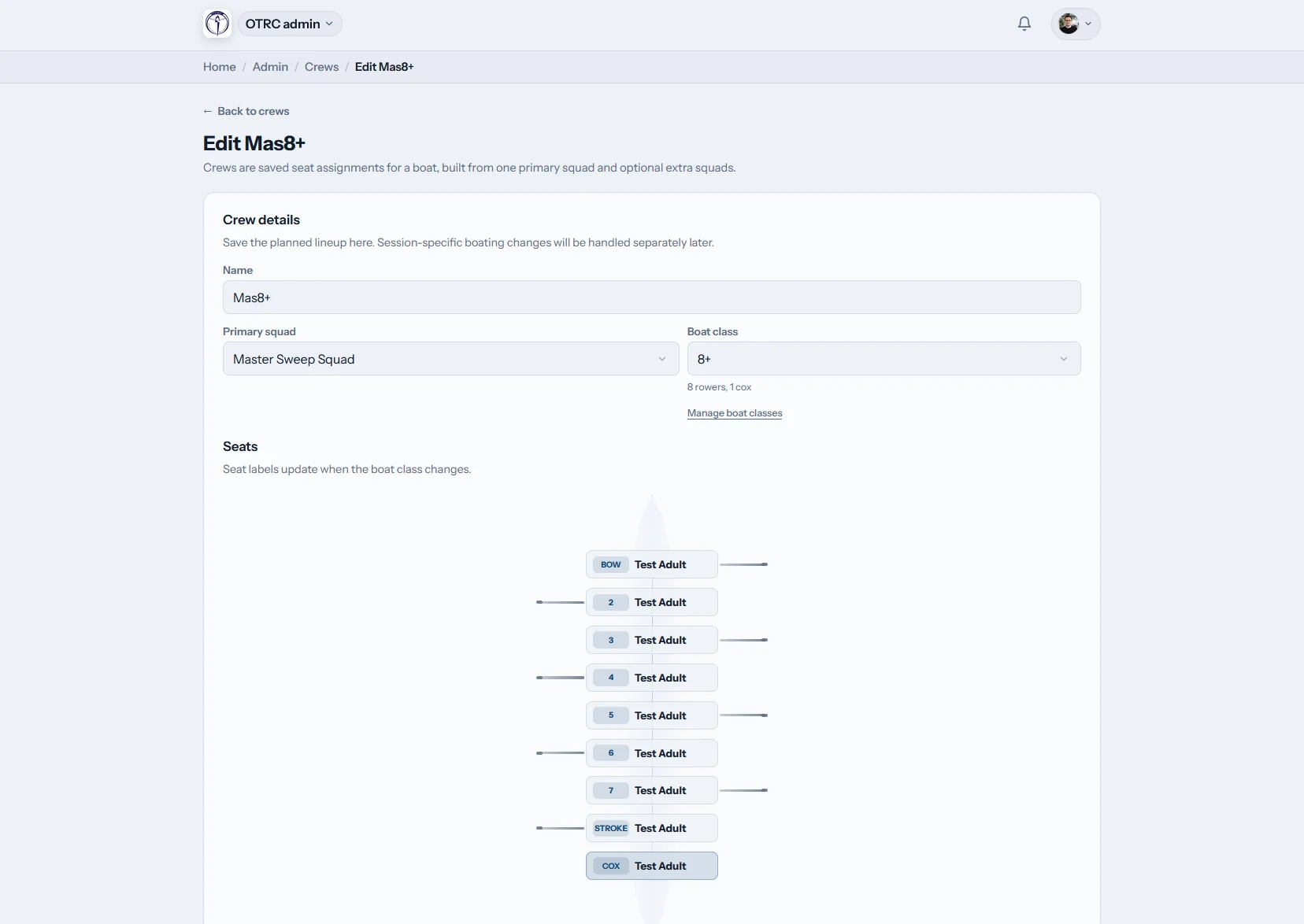
Drag, Drop, Done
Build the boat by dragging rowers into seat positions. Availability shows on every name (green available, amber tentative, unavailable greyed out). No cross-referencing lists, no "are you in?" messages bouncing around the squad chat. Walk through the screenshot gallery to see the workflow in action.
Lineups That Compound Week on Week
Found a combination that rowed well? Save it. Row HQ stores crew configurations and recalls them in one tap for the next session. Useful for the 1st VIII heading toward the Australian Schools Championships, the Head of the Yarra or AIRC, just as useful for the development eight slowly building toward King's Cup contention or the Australian Boat Race squad shortlist.
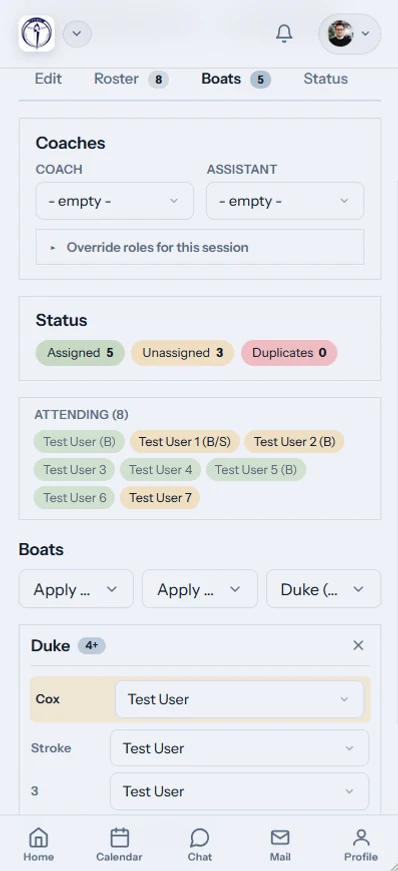
Seat-Specific, Not Just Boat-Level
Every seat carries a different brief. Row HQ lets the coach assign bow, stroke, engine room and middle pair explicitly with member preferences and capabilities visible alongside. Track who can cox, who prefers stroke side, who is still developing the bow-side feel they need before stepping into the senior squad.
What holds up across schools and clubs
Tools speed selection up. They do not replace coaching judgement. A handful of principles that produce M8+, W8+, Schoolboy 8 and Schoolgirl 8 lineups that perform consistently:
-
Run Senior with Developing Athletes Where the Boat Allows: Mix senior rowers with developing athletes where the lineup permits. Strong mentorship in the boat accelerates the Year 8 to 1st VIII pipeline at GPS schools and builds chemistry across the programme.
-
Plan Around Term-Time Availability Patterns: Some athletes never make Tuesday evening; others lock in every weekend. Build the senior crews around the consistent attendees, especially through HSC, VCE and IB exam weeks and inter-school commitments. Attendance tracking exposes these patterns in week one.
-
Compound on the History You Already Have: Track which combinations have rowed clean across past sessions. Row HQ stores crew history alongside ergo progressions, which matters most when picking King's Cup or Australian Schools lineups. Layer this with ergo metrics for the sharpest picture.
-
Physical Compatibility Still Matters: Similar heights in the engine room, strong rhythm-setters at stroke, reliable steady hands at bow. The fundamentals matter as much as raw 2k ergo time. A boat full of fast ergos that sit eight different lengths is slow.
-
Publish in Writing the Night Before: Row HQ pushes crew assignments to athletes via notification automatically. Kills the "did not see the WhatsApp" confusion the morning of the session.
Some rowers will never ever get how hard it is for coaches to make that selection, how much stress it causes you. You really are trying to do the right thing, you're not trying to do someone over.
What changes once the data lives in one place
What an Aussie programme notices after switching
Less time spent piecing together M8+, W8+, Schoolboy 8 and Schoolgirl 8 each week
Live availability cuts the last-minute pontoon scramble
Every crew combination logged next to ergo and seat race progression
Beyond the time saved, the workflow shift changes how Aussie coaches actually make selection calls:
- Coaching Hours Returned: Less time on admin, more time on technique work and progression planning ahead of regattas and head races.
- Cleaner Squad Comms: The lineup lands in the app for every athlete at once. No more WhatsApp confusion about who is in which boat by 5am Saturday.
- A Decision Trail You Can Defend: Build on every previous lineup with a complete record. Selection conversations with parents get short when the rationale lives next to the seat.
- Reshuffle on the Fly: Plans change. Reorganise crews in seconds, not minutes, when the heat policy triggers or an athlete pulls out.
The pattern Aussie coaches keep reporting: Sunday-evening planning that used to eat an hour drops to about fifteen minutes once the workflow is wired up. When a rower drops out, the system shows who slots in straight away, even mid-week if an ergo trial reshapes the picture ahead of King's Cup or Head of the Yarra selection. Use the free ergo pace tool when crunching individual splits during trials.
Putting It Together
Picking the boat is more than filling seats. It is stitching combinations that let athletes grow, compete and stay in the sport. The pattern at clubs and schools that get this right looks the same every time. Do the thinking the night before with the ergo trial sheet, the on-water time piece splits and the seat race deltas in front of you. Post the boat in writing in the app so everyone sees it at once. Let the conversations happen after, never in the boatshed with rowers, parents and old boys watching. Get the admin out of the way and the coaching window opens.
The principles stay the same whether the programme runs a single 1st VIII or twelve squads across a federation school. Know the athletes, track what holds up, communicate cleanly, learn from past selections. Check our pricing for a plan sized to your club or school, or the FAQ for the usual questions.
Takeaways for the rowing master
- Manual tracking burns coaching hours and produces selection decisions that are hard to defend at the parent committee meeting
- Drag-and-drop boards plus saved crew cards collapse 1st VIII selection from a Sunday afternoon into fifteen minutes
- Run the three-leg sequence: ergo trial, on-water time piece, matched seat racing. Stack the data, build off the shortlist
- Compound across weeks. The 1st VIII that rowed clean last weekend is not a fresh selection problem this weekend
- Push lineups in writing the night before. Never live in the shed during a session with parents and old boys watching
- Ready to see it in action? Get started with Row HQ today
From the RowHQ shop
Printable PDFs written for club rowers. Buy once, keep forever.
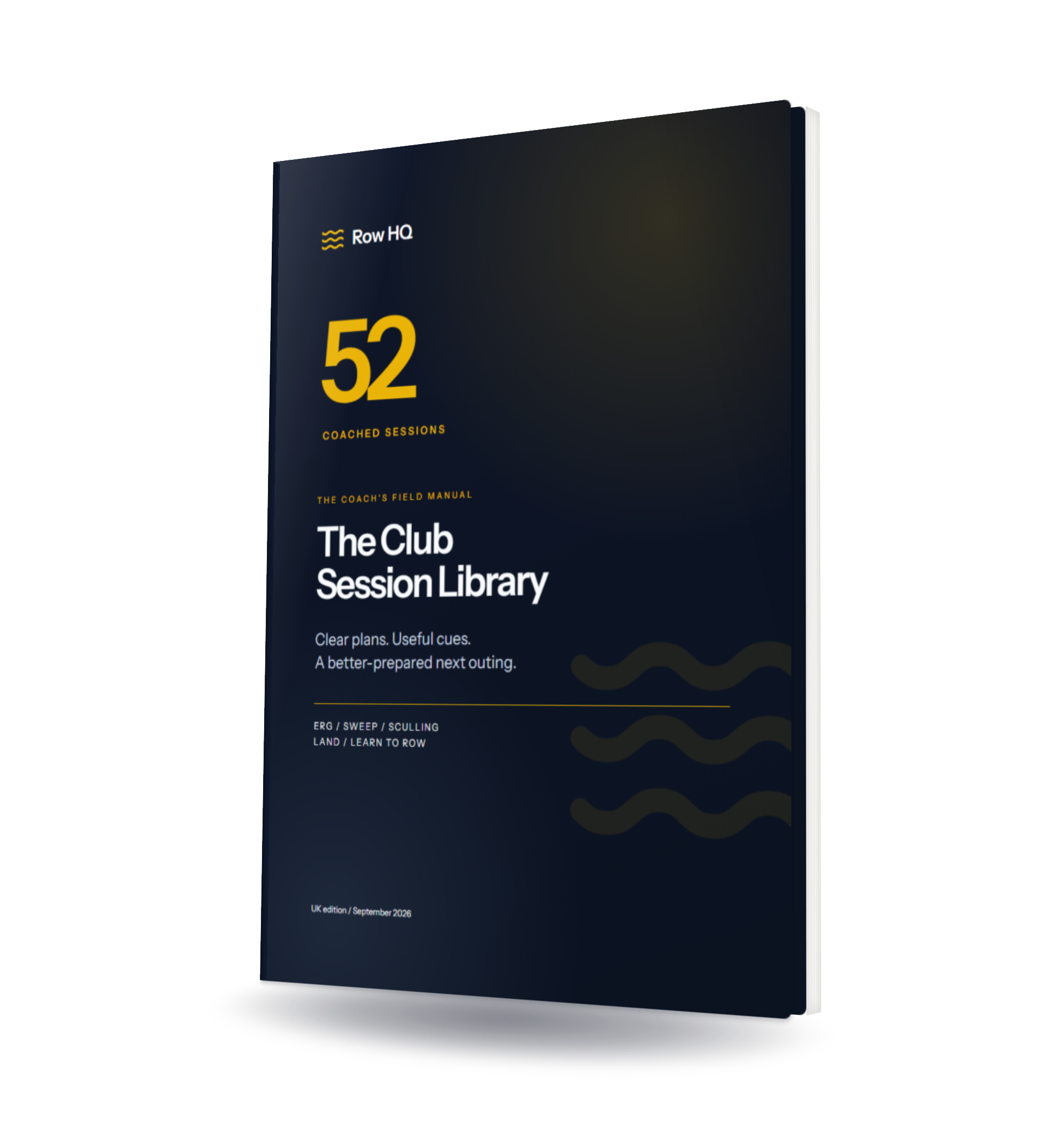
The Club Session Library
52 rowing sessions for club coaches, with an illustrated coaching PDF, editable CSV plans, two seasonal blocks and a printable coaching cheat sheet.
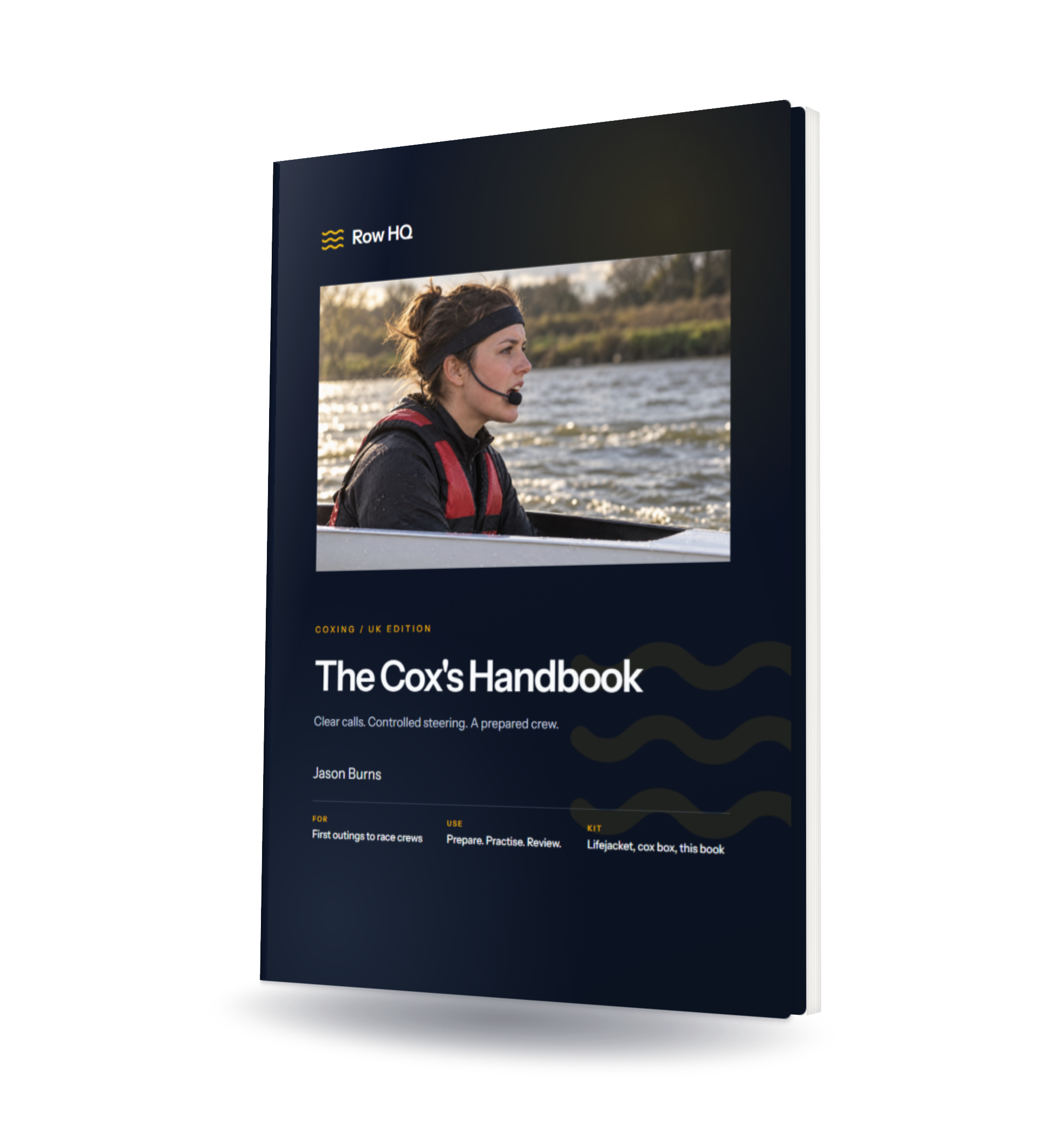
The Cox's Handbook
Practical calls, steering, session drills and race plans for new and improving coxes. Includes five printable worksheets.
Sources & references
- Crew selection in rowing (coach interviews: Jamie Leighton, Rob Dauncey, Tom Mapp, Beth Rodford) — British Rowing Plus (accessed May 17, 2026)
- Relationship between 2000-m rowing ergometer performance times and World Rowing Championships rankings in elite-standard rowers (Mikulic et al., 2009) — Journal of Sports Sciences
- Physiological responses to ergometer and on-water incremental rowing tests (Vogler, Rice and Gore, 2010) — International Journal of Sports Physiology and Performance
- The Evaluation of Physical Performance in Rowing Ergometer: A Systematic Review (2025) — Journal of Functional Morphology and Kinesiology (MDPI)
- Rowing Australia - high performance and pathways — Rowing Australia
- Rowing Australia - Australian Rowing Championships — Rowing Australia
- Head of the Yarra Regatta - official site — Mercantile Rowing Club / Head of the Yarra
- British Rowing PT Testing Protocols (Concept2 erg testing standard adopted by AU clubs) — British Rowing
- Row HQ coach tools (lineup builder, ergo tracking, saved crew cards) — Row HQ
- Row HQ training sessions feature (attendance, availability, scheduling) — Row HQ
- Row HQ member portal (athlete self-service availability and preferences) — Row HQ
Good coaching to you,
- The Row HQ Team