Ergometer
Every boathouse in Canada has a row of them along one wall. Concept2 RowErgs - the indoor rowing machines that translate each stroke into watts, splits and metres on the PM5 screen up front. When freeze-up locks the lake from November through April, the erg is not a complement to on-water work. It is the work. OUA programmes run their selection trials on it, CSSRA athletes benchmark to it before Brentwood, and the Canadian Indoor Rowing Championships exist because of it.
What is an Ergometer?
An ergometer (erg) is an indoor rowing machine that measures the mechanical work a rower produces stroke by stroke. In Canadian rowing the machine is almost always the Concept2 RowErg, an air-resistance flywheel design that has been the standard for university, club and Rowing Canada Aviron national-team testing since the mid-1980s. The PM5 monitor on the front of the machine reports 500m split, watts, calories per hour, distance, elapsed time and stroke rate, and logs each session to the Concept2 Logbook for athletes and coaches.
Also called: Erg, Rowing Ergometer, Indoor Rower, Rowing Machine
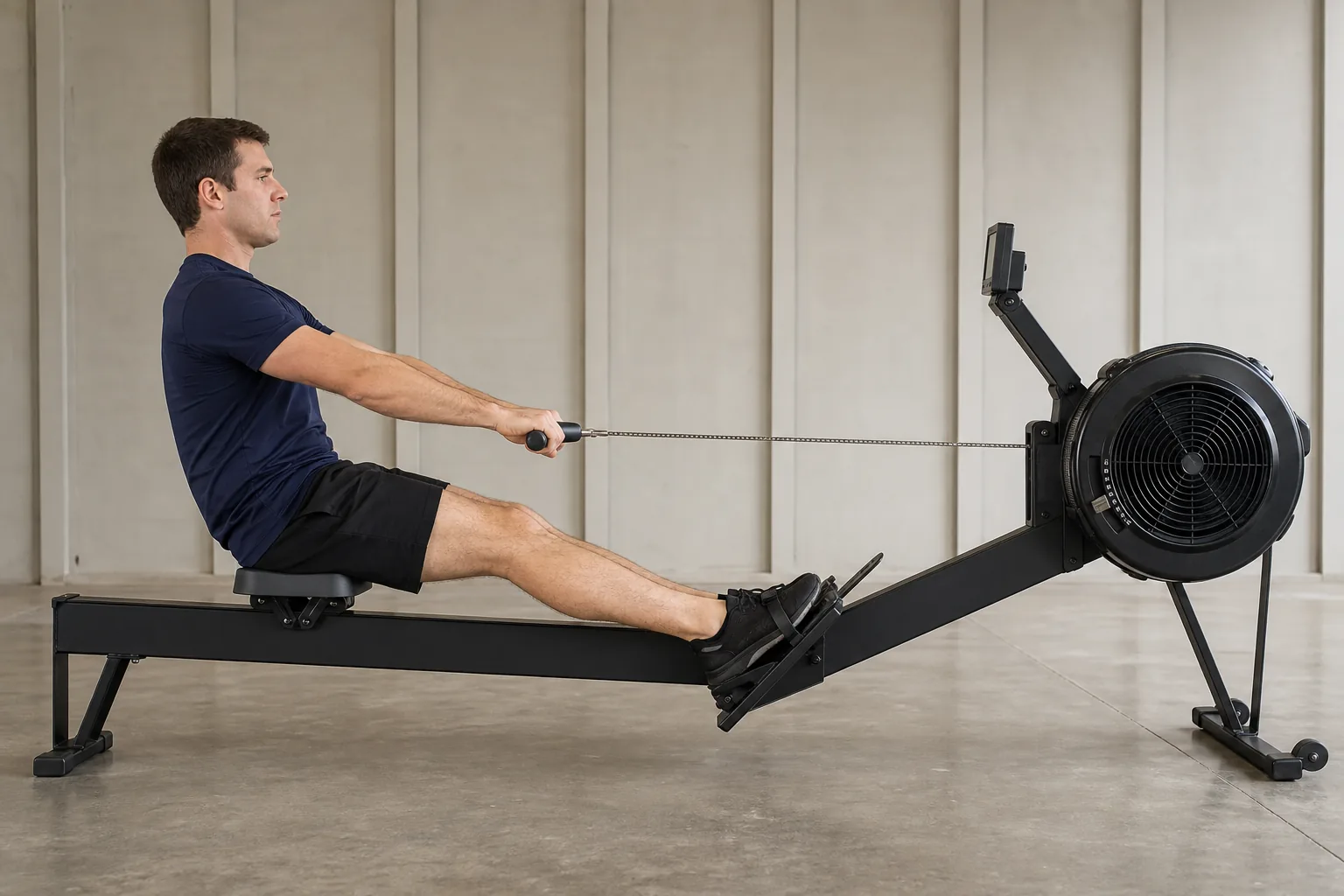
Ergometer, erg, indoor rower: same thing
Three names cover one piece of equipment. The technical one is "ergometer", borrowed from Greek ergon (work) and used in coach education through the NCCP, in sports science journals, and in the Rowing Canada Aviron testing manual. The casual one is "erg" - what anyone who has rowed in a Canadian boathouse actually says: "60 minutes on the erg," "her 2k erg is 6:48," "the ergs are booked solid at five." The fitness-industry name is "indoor rower" or "rowing machine", which is how it appears on a Costco price tag. All three refer to the same kit: a sliding seat on a rail, a footplate with adjustable straps, a chain-mounted handle, and a flywheel that resists the pull.
How an ergometer works
Each stroke pulls the chain, which spins the flywheel. The flywheel resists through air (Concept2), water (WaterRower), magnets (Hydrow), or some blend of the three. Sensors inside the housing time how quickly the flywheel decelerates between strokes, run the work-done calculation, and convert the answer into metres rowed. Everything the PM5 displays - split, watts, calories, distance - falls out of that single deceleration measurement happening hundreds of times per second.
On a Concept2, the lever on the side of the flywheel cage is the damper. It runs from 1 (light, snappy acceleration) to 10 (heavy, slow acceleration) and changes how each stroke feels. It does not change the score. The number that actually matters for performance is drag factor, calculated by the monitor under More Options and adjusted automatically for damper position and the air density in the room. Most Canadian boathouses run cold and dry through winter, which pulls drag factor higher at the same damper setting than a humid summer afternoon would. Use the erg pace calculator to convert any 500m split into watts, calories per hour and projected race times.
The Concept2 standard
The Concept2 RowErg (previously sold as Model D and Model E) has dominated Canadian rowing since the mid-1980s. It is the machine used at the World Rowing Indoor Championships, the Canadian Indoor Rowing Championships (CIRC), every Rowing Canada Aviron and provincial selection trial, and at every U Sports varsity programme from McGill to UBC. What gives it that position is design longevity. The flywheel, chain, monorail, handle, footplate and damper have stayed essentially identical for decades, and the calibration is consistent enough that a 2k score from 2008 compares cleanly against a 2k score from 2026. That continuity is why coaches can compare a fresher across years and why university recruiters can read a high-school score from anywhere in Canada without asking for context.
WaterRower, Hydrow, NordicTrack and Echelon build machines for the home fitness market. None of them calibrate to the Concept2 standard. A 2k personal best on a WaterRower is not directly comparable to a 2k on a RowErg, and Canadian club coaches, OUA selection panels and Rowing Canada Aviron testing administrators will only accept Concept2 scores when it counts. If you want a score that travels, the machine has to be a Concept2.
What the readouts mean
- 500m split: the time the monitor projects to cover the next 500 metres at the current rate of work. A 1:45 split means the next half-kilometre would land in 1 minute 45 seconds. This is the primary pacing metric in Canadian rowing and the number coaches write on the whiteboard.
- Watts: instantaneous power output. The Concept2 formula is watts = 2.80 / (split_seconds / 500)^3. A 1:45 split produces roughly 268 watts; a 1:30 split produces roughly 425 watts. The cubic term is what makes the climb hurt.
- Calories per hour: approximately watts x 4 plus 300 for basal metabolism. Useful as a session-to-session training-load proxy. Not a dietitian-grade fuelling figure.
- Stroke rate: strokes per minute. UT2 (low aerobic) sits at 18 to 20, UT1 at 20 to 24, anaerobic threshold at 26 to 28, race pace climbs from 32 to 38.
- Distance: metres of work calculated from flywheel deceleration. Not literal distance. The machine is not moving.
How Canadian rowing clubs use ergometers
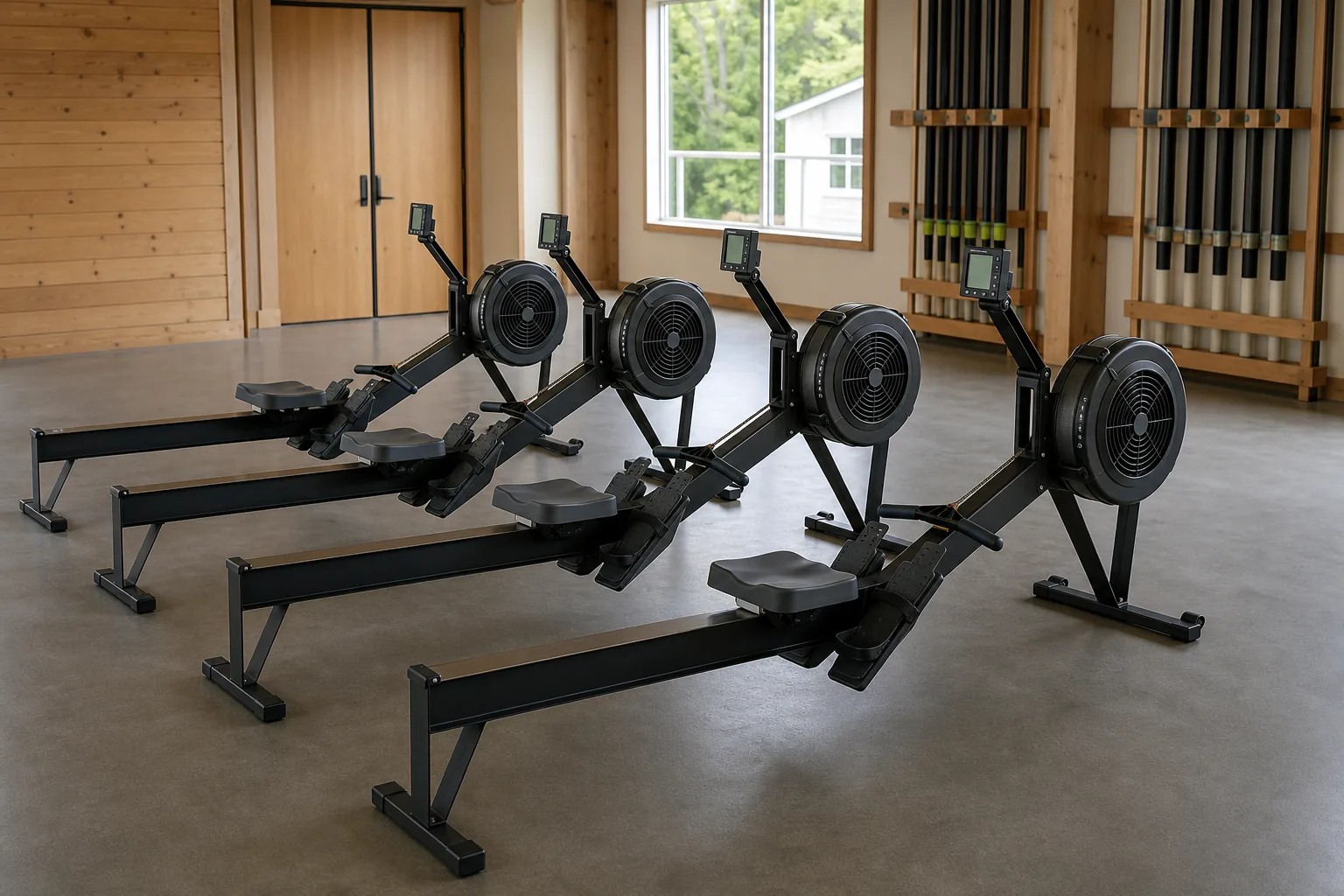
Canadian clubs lean on the erg harder than clubs in milder climates because the calendar forces it. Across Ontario and Quebec the river is unrowable from late November through early April. In the prairies the season is shorter still. Even on the south coast of Vancouver Island, where Elk Lake and the Gorge stay open through most of the winter, ergs carry the morning trials. So the erg is not a winter substitute - it is the platform that holds the OUA fall trial block, the winter Royal Canadian Henley build, and the spring sprint preparation together. It gives coaches a controlled environment for the standard fitness tests (2k, 5k, 6k, 30 minute, 60 minute), and it feeds crew selection alongside seat-racing and on-water timed pieces.
Erg scores belong in the squad management system next to on-water data, body weight, attendance and injury notes. Recording every test against the right athlete, plotting the trajectory across a season, and comparing against age-adjusted and weight-adjusted standards is what makes selection decisions defensible when a 1st VIII seat comes down to two athletes. Row HQ's coach tools hold erg scores against each rower's profile so coaches can see who is climbing fastest going into CSSRA week or Royal Canadian Henley.
Erg testing protocols
Standard ergometer test pieces used across Canadian competitive rowing:
- 2,000m (2k): the headline fitness test, matching the Olympic race distance. Maximum effort. Elite men land between 5:40 and 6:00; elite women between 6:30 and 7:00; competitive OUA and CSSRA 1st VIII rowers between 6:15 and 6:45.
- 5,000m (5k): aerobic capacity test. 17 to 19 minutes for competitive senior men, 19 to 21 minutes for senior women, longer for juniors and masters.
- 30 minutes: distance covered at sustained anaerobic threshold pace. Standard winter benchmark for tracking aerobic base across the long Canadian off-season.
- 60 minutes: the long aerobic test, typically rowed at UT1 or UT2 pace. Common in November and December training blocks at university programmes.
- 4 x 2,000m or 8 x 500m intervals: race-specific power and recovery testing. The 8 x 500m piece is the standard sharpening session in the final weeks before a 2k trial.
Each test gets logged with the rower's body weight on the day (lighter rowers carry a power-to-weight disadvantage that the World Rowing weight-adjusted formula corrects) and the drag factor used. Without the drag factor and weight in the record, a score is hard to compare against itself.
Indoor rowing as a sport in its own right
Indoor rowing has grown into a discipline of its own, no longer just a training tool for on-water athletes. The C.R.A.S.H.-B Sprints in Boston (running since 1982) is the original international indoor 2k championship and Canadian crews travel south for it every February. The Canadian Indoor Rowing Championships (CIRC), the World Rowing Indoor Championships, and Concept2's annual online challenges - Holiday Challenge in December, Fall Team Challenge, the Million Metre badge - fill the calendar with events that need no water and no boat. CrossFit gyms and commercial fitness clubs across Canada run their own erg leagues, pulling in participants who would never set foot in a boathouse.
Ergometer FAQs
Is an ergometer the same as a rowing machine?
Yes. In Canadian rowing, 'ergometer' (or the shorter 'erg') is the technical and the everyday term for what most commercial gyms label a rowing machine. The two words refer to the same equipment. Competitive rowers use 'erg' almost without exception. The wider fitness market uses 'rowing machine'. The dominant make at every Canadian rowing club, every U Sports varsity programme, and every Rowing Canada Aviron testing centre is the Concept2 RowErg, and has been since the mid-1980s. It is also the machine used at every world championship indoor rowing event.
What does an ergometer measure?
It measures the mechanical work done on each stroke and converts that into a set of readouts on the monitor: 500m split (the projected pace for the next half-kilometre at the current rate of work), watts (instantaneous power output), calories per hour, distance covered, elapsed time and stroke rate. Concept2 ties split to power through the formula watts = 2.80 / (split_seconds / 500)^3. The calorie figure is approximately watts x 4 plus 300 for basal metabolism. Every reading on the PM5 falls out of timing how fast the flywheel decelerates between strokes, and the whole session writes itself to the Concept2 Logbook automatically.
What is a good 2k erg time?
For senior men at a competitive Canadian club, sub-7:00 (1:45 split or quicker) is the working target, with sub-6:30 (1:37 split) indicating national-level fitness. For senior women, sub-8:00 (2:00 split) is the working target and sub-7:15 (1:48 split) is the national-level mark. U19 athletes typically aim for 6:30 to 7:00 (boys) and 7:30 to 8:00 (girls). OUA and CSSRA 1st VIII athletes usually sit between 6:15 and 6:45 by championship week. Masters rowers should always run the raw score through the Concept2 age-grading tables before drawing comparisons against the open figures. Use the erg pace calculator to convert any 2k time into its equivalent split, watts and projected longer-distance times.
How does the erg measure distance without moving?
The flywheel does the work. Each stroke pulls the chain, the chain spins the flywheel, and the flywheel meets resistance from air drawn in through the cage. Sensors inside the housing time how quickly the flywheel slows down between strokes. From that single measurement the monitor calculates the work done per stroke and converts it into 'metres rowed', expressed as if the rower were propelling a boat. The drag factor lets the monitor compensate for damper position and the air density in the room, which is how a January session in a cold Toronto boathouse compares fairly against an August session in a humid Halifax shed. The metres displayed are not literal distance - they are a standardised unit of work output dressed up in metres.
What damper setting should I use on an erg?
Most Canadian rowers train at damper 3 to 5 on a Concept2, not 10. The damper changes how the stroke feels (5 feels like a heavier boat, 1 feels like a fast racing single) but has no direct effect on the score. The number that actually governs the work done is drag factor, displayed under More Options on the PM5. Lightweight men typically aim for drag factor 110 to 130. Heavyweight men sit at 130 to 150. Lightweight women run 105 to 120 and heavyweight women 120 to 135. World Indoor Rowing Championships events are generally rowed at drag factors below 130. Pick a drag factor and stick to it across the season so scores compare cleanly to one another.
Can ergometer scores predict on-water speed?
Yes, with caveats. The erg measures raw power output in a controlled, weather-free environment. On-water speed is power plus technique plus boat balance plus crew timing plus water conditions plus steering. A faster erg score does generally indicate a faster rower in the boat, but the relationship is not one-to-one. Rowing Canada Aviron selection panels and OUA coaches use erg numbers as one input alongside seat-racing, on-water timed pieces and direct coach assessment. Watch for rowers who post strong erg scores but cannot transfer the power to the boat - and watch equally for rowers who underperform on the erg but rise to the top in seat-racing on Henley Island.
Related
What is a Regatta?
A regatta is the sprint format of competitive rowing. Six lanes, a buoyed 2,000m course, all crews launched off the line...
The Coxswain
The coxswain is the non-rowing crew member who sits in a coxed shell to steer, call rate and direct race strategy. The c...
What is a Scull?
A scull is one of a matched pair of short rowing oars. A sculler holds two of them - one in each hand. That one fact sep...
Stroke Rate Explained
Stroke rate is the rating a crew holds, measured in strokes per minute. Canadian rating bands run from 18 spm on a UT2 w...
From the RowHQ shop
Printable PDFs written for club rowers. Buy once, keep forever.

Learn-to-Row Starter Plan
A free 6-week introduction plan for brand-new rowers - on the water and on the erg.
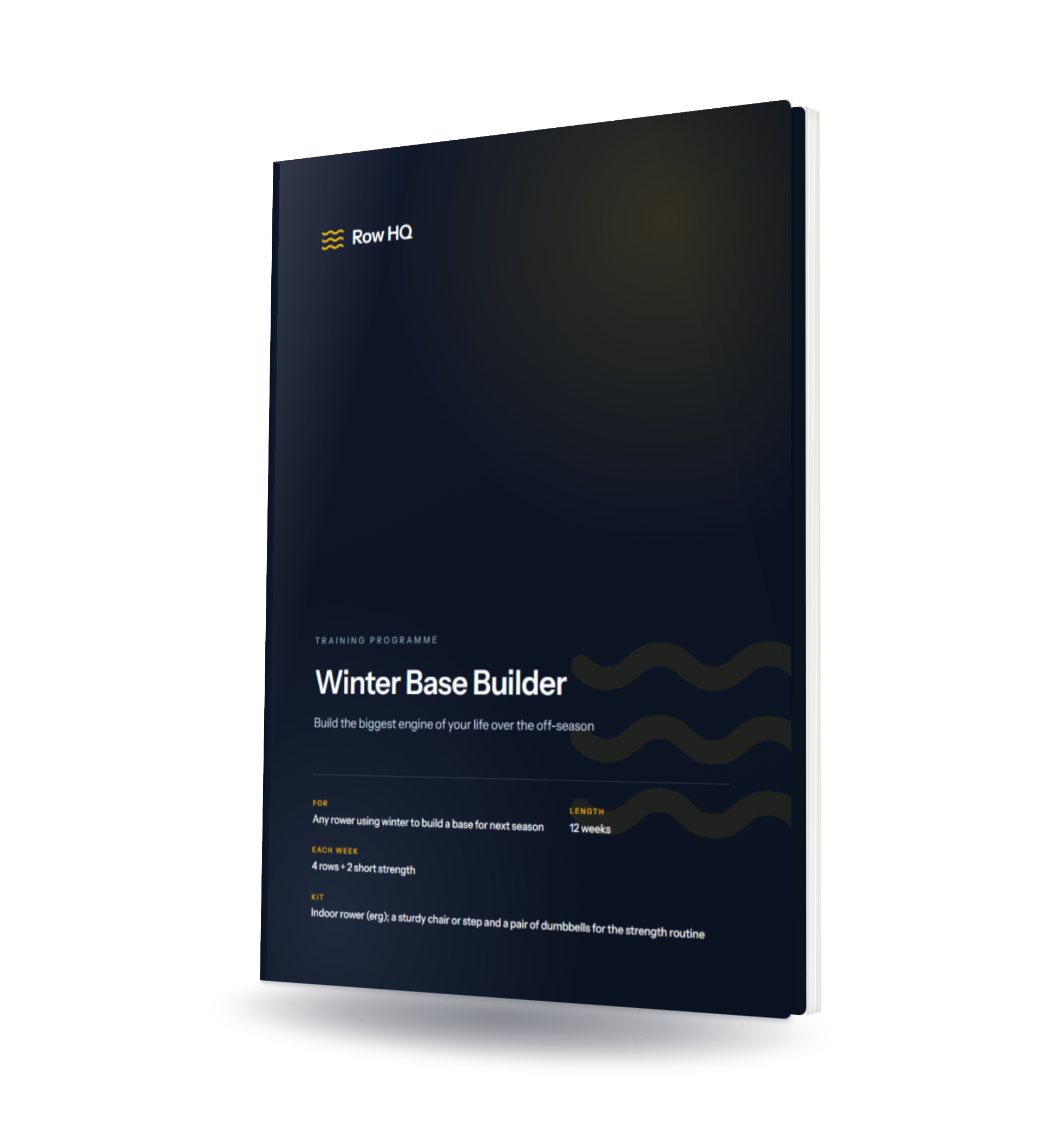
Winter Base Builder
Build the biggest engine of your life over the off-season - 12 weeks of mostly-easy volume plus a strength routine, so you arrive at spring fast.
Keep learning
Winter erg work produces months of scores that need context. rowing club management software keeps each test with the athlete record so coaches can track progress. Continue with the rowing glossary for the terms Canadian rowers use through the season.
Track every erg score in one place.
Row HQ logs erg tests against every rower's profile, plots fitness trajectory across the season, and feeds the data into crew selection. Built by rowers, used at Oundle Town Rowing Club.