Stroke Rate
Stroke rate is the cadence of strokes per minute a crew rows. Anywhere from 18 on a long base paddle on Lough Ree to 44 in a sprint finish through the Inniscarra timing tower. Rate is not the same thing as boat speed, but it shapes it.
Stroke Rate: Strokes Per Minute Cadence
Stroke rate is the cadence at which a crew or sculler takes strokes, measured in strokes per minute (spm). It is displayed live on cox boxes, PM5 ergometer monitors and GPS units like the NK SpeedCoach. Rate is a separate question from boat speed, which is governed by distance per stroke and force per stroke. A patient long boat at 28 spm can outrun a frantic short boat at 36 spm. Typical Irish ranges run from 18 spm on a UT2 paddle on Lough Ree up to 44 spm on a sprint finish through the Inniscarra timing tower.
Also called: Rate, SPM, Stroke Rating, Cadence
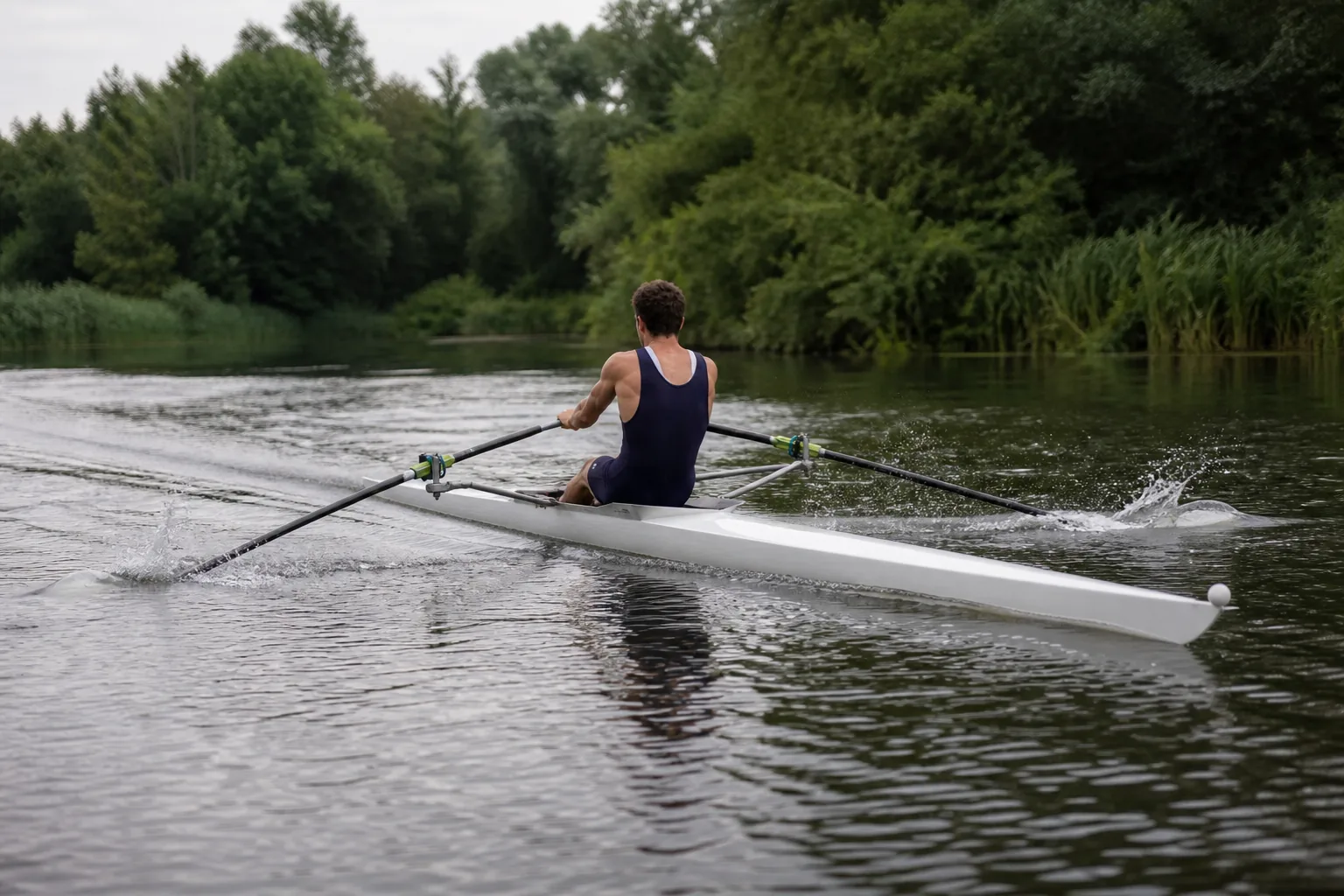
Definition and units
Stroke rate is measured in strokes per minute, written spm. One stroke is one full cycle: catch, drive, finish, recovery. A crew rating 32 spm takes 32 complete strokes every 60 seconds, which works out at one stroke every 1.875 seconds.
Modern displays show rate to one decimal place, because at race pace a tenth of a stroke per minute can be the difference between holding rhythm and slipping off the rate. Cox boxes, PM5 monitors and GPS units all read out live and update the figure every few strokes.
How rate gets measured on the water
The classic setup in any coxed boat is a magnetic reed switch on the stroke seat's slide. Every time the seat reaches the catch position, the magnet triggers the switch, and the cox box converts the gap between triggers into a strokes-per-minute figure. NK CoxBox units are the dominant fit in Irish boathouses, followed by Coxmate GPS at junior and masters level.
On a Concept2 ergometer the PM5 monitor derives rate from the chain-pull cycle. The monitor times each drive and recovery and reports a live spm figure alongside split, watts and the cumulative kcal/hr estimate. Erg-test rate is one of the standard data points every Rowing Ireland squad day collects.
On a sculling boat with no slide sensor, a NK SpeedCoach GPS or a Coxmate GPS unit will derive rate from the boat's own velocity trace. The hull surges forward on each drive and decelerates slightly on each recovery, and the GPS picks out the surge cycle as individual strokes. Works cleanly on flat water at Inniscarra or Lough Allen, less cleanly in heavy chop on the Lee in February.
Typical rates across an Irish training week
Standard rate bands across an Irish senior club or university programme:
- UT2 (steady state): 18-22 spm. The base aerobic work that fills most of a winter at NUIG or UCC.
- UT1 (firm aerobic): 22-26 spm. Quality aerobic work pushing into the lactate threshold zone.
- AT (anaerobic threshold): 26-30 spm. Threshold pieces and sustained race-pace work through January and February.
- Head-race pace: 28-32 spm. The settled rate for Castleconnell, Cork Head, Erne Head and the rest of the autumn head-race calendar.
- Inniscarra race pace: 36-40 spm. The middle-race rate for senior crews at the Irish Championships.
- Start and sprint: 40-44 spm. The opening 20 strokes off a standing start and the final 250m push to the line.
Junior and most club crews race a stroke or two lower than the senior international ranges above. Use the training pace calculator and the Concept2 erg pace calculator to translate target splits into rates and watts.
Drive-recovery ratio and why it shifts
Each stroke has two phases. The drive is the propulsive half with the spoon locked in the water. The recovery is the return half with the blade flat above the surface. The ratio between them shifts as the rate climbs.
At a 20-rate UT2 paddle the recovery is about three times the length of the drive. A 1:3 ratio. The hull glides freely between strokes. At a 38-rate A-final the recovery has collapsed to roughly the same length as the drive. A 1:1 ratio. Above 40 the recovery is barely longer than the drive at all. The mark of a fast crew anywhere from Skibbereen to Queen's University Belfast is the ability to keep the recovery feeling deliberate even when the rate is up at race pace. Coaches at every Irish senior programme spend more time on this than on the drive itself.
Why higher rate is not the same as faster boat
Boat speed and stroke rate are linked through distance per stroke. DPS equals boat speed divided by rate. A crew can build boat speed by rowing the same rate but applying more force per stroke (longer arc, sharper catch, harder leg drive), or by lifting the rate while holding force per stroke constant. The first approach is almost always the more durable one for distance racing.
Above a crew-specific ceiling, more rate slows the boat down. The recovery becomes too short for a complete leg drive, force per stroke falls faster than rate rises, and DPS collapses. Rate-ladder pieces are how every Irish coach finds the ceiling: row five minutes at 20, then 22, then 24, then 26, all the way up the range, recording split or boat speed at each step. The rate where boat speed peaks and starts to fall is the practical race-rate ceiling for that crew.
Rate ladders and rate-locked sessions
Rate ladders are a staple of every Irish winter programme: five minutes at 18 spm, then five at 20, then five at 22, then five at 24, all the way through to race pace. The crew builds tolerance for each rate band and the coach builds a picture of where boat speed peaks. Rate-locked pieces (four times one kilometre, all at exactly 32 spm, off three minutes rest) train the crew to hold a target under fatigue across the full distance.
The cox enforces the rate from the cox box during each piece, and the stroke seat sets the rhythm the rest of the crew follows. Crew lineup and session planning tools let the coach pre-load rate targets per piece so the cox arrives at the boathouse with the plan in front of them instead of a half-remembered whiteboard scribble from yesterday.
Stroke rate FAQs
What is a typical rowing stroke rate?
Steady-state UT2 paddles run at 18-22 spm, UT1 work at 22-26 spm, anaerobic threshold sets at 26-30 spm, head-race pace (Erne Head, Castleconnell, Cork Head) at 28-32 spm, Inniscarra A-final race rate at 36-40 spm, and start strokes or a 250m sprint push at 40-44 spm. Senior international eights settle race pace around 38-40 spm and most Irish club eights at Champs settle a stroke or two lower than that.
Stroke rate versus boat speed: what is the difference?
Rate is how often the crew is taking a stroke. Boat speed is how fast the hull is actually moving. They are connected through distance per stroke, which is boat speed divided by rate. Crew A rowing a 30 at 1:42 splits is going slower than Crew B rowing a 26 at 1:40 splits, even though Crew A is rating four higher. Most decent coaches at UCC, UCD, NUIG and Garda RC track distance per stroke alongside the rate during head-race builds for exactly this reason.
What is the drive-recovery ratio?
The proportion of each stroke spent driving the blade through the water versus sliding back to the front stop. At a 20-rate UT2 paddle the recovery takes roughly three times as long as the drive, a 1:3 ratio. At a 38-rate Irish Champs A-final the recovery has shortened to roughly the same length as the drive, a 1:1 ratio. Fast crews keep the recovery feeling patient at race rate. Slow crews collapse the slide back at high rate and their splits go backwards.
How is stroke rate measured?
In a coxed boat a small magnetic sensor on the stroke seat triggers at each catch. The cox box counts triggers and displays spm live. On an ergometer the Concept2 PM5 derives rate from the chain-pull timing. On a sculling boat without a cox box, a NK SpeedCoach or Coxmate GPS picks up rate from the surge pattern in the velocity trace. All three methods are accurate to about a tenth of a stroke per minute, which is more than enough for any rate-locked session out of Inniscarra or Lough Allen.
Does a higher rate always make the boat faster?
No, and this is one of the most counter-intuitive things in rowing. Above a crew-specific ceiling, somewhere around 40 spm for most senior Irish club crews and higher for international-grade lightweights, the recovery becomes too short for a full leg drive on each stroke. The force per stroke falls faster than the rate rises and the boat actually slows down. The job of every coach in the country is to find the rate at which the crew makes the most boat speed and lock to it on race day.
Related
Stroke Seat: Owner of the Boat's Rhythm
In an Olympic final, the camera holds on the stroke seat. That is the rower at the stern setting the cadence the rest of...
The Coxswain: Steering and Race-Calling in the Stern
The coxswain is the person in the stern of an eight or coxed four driving the boat. Rudder lines in each hand, microphon...
The Cox Box: Voice Amp, Rate Counter, GPS Display
A cox box is the electronic unit a cox uses to push voice through the boat speakers, count stroke rate live off a magnet...
The Ergometer: Concept2 in an Irish Boathouse
An ergometer is an indoor rowing machine that measures the power an athlete produces per stroke. The Concept2 RowErg is...
Head Race: The Autumn Time Trial Format
A head race is rowing run as a time trial against the clock. Boats start at 10 to 15 second intervals on a long river or...
Regatta: Sprint Racing on a Multi-Lane Course
A regatta is sprint racing on a buoyed multi-lane course. Crews line up side by side, the starter calls the start, and t...
From the RowHQ shop
Printable PDFs written for club rowers. Buy once, keep forever.
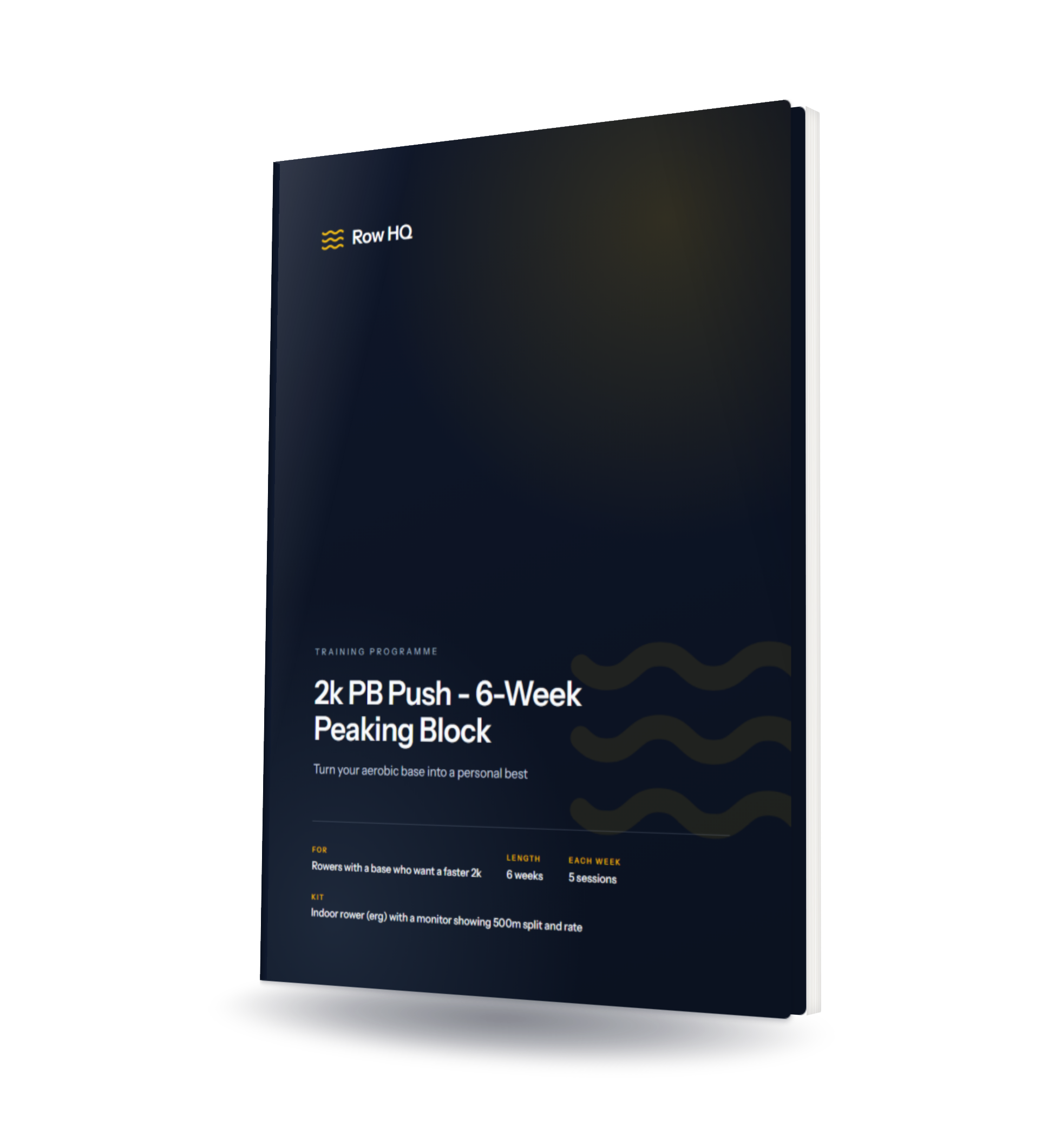
2k PB Push - 6-Week Peaking Block
Six weeks that turn an existing aerobic base into a 2k personal best - race-specific work, a proper taper, every pace scaled to your own time.

The Club Session Library
52 rowing sessions for club coaches, with an illustrated coaching PDF, editable CSV plans, two seasonal blocks and a printable coaching cheat sheet.
Keep learning
A cox should not have to reconstruct a rate ladder from a note left in the boathouse. club management software for rowing clubs keeps every target with the session plan. The rowing glossary explains the technique that makes those numbers useful.
Stop scribbling rate targets on the whiteboard outside the launch shed.
Row HQ session planning lets a coach load rate targets per piece in advance, and the cox sees them in the crew portal before they unrack the boat.