Stroke Seat
Stroke is the rower at the stern of the shell, sitting nearest the coxswain in a coxed boat. Every other rower behind stroke watches that blade and matches it - catch, drive, finish, recovery. In an eight stroke is seat 8, in a four seat 4, and in a pair the stern-side rower. Get stroke right and the crew has a rhythm to hold; get it wrong and the boat never settles.
What is the Stroke Seat?
In rowing, the stroke seat is the stern-most rower, the athlete whose blade every other crew member times off. The whole boat catches, drives and recovers in time with stroke. In an eight that is seat 8; in a four, seat 4; in a coxed or coxless pair, the rower at the stern end of the shell.
Also called: Stroke, Stroke Position, Stern Pair
The role of the stroke seat
Rhythm is the single deliverable. Eight rowers cannot watch each other simultaneously, so they all watch one rower instead - stroke. When stroke is clean and consistent through every part of the stroke cycle, the crew settles in behind and the boat runs. When stroke is hurried or jagged, every rower behind is forced into micro-corrections that bleed boat speed.
The coxswain talks to stroke first. If the call is "in two, take the rate up to 36" coming into the grandstand at Lake Ruataniwha, stroke is the rower who has to find that rate on the very next catch and hold it. Everything else flows from that response. The cox is reading the race; stroke is converting the read into a physical change in the boat.
Take the cox away - in a 4-, a 2- or a single - and stroke inherits the tactics. There is no third party watching the opposition, judging the pace plan or calling moves. Stroke does it all, and rows hard while doing so. Kiwi coaches assembling lineups for the Maadi Cup or Bond Cup typically lock in the stroke seat before any other position, then build the rest of the crew around that rower - crew selection tools in modern club software make it easier to test which engine-room and bow-side combinations work best behind a particular stroke.
How stroke seats are selected
Most NZ coaches settle stroke as the first decision of the selection process, not the last. The criteria worth weighing:
- Technical consistency: a stroke shape and length that does not change from rep to rep, so the rest of the crew has something stable to track.
- Racing composure: a rower who lands rate changes cleanly when a Maadi A-final is on the line, rather than rushing the slide or flinching.
- Rhythm instinct: the feel for what rate this particular crew runs fastest at, which is rarely the rate written on the plan.
- Endurance base: stroke wears slightly more load than the crew on average because the rest of the crew adapts to stroke, not the other way round.
Pure erg score is a poor predictor of who should stroke. The strongest 2k on the squad sheet often belongs in the engine room - 5 or 6 seat - where raw power translates most directly into boat run. Stroke is a rhythm role first and a power role second, which is why a slightly lower erg with cleaner timing can outrace a bigger pull who cannot hold a rate.
The stroke pair
Seats 7 and 8 are the stroke pair in an eight. Stroke writes the rhythm; 7 reads it on the seat directly behind and pushes it back through the boat to the engine room. The two seats are effectively one connected unit - a millisecond gap between their catches is enough to make the boat feel heavy. In a four, seats 3 and 4 are the equivalent unit.
The most famous Kiwi example of two-person synchrony is Bond and Murray in the M2-: undefeated from 2009 through Rio 2016, two Olympic golds, and a partnership built on absolute matching of catch, drive and finish. That is the standard a good stroke pair aims for, scaled across two seats inside a larger crew. NZ club and university programmes - Waikato RPC, Canterbury, North Shore, Otago University - tend to lock their 7-stroke pairing in by April and keep them rowing together right through to NZ Champs and Maadi.
Stroke seat in sweep vs sculling
Sweep crews face a rigging decision at stroke that sculling crews do not. Stroke can rig either bow-side or stroke-side, which then changes the rigging of every seat behind, the cox's steering sightline, and how the load is shared across the boat. Convention in a coxed eight is to rig stroke on stroke-side (the left as you sit facing the stern), but Italian rigging and other patterns turn up at the national level when a crew has unusual side preferences.
Sculling drops the rigging question entirely. Both blades work on each rower, so stroke is just whoever sits nearest the stern. In a double the stern rower naturally takes the role; in a quad the crew nominates a stroke for the season. A Mahe Drysdale single is the pure case - one rower carries every job at once: stroke, engine room, tactician and finisher, all rolled together on one seat.
Famous stroke seats
NZ rowing has produced several of the sport's most decorated strokes. Mahe Drysdale sat at stroke - the only seat - in his M1x for three Olympic cycles, winning gold at London 2012 and again at Rio 2016 and earning a reputation as the most consistent single sculler of his generation. Hamish Bond stroked the unbeaten M2- alongside Eric Murray for seven years, including two Olympic golds and a streak of regatta wins unmatched in modern small-boat rowing. Robbie Manson has stroked NZ M2x and M4x crews and held the M1x world best time for 1x. Stroke is where Rowing NZ tends to seat its most tactically reliable racer in any given lineup.
How stroke seats train differently
A stroke trains the same volume and intensity as the rest of the crew, but with added drills aimed at one thing: hitting a called rate exactly. Training session plans often include rate ladders (18, 20, 22, 24 strokes per minute in sequence, two minutes each) and rate-change pieces where the cox calls "up two" or "down two" and stroke has to land the new number within a single stroke. Race rehearsals from a rolling start at full intensity are core preparation in the weeks before NZ Champs or Maadi - the only way to learn what 36 spm at race pressure actually feels like is to row it.
Cox boxes (NK CoxBox, Coxmate GPS) feed real-time rate to the cox and stroke during every piece. In training, stroke uses that feedback to calibrate: at 32 the seat feels like this, at 34 like that, at 38 the slides are getting short. By race day, when the cox calls a rate at Karapiro or Ruataniwha, stroke can find it on feel alone - the display becomes a confirmation rather than a reference.
Origin of the term
"Stroke" as a noun meant the act of pulling the oar through the water - the work cycle itself. The rower at the stern set that work cycle for everyone behind, so the seat picked up the name. The term travelled with the sport. New Zealand rowing inherited it directly from the English clubs that brought rowing to Wellington Harbour and the Avon in the 1860s, and every NZ club from Whanganui RC down to Otago University RC has used "stroke" for the stern seat ever since.
Stroke seat FAQs
What does the stroke seat do?
Stroke owns two things: the rate and the rhythm. Whatever cadence stroke lands on, the rest of the crew matches it. During a race, stroke is also the first rower to act on a coxswain's call - if the cox calls a power 10 off the start at Lake Karapiro or asks for a half-beat lift through 1,000 metres, stroke executes immediately and the boat follows. In coxless shells, stroke picks up the tactical decisions a cox would normally make.
What is the difference between stroke seat and bow seat?
Two ends of the shell, two completely different jobs. Stroke sits at the stern next to the cox and controls the boat's tempo. Bow sits at the opposite end, the lightest part of the shell, and is the first across the line at the finish. A good bow tends to be a fine technician whose blade work protects the run of the boat; a good stroke is a tactical racer with a metronomic rhythm.
What makes a good stroke seat?
Three qualities matter most: a steady, repeatable stroke that does not drift; nerve under racing pressure; and a feel for the rate the crew is actually running at, not the one the rate monitor says. The best Kiwi strokes - Hamish Bond in the unbeaten M2- with Eric Murray, Mahe Drysdale in his Olympic-winning single - share that profile. At Maadi level, coaches at Hamilton Boys', Saint Kentigern, Christ's College and St Bede's rarely give stroke to the biggest erg pull. They give it to the rower who keeps the boat honest when a Karapiro headwind starts costing two seconds per 500.
What is the stroke pair?
In an eight, seats 7 and 8 ride together as the stroke pair. Stroke lays down the rhythm and 7 picks it up, then transmits it through the engine room (seats 3 through 6). If 7 and stroke are even a hair off each other, the rest of the crew cannot lock in. Fours have an equivalent stroke pair at seats 3 and 4. NZ coaches usually fix this pairing early and leave it untouched all season because shared timing only comes from kilometre after kilometre of rowing together.
Is the stroke seat different in sweep vs sculling?
The job - set the rate, run the rhythm - is identical. What changes is rigging. Sweep crews have to decide whether stroke is rigged bow-side or stroke-side, which alters the cox's steering line and the load through the riggers. Sculling boats have no rigging-side question because both blades work on each rower, so stroke is simply whoever sits closest to the stern. In a Karapiro double the stern rower takes stroke by default; in a quad, the crew formally appoints one.
Related
The Coxswain: Steering, Strategy and the Other Voice in the Boat
A coxswain (cox) is the non-rowing crew member in the stern of a coxed shell who steers, calls the race plan and holds t...
Stroke Rate: The Cadence Number That Doesn't Equal Boat Speed
Stroke rate is the cadence number - strokes per minute (spm). NZ crews run anywhere from 18 spm in winter base work to 4...
What is a Head Race?
A head race is a processional time trial. Crews leave the start every 10 to 15 seconds, race the clock over 4 to 6km of...
What is a Regatta?
A regatta is the side-by-side sprint format of rowing. Crews race in buoyed lanes over 2,000 metres (1,000 metres for ma...
Rowing Boat Types
World Rowing recognises eight standard racing shells, and you will see every one of them on the Karapiro race lane durin...
From the RowHQ shop
Printable PDFs written for club rowers. Buy once, keep forever.
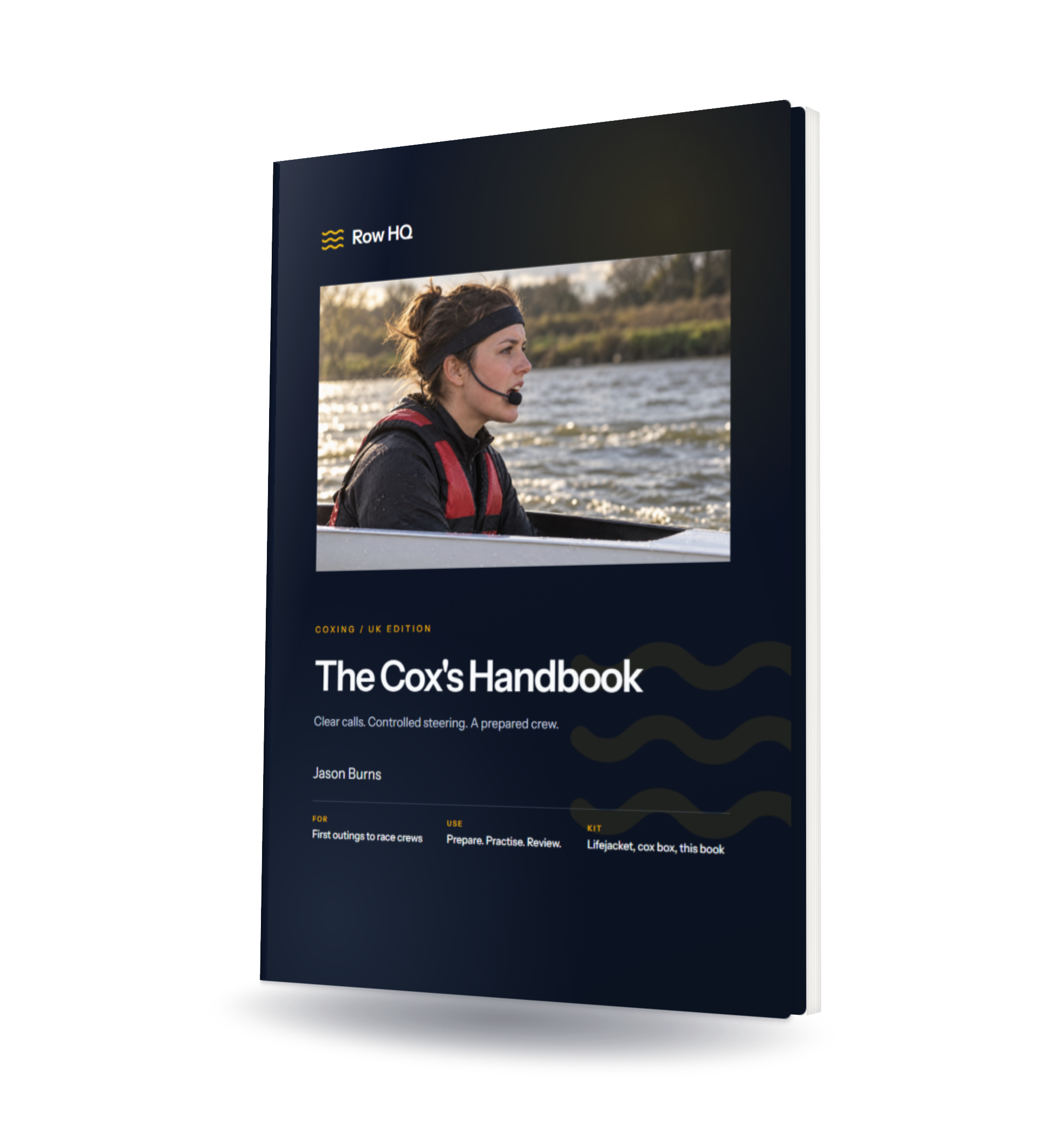
The Cox's Handbook
Practical calls, steering, session drills and race plans for new and improving coxes. Includes five printable worksheets.
The Club Session Library
52 rowing sessions for club coaches, with an illustrated coaching PDF, editable CSV plans, two seasonal blocks and a printable coaching cheat sheet.
Keep learning
A Maadi crew is often built from the stroke seat back. Row HQ gives coaches one record of the lineup and who is available for each outing. Browse the rowing glossary for the language used through the rest of the boat.
Picking a stroke seat is a coach call. Building the crew shouldn't be admin.
Row HQ's coach tools handle crew lineups, rower availability and seat assignments in one view. Built by rowers, for rowing clubs.