Stroke Seat
The stroke seat owns the boat's clock. Sitting at the stern of the shell, this athlete sets the cadence every other rower lifts off. In a coxed VIII it is seat 8, in a coxed IV it is seat 4, in a pair the stern athlete. Whatever rhythm leaves the stroke's blade is what the rest of the crew rows for the next two thousand metres.
Stroke Seat Explained
In rowing, the stroke seat is the rower at the stern-end of the shell who sets the cadence the whole crew follows. The coxswain owns steering and tactics. Stroke owns the clock. Seat 8 in a coxed VIII, seat 4 in a coxed IV, the stern athlete in a pair or sculling boat. Every blade in the crew lifts off the stroke's catch.
Also called: Stroke, Stroke Position, Stern Pair
What the stroke seat owns
A simple split of the boat helps here. The coxswain owns the steering and the strategy. The stroke owns the cadence. Catch timing, blade speed through the water, the length of the layback, the speed of the recovery: all of it is set by the stern-most rower and copied by everyone behind them. When the stroke is steady, an VIII can hold a rhythm through a 2k race without the cox calling a single technical correction.
The cox's race calls only become real once the stroke executes them. "Wind in two" sits as words on the speaker until the stroke shortens the recovery and the rate climbs. The bow pair (the 7 and 8 seats from the rowers' perspective, sitting up the stern end of the boat) feel the change first because they are physically nearest, the middle four lock onto it next, and the bow seat watches the rhythm settle through the hull a few strokes later.
In a coxless four or pair the stroke picks up the tactical brain on top of the rhythm job. There is no voice telling the crew when to attack, so the stroke decides where to throw a push and rides whatever margin comes back. Aussie coaches build coxless lineups around the stroke seat first and slot the other athletes around them. Crew selection tools inside modern club software let coaches lock the stroke first and play with the remaining seats against availability and ergometer trend.
Picking a stroke for an Australian crew
Selection conversations across Aussie boatsheds keep coming back to the same handful of qualities:
- Length under fatigue: a catch and finish that holds shape from stroke 1 to stroke 220, not just for the first 500.
- Rate honesty: when the cox asks for a 34, the stroke gives a 34, not a 33.5 that quietly drifts down through the body of the race.
- Racing nerve: a willingness to push first in a King's Cup final without waiting to see what the other crews do.
- Boat feel: a sense of when the hull is running and when it is being forced, so the rhythm is built around speed rather than effort.
The 2k ergometer ranking is rarely the deciding factor. Aussie 1st VIII coaches will often place the biggest erg score at 6 seat, where the watts land straight on the pin, and put a longer technical athlete at stroke. The classic Oarsome Foursome era leant on this idea hard. James Tomkins and Drew Ginn shared the rhythm seats across the 1990s precisely because neither was the heaviest erg in the boat. They were the truest.
The stroke pair and the bow pair
Inside an VIII the stroke seat does not work alone. Seat 7 sits directly behind, riding the same rhythm and feeding it back through the engine room to seats 5 and 6. The bow pair (seats 7 and 8 measured from the boat's bow, which from the rowers' perspective sit up at the stern end of the shell) literally row in time with the stroke's blade. The connection between the seven seat and the stroke is the single fastest way to slow an VIII when it breaks.
Most Aussie programmes lock the stroke pair as a fixed unit for the season. The pair train together in a coxless pair across the winter, build a shared sense of catch timing on the ergometer side-by-side, and arrive at selection nights already wired in to each other. In a coxed four the equivalent is the 3-4 stroke pair, and Mercantile, Sydney University and Banks all run the same convention.
Stroke seat across sweep and sculling boats
A quick terminology note that catches new rowers out. The phrase "stroke side" in Aussie rigging language refers to the bow-side rower's left hand and sits on the opposite side of the boat from the stroke seat itself. The stroke athlete in an VIII typically rigs on stroke side (their oar on the starboard pin), but Italian and tandem rigging variants flip seats around for boat balance. The seat is named for who sits there. The side is a separate rigging concept worth keeping straight.
In sculling boats (single, double, quad and octuple) the stroke role is identical. The stern athlete sets the cadence and the rest of the crew lifts blades together off that rhythm. Kim Brennan at stroke of an Aussie women's sculling boat did the same job as Drew Ginn at stroke of a sweep four. The shell is different, the responsibility is the same.
Aussie stroke seats worth knowing
A run of Australian stroke seats sit in the Boat Race highlight reels and Olympic broadcasts. Drew Ginn stroked variants of the Oarsome Foursome through three Olympic cycles and is the reference name for rhythm-first stroke selection in Aussie rowing. James Tomkins shared those rhythm seats and stroked Australian pair and four crews into Athens and Beijing. Duncan Free stroked through Sydney and Athens lineups and remains the case study for length and consistency over raw power. Kim Brennan sculled at stroke of senior Australian women's crews and finished her career as Olympic single sculls champion. Chris O'Brien sits in the same conversation for the Sydney University Boat Club lineups across the Australian Boat Race. Watch any of them in the final 500 of a King's Cup or an Aussie Schools final and the broadcast cameras lock on the stroke seat. That is the seat the result is decided from.
How an Aussie stroke seat trains differently
A stroke gets the same kilometres on the water as every other athlete in the crew, but the layered work is built around rate control. Session plans in Penrith camps and AGSV programmes typically run rate ladders (18, 20, 22, 24, 26) where the stroke has to hit each setpoint cleanly and hold it for a fixed number of strokes. Rate changes mid-piece (locking 32 then dropping to 28 without losing length) become the bread and butter of pre-regatta sessions, because that move is what a stroke executes from the cox's call inside the body of a 2k.
Cox boxes (Coxmate GPS and the NK CoxBox) earn their cost here. They show the real-time stroke rate to a tenth, so the stroke and cox can verify after every piece whether a "drop to 28" landed at 28.1 or quietly drifted to 27.4. The Head of the Yarra is a useful mental rehearsal. The river turns every couple of hundred metres and the cox is steering through the bends. The stroke has to absorb each steering interruption without the rhythm collapsing on the inside oar.
Where the name comes from
The word "stroke" traces back to nineteenth-century English rowing on the Thames, where it described the act of pulling the oar through the water. The athlete at the stern-end of the boat set the rate of the strokes for the rest of the crew, and the seat itself eventually picked up the same name. Aussie rowing inherited the convention through the colonial-era Oxford and Cambridge fixtures that shaped early Sydney and Melbourne club rowing, and the term has stayed identical across the modern Australian sport.
Stroke seat FAQs
What does the stroke seat actually do in an Aussie crew?
Stroke owns the cadence. The seven athletes (or three, or one) behind them lock their catch to the stroke's blade and ride whatever rhythm comes out of the stern. The cox owns the line and the calls. Stroke turns those calls into a physical change everyone can copy. A "wind in two" only lives once the stroke pushes the rate. In coxless boats the stroke also carries the racing brain, deciding where to attack and where to settle without a voice over the speaker.
How does the stroke seat differ from bow seat?
Stroke sits at the stern of the shell, alongside the cox in a coxed boat or next to the bow-loader pod in a sculling four. Bow sits at the opposite tip, the seat that breaks the line at the finish. Stroke writes the rhythm. Bow watches that rhythm arrive after passing through seven (or three) other athletes and tidies up the boat run on the lightest end of the hull. Aussie selection rooms talk about them as opposite skill sets, not opposite ranks.
What does a coach look for when picking a stroke?
Reliability under fatigue, not the biggest 2k ergometer score. A stroke who shortens up at 1200m to go pulls the rest of the boat off rhythm and costs more than they add. AGSV, CAS and GPS programmes typically slot a long-levered technician into the seat, then drop the engine athlete into 6 where the pure watts go straight through the pin. Penrith camp shortlists test stroke candidates by locking them into seat racing pieces and watching the boat speed, not the metres pulled on the erg.
How does the stroke pair work in an VIII?
Seats 7 and 8 are the stroke pair. The seven seat sits directly behind stroke, lifts the catch off the same blade and amplifies the rhythm into the engine room (5 and 6). A good seven covers small wobbles before they spread to the middle four. Coaches usually keep the stroke pair together across a full season because the timing relationship takes months of paired outings to settle, and it is the first connection to break when crews swap riggers around in the back half of the year.
Is the stroke seat the same in sculling boats?
Same job, two oars. In a quad, double or octuple the stern-most rower owns the cadence and the rest of the crew rides off it. Mahe Drysdale at full noise in the single is the same role compressed into one athlete. The only practical change in a sculling boat is that the stroke also picks the line, because most racing sculling boats have no cox to call steering. In a double the stroke role often rotates between outings depending on who feels sharper that morning.
Related
The Coxswain: Steering, Race Plan and Crew Direction
The coxswain is the person in the stern of a rowing boat steering the line, calling the race plan and managing the crew...
Stroke Rate: Cadence in Strokes per Minute
Stroke rate is the cadence of the rowing stroke in strokes per minute (spm). Aussie training bands run 18 to 22 for stea...
What is a Head Race?
A head race is the autumn time-trial format of Australian rowing. Crews leave the start in single file at 10 to 15 secon...
What Is a Regatta in Australian Rowing?
In Australian rowing, a regatta is a sprint side-by-side meet on a flat-water buoyed course, every crew starting on the...
Rowing Boat Types
Aussie rowing runs on eight standard racing shells: the single (1x), double (2x), pair (2-), quad (4x), straight four (4...
From the RowHQ shop
Printable PDFs written for club rowers. Buy once, keep forever.
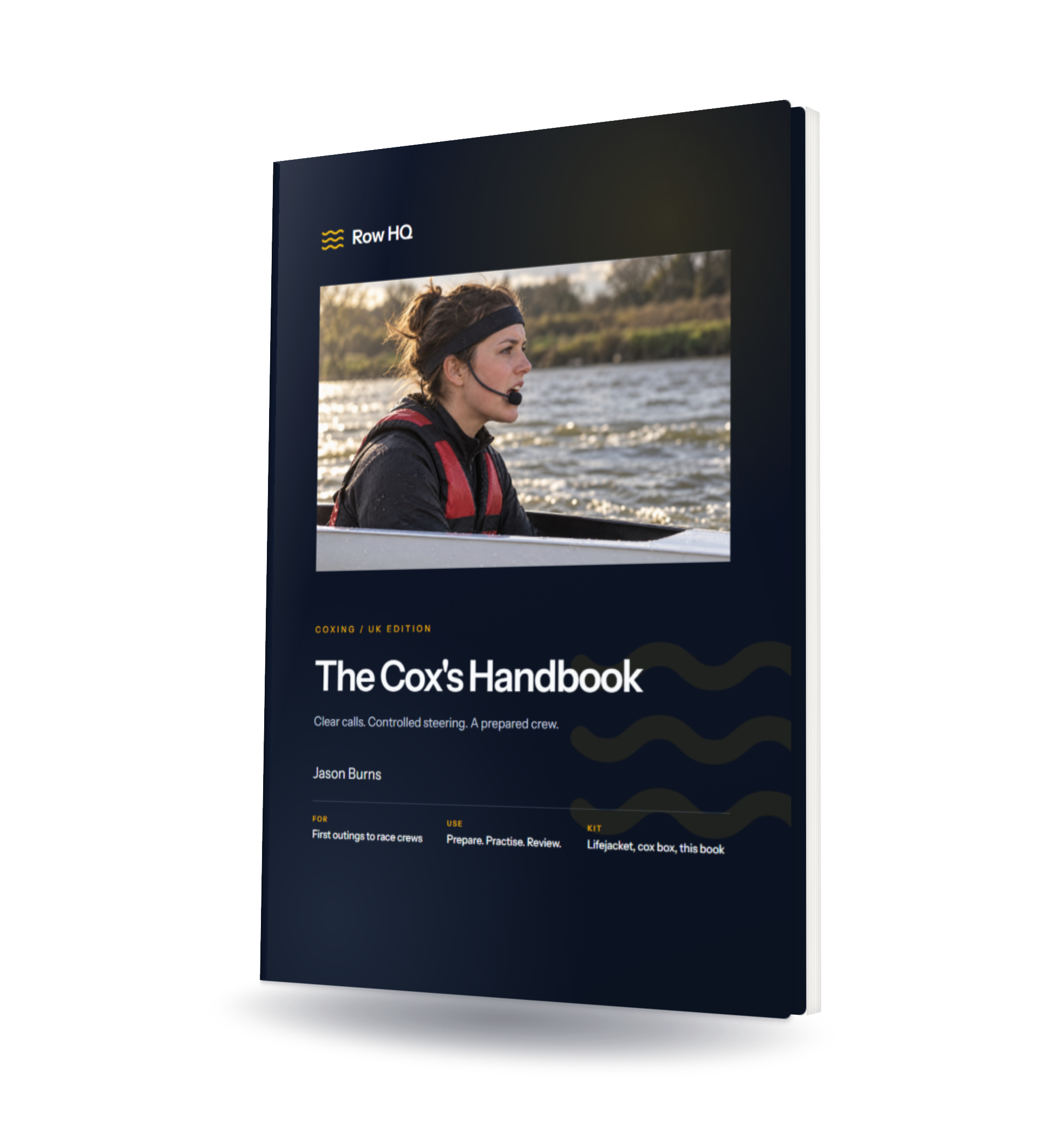
The Cox's Handbook
Practical calls, steering, session drills and race plans for new and improving coxes. Includes five printable worksheets.
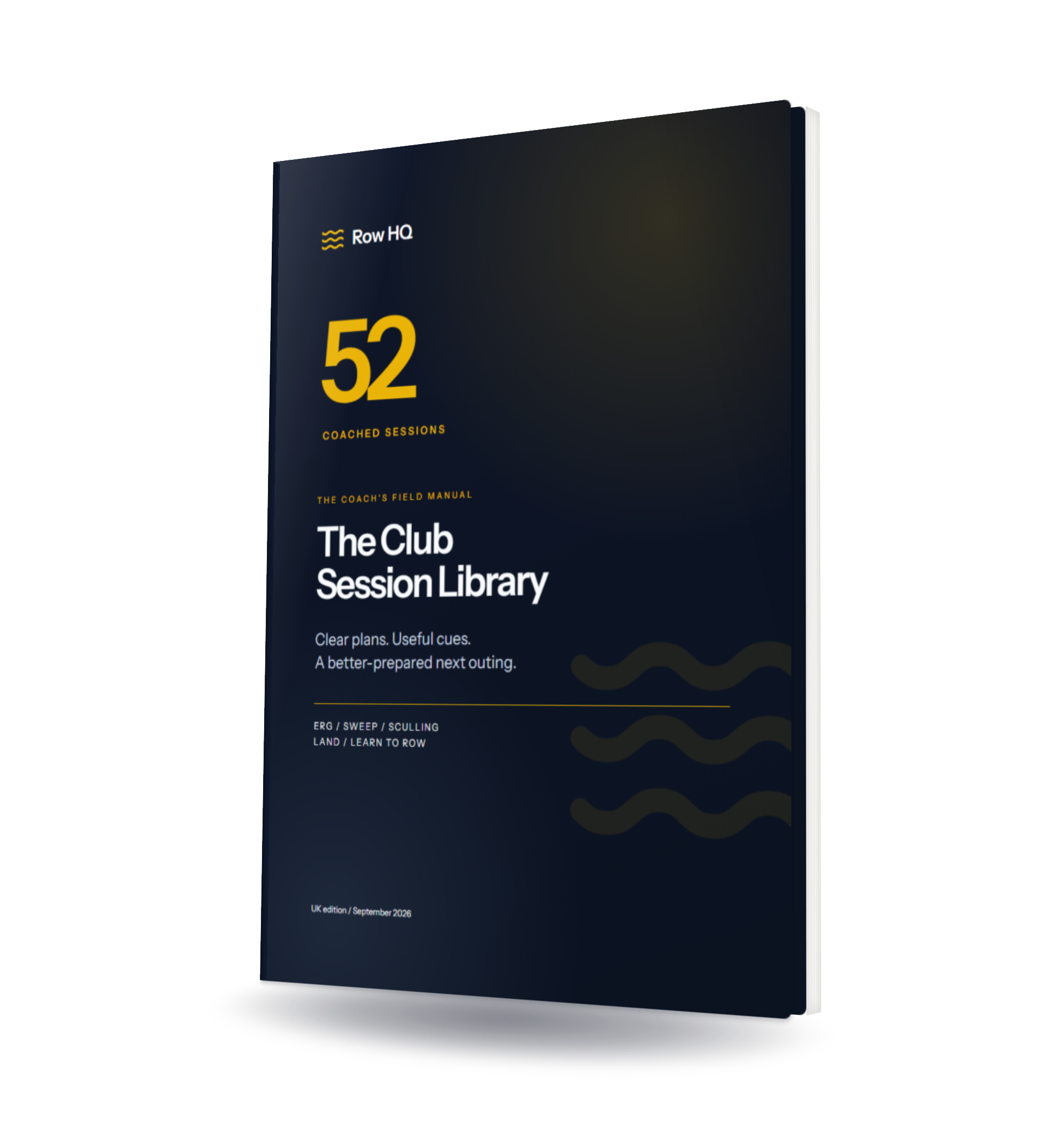
The Club Session Library
52 rowing sessions for club coaches, with an illustrated coaching PDF, editable CSV plans, two seasonal blocks and a printable coaching cheat sheet.
Keep learning
Once a coach locks the stroke seat, the rest of the crew has to fit that rhythm. Row HQ keeps the lineup and availability behind that call together. Follow the rowing glossary for more boatshed terms.
Picking a stroke is the coach's call. Wiring the lineup shouldn't cost a Sunday.
Row HQ keeps crew lineups, athlete availability and ergometer trend in one screen, so the stroke seat decision sits on data instead of a WhatsApp thread. Built by rowers for Aussie club programmes from Oundle Town across to Sydney and Melbourne boatsheds.