Stroke Seat
Stroke seat is the rower nearest the coxswain at the stern end of the shell. Stroke carries the rate (in strokes per minute), holds the rhythm, and executes every race call. In a varsity 8+ that is seat 8. In a 4+, seat 4. In a pair, the stern athlete. Bow seven watches stroke's blade, the rest of the lineup watches bow seven, and the boat moves on stroke's timing.
What is the Stroke Seat?
Stroke seat (seat 8 in a varsity 8+, seat 4 in a 4+, the stern rower in a pair) is the athlete nearest the coxswain who carries the rate and rhythm for the whole boat. Every other seat watches stroke's blade and locks timing off it. The job runs from the standing start through every cox call ("up two in two", "settle", "go") to the closing sprint at 36 spm.
Also called: Stroke, Stroke Position, Stern Pair
What stroke seat actually does in a race
Rate and rhythm. Out of the standing start a US varsity 8+ comes off the line around 44-46 spm for the first five strokes, then stroke settles the rate inside the next ten. The cox calls "settle in two" and stroke drops to base race pace (typically 34-36 spm for an open varsity heavyweight crew over 2k), holds it through the second 500, sits at the same rate through the third, then lifts on the cox's sprint call inside the last 500. Every rate change goes through stroke first.
Race calls work the same way. The cox says "up two in two" and the next two recoveries belong to stroke. Two strokes later the rate is up two beats. Same pattern for a power 10, a power 20 through a 500m landmark, a "send" call to extend the finish, a "go" through a moving crew. The lineup does not respond to the cox directly. The lineup responds to stroke responding to the cox.
In bowloaded coxless boats (a 4-, a straight pair, sculling shells) the stroke runs the racing herself. No mic, no cox to read the field, just a stroke seat with a sense of where the racing is in the piece. The Yale women's straight pair that won the IRA in 2019 ran on the stroke calling the sprint. Lineup tools built around stroke seat selection give US coaches a way to test stroke combinations across the squad before locking the boat for the season.
How US programs pick a stroke seat
Stroke seat selection at the varsity 1V level is usually a coach call, not a seat race. The criteria most US programs lean on:
- Rate consistency under pressure: can the athlete hold 34.5 spm through the body of a 2k without drift, then lift to 36-38 spm on a cox call without rushing the slides?
- Stroke profile: a length on the recovery the rest of the lineup can match, a clean catch placement, a finish that releases cleanly off the back end.
- Racing brain: the temperament to sit in the stroke seat at Eastern Sprints with a Princeton or Brown crew rowing through and still execute the next call.
- Aerobic engine: not the top 2k erg score (often the engine room rower) but a strong enough aerobic base to carry the rate without fading inside the third 500.
The biggest erg score in the squad rarely ends up at stroke. Coaches at Washington, Cal and Princeton routinely put their top heavyweight at 5 or 6 seat where raw power moves the boat hardest, and pick a slightly lighter, more technical rower (often 6'2"-6'5") at stroke who can hold 36 spm in the sprint without checking the run.
The stern pair
Seats 7 and 8 form the stern pair in an eight. Stroke holds the rate, bow seven amplifies it back through 3, 4, 5 and 6 in the engine room. If bow seven is half a beat off the stroke timing, the engine room cannot find the catch and the boat checks at the front end of every stroke. US coaches usually identify the stern pair first and seat-race the rest of the lineup around the combination.
Through fall trials and the winter trial season, the stern pair tends to row together at every practice. They develop a shared sense of slide ratio, a matched length, and (by the time HOCR or San Diego Crew Classic comes around) an unspoken cue for when to take the rate up half a beat. The same mechanic applies in a 4+, where seats 3 and 4 carry the stern-pair role.
Sweep versus sculling at stroke
In US sweep crews, stroke seat side (port or starboard) is decided by lineup balance, not by tradition. A varsity 8+ at Brown might run port-stroke one season and starboard-stroke the next, depending on which rowers are available and which side gives the cleaner rigging. The cox's steering line and the sightline through stroke's shoulder both depend on which side stroke is rigged.
Sculling boats (a 1x, 2x, 4x, the 8x at junior level) put both blades in the water at the stroke seat. The rate-setting job is identical, but the timing problem narrows to length and slide ratio rather than rigging. A varsity quad still races on the stroke catch. The stern rower in a double is stroke for the outing, often by mutual agreement rather than coach decision in masters and club doubles.
US stroke seats worth knowing
Bryan Volpenhein stroked the US men's 8+ to gold in Athens 2004 under Mike Teti, the first US men's 8+ Olympic gold since 1964. Caryn Davies stroked the US women's 8+ to gold in Beijing 2008 and London 2012, with Mary Whipple in the coxswain seat, one of the longest-running stroke-cox combinations in international rowing. At the college level the IRA varsity 8+ stroke seat is treated as a prestige role: programs at Princeton, Yale, Washington and Cal recruit specifically for it, and a stroke seat at the Eastern Sprints grand final is usually the boat's most experienced racer rather than its highest 2k score.
How US stroke seats train
Stroke seats run the same erg pieces as the rest of the lineup but with extra time on rate work. Standard sessions include rate ladders (open at 18 spm, climb through 20, 22, 24, 26, 28 over 500m intervals), rate locks (hold 32 spm flat for six minutes, then drop to 28 on a cox call and re-establish the rhythm), and standing start race rehearsals at full intensity. Practice scheduling tools built for US college programs let the coaching staff plan stroke seat work across a fall HOCR build and a winter IRA prep block without losing the thread.
Cox boxes (NK CoxBox, NK SpeedCoach, Coxmate GPS) display real-time stroke rate, splits and elapsed time. Between pieces stroke checks the screen with the coxswain to confirm the rate held, the splits matched the call, and the timing on the rate change executed cleanly. Most US college boathouses lean on the NK SpeedCoach for water sessions and the PM5 monitor for erg pieces.
Where the term comes from
"Stroke" originally meant the pull of the oar through the water in 19th-century English rowing on the Thames. The rower at the back of the boat set the stroke for everyone else, and the seat picked up the name. American college rowing adopted the term wholesale in the late 1800s with the first Harvard-Yale and IRA races. Australian, German, Italian and Russian rowing all use direct translations of the same word for the same seat. In US shorthand the position is often called "stroke" without "seat", as in "she strokes the 1V" or "he stroked the freshman 8+ at Stotesbury".
Stroke seat FAQs
What does the stroke seat do?
Stroke holds the rate the rest of the lineup rows to and answers every call the coxswain makes. When the cox says "up two in two", the next two recoveries belong to stroke and the boat follows. Same with "settle in two" off the high start, or a power 20 through the second 500 of a 2k race. Bow seven watches stroke's blade directly, the rest of the lineup times off bow seven, and the chain breaks the moment stroke is inconsistent. In bowloaded coxless boats the stroke also calls the racing herself.
What is the difference between stroke seat and bow seat?
Stroke seat is at the stern of the shell, an arm's length from the coxswain's mic. Bow seat is at the opposite end, the seat the camera shows first across the line. Stroke owns the rate and the racing rhythm. Bow seat is usually the cleanest technician in the lineup because the bow end of an eight runs lightest, so a sloppy bow seat checks the boat hard on every stroke. In US college lineups, bow and stroke are different recruitment profiles.
What makes a good stroke seat?
Repeatable length, a stroke profile that holds across a six-minute race, and the temperament to sit two feet from the cox under pressure without panicking. Mike Teti, who coached the US men's 8+ to Athens 2004 gold, talked openly about wanting stroke seats with the best racing brain in the boat, not the highest 2k score. Princeton, Washington and Cal varsity 1V strokes tend to hold a target rate inside half a beat all the way to the closing sprint, then lift to 36-38 spm on a cox call without rushing the slides.
What is the stern pair?
Seats 7 and 8 in an eight, seats 3 and 4 in a four. Stroke sets the rate, bow seven amplifies it back through the lineup. The two seats live together through fall trials and the spring season, train together, and become the rhythm core. A bow seven who is half a beat off stroke is one of the fastest ways to drop a 1V eight a length over 2k. US college coaches usually lock the stern pair early and seat-race the engine room around them.
Is the stroke seat different in sweep versus sculling?
Same job (set the rate, hold the rhythm), different mechanics. In sweep, the stroke side is decided by lineup balance and athlete handedness, so a US varsity 8+ might run stroke on port one season and starboard the next. In sculling boats the stern rower is stroke by default, with both blades in the water, so the job becomes pure timing without rigging politics. A varsity quad still races off the stroke seat's catch, even though the cox seat is empty.
Related
What is a Coxswain?
A coxswain is the human in the stern of a coxed rowing shell who steers, runs the race plan, motivates the lineup and st...
What is Stroke Rate?
Stroke rate is the per-minute cadence the cox box, NK SpeedCoach and Concept2 PM5 monitor display, in strokes per minute...
What is a Head Race?
A head race is the long-course fall time-trial format that anchors US rowing. Each shell pushes off at 10 to 20 second i...
What is a Regatta?
A regatta, in US rowing, is the spring and early summer sprint format. Six lanes, a buoyed straight, a 2,000m course for...
Rowing Boat Types
Eight racing shells make up the entire roster of US rowing. The single (1x), double (2x), pair (2-), quad (4x), straight...
From the RowHQ shop
Printable PDFs written for club rowers. Buy once, keep forever.
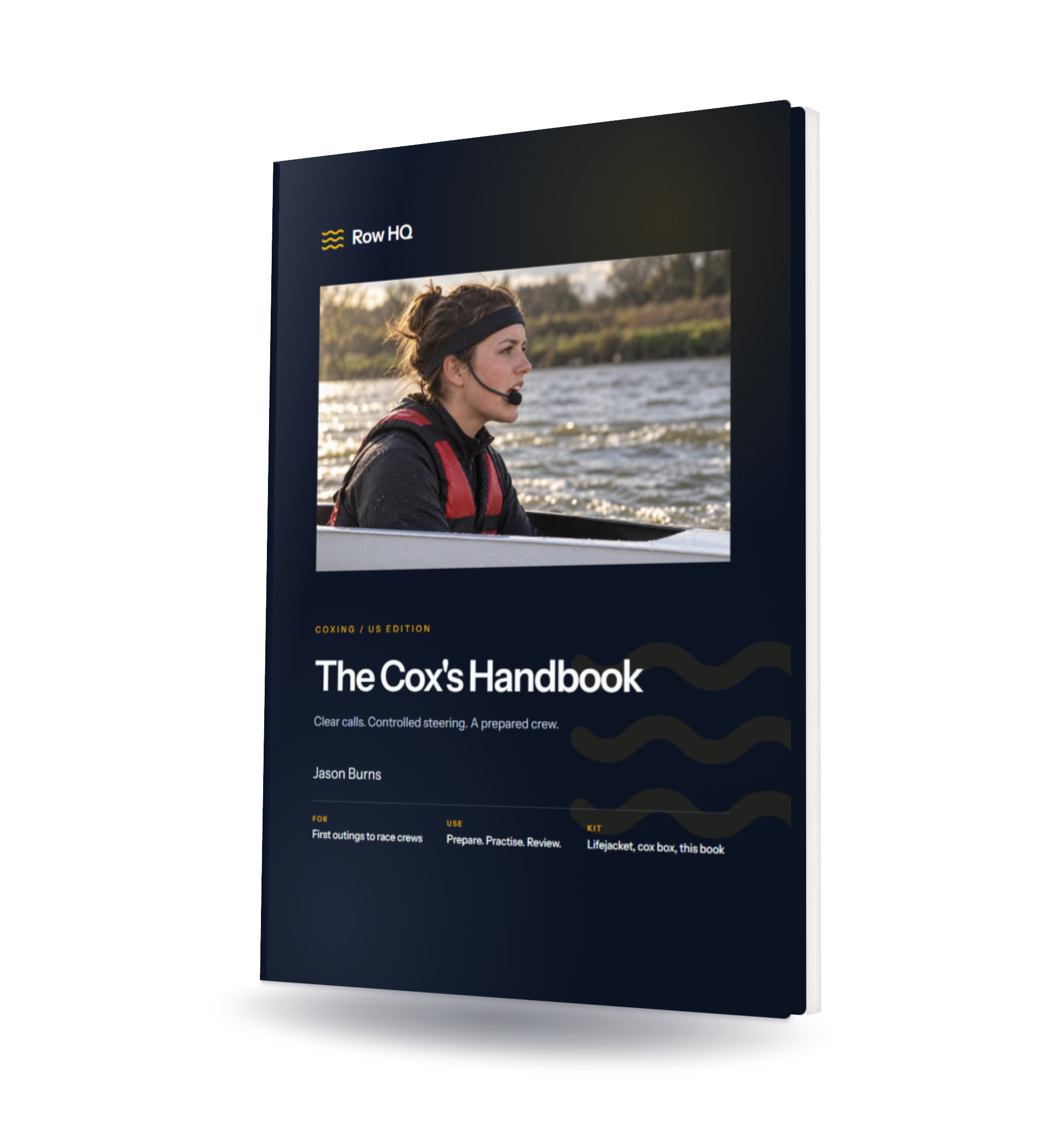
The Cox's Handbook
Practical calls, steering, session drills and race plans for new and improving coxes. Includes five printable worksheets.
The Club Session Library
52 rowing sessions for club coaches, with an illustrated coaching PDF, editable CSV plans, two seasonal blocks and a printable coaching cheat sheet.
Keep learning
A varsity stroke can hold the rate only when the lineup is settled around them. Coaches can record those seat choices and athlete availability in Row HQ. The rowing glossary explains the calls and positions across the shell.
Stroke seat is a coach call. Building the lineup around it shouldn't eat your week.
Row HQ pulls lineups, athlete availability and seat assignments into one view, sized for US college and scholastic programs. Built by rowers.