Finish
The finish is the end of the drive phase when the blade leaves the water at the rower's body, transitioning into the recovery. A clean finish keeps the boat running; a sloppy finish washes out, slows the boat or causes a crab.
What is the Finish in Rowing?
The finish in rowing is the end of the drive phase when the blade leaves the water at the rower's body, transitioning into the recovery. The legs are flat, the back has leaned back to around 30 degrees past vertical, the hands are at the body, and the blade is extracted vertically before being feathered. A clean finish keeps the boat running; a sloppy finish washes out, slows the boat or causes the rower to catch a crab.
Also called: Release, Extraction, Stroke Finish
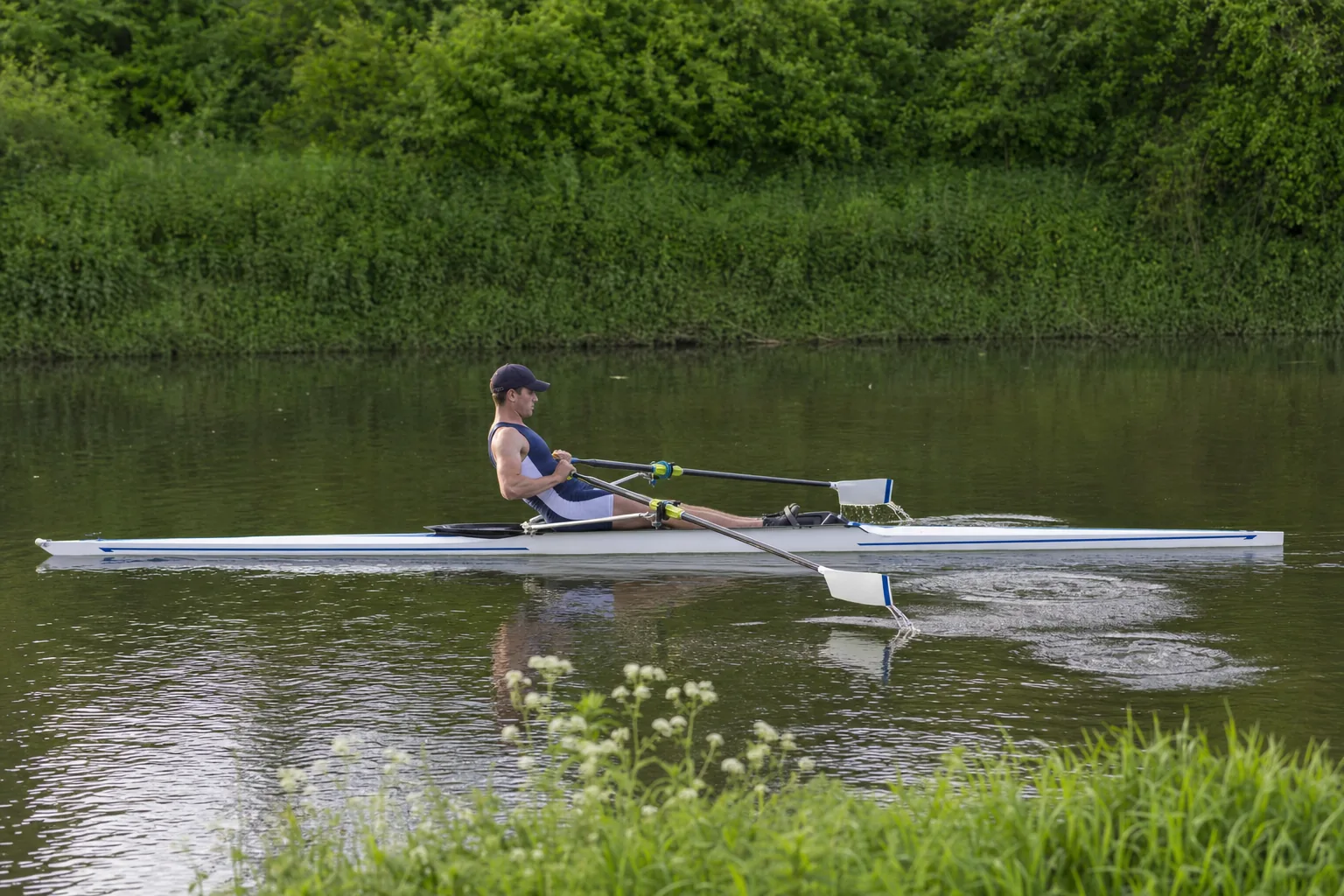
Definition
The finish is the back end of the rowing stroke. The rower has driven through with the legs and opened the back, the handle has been drawn into the body with the arms, and the blade is now lifted out of the water before being feathered. The finish marks the transition from drive to recovery.
In sweep rowing the handle finishes at the lower ribs, near the body. In sculling the two handles finish at the body with the inside hand slightly ahead of the outside hand. The finish is sometimes called the release or the extraction - all three terms refer to the same moment.
Body position at the finish
A balanced finish position keeps the boat stable through the recovery:
- Legs: flat, knees fully extended. The legs have done all the work and the slide is at the back stop.
- Back: leaned back to around 30 degrees past vertical. The back is still engaged - not collapsed or slumped.
- Arms: drawn in to the body, elbows past the ribs, hands at the lower ribcage.
- Wrists: flat, controlled. Ready to feather the blade once it is clear of the water.
Blade extraction
Extraction is the action of lifting the blade out of the water at the finish. The hands tap down (drop sharply) to lift the blade vertically clear of the surface. The wrists do not roll - they just drop the hands. The blade comes out of the water still square at this point.
Once the blade is clear of the water, the wrists roll to feather the blade (rotate it parallel to the water for the recovery). The order is extract first, then feather. Reversing this - feathering before extraction - is the most common cause of crabs and one of the easiest faults to spot from the bank.
Common finish errors
The finish is where most boat speed gets lost at club level. Common errors:
- Washing out: the blade leaves the water early in the drive, before the rower reaches the body. The last 6-12 inches of the drive apply no power and the boat slows down.
- Late extraction: the blade stays in the water past the finish position, dragging through the recovery. The boat is decelerated by the blade.
- Feathering before extraction: the rower rolls the wrists while the blade is still in the water. The blade slices sideways and can dig in - a frequent cause of crabs.
- Rushing the finish: the rower jerks the hands away or starts the recovery before the finish is complete. The boat lurches and the next stroke starts off-balance.
Drills that train the finish
Pause-at-the-finish drills (rowers pause for two seconds at full extraction with hands at the body) build position awareness. Square-blade rowing forces a clean tap-down before the wrists can roll. Hands-away drills (rowers stop the slide and just move the hands away from the body) isolate the finish-to-recovery transition. Outside-the-boat coaching is more effective than inside-the-boat coaching for finish errors because the angle of the blade at extraction is hard to see from the rower's seat. Coach tools let coaches log finish issues per rower across sessions.
Finish FAQs
What is the finish in rowing?
The finish is the back end of the rowing stroke - the moment the drive ends and the recovery begins. The rower has driven through with the legs (flat), opened the back (leaned back to around 30 degrees past vertical), and drawn the handle into the body. The blade is then lifted vertically out of the water and feathered (rotated parallel to the water) before the recovery starts.
How do you extract the blade cleanly?
A clean extraction is vertical, not horizontal. The hands tap down to lift the blade out of the water before any feathering happens. The order is critical: extract first, then feather. If the rower starts feathering while the blade is still in the water, the blade slices sideways through the water (washing out) and can catch the surface awkwardly. Tap-down-then-feather is the rule.
What does washing out mean?
Washing out is when the blade comes out of the water early in the drive - usually because the rower opens the back too early or the handle path drops too soon. The blade leaves the water before the drive is finished, so the last few inches of the drive apply no power to the boat. Washing out costs boat speed and is one of the most common technique errors at club level.
What is the body position at the finish?
At the finish the legs are flat (knees fully extended), the back has leaned back to around 30 degrees past vertical, the hands are at the body (often at the lower ribs or just above), the elbows are past the body and the wrists are flat. The body is in a stable, balanced position ready to start the recovery. The rower does not collapse or slump at the finish - the back stays engaged.
How does a clean finish prevent catching a crab?
A crab happens when the blade gets stuck in the water during extraction or recovery, usually because the rower feathered before the blade was clear of the water. A clean finish - tap down to extract, then feather - keeps the blade above the water during the recovery so it cannot dig back in. Sloppy finishes (feather first, then try to extract) leave the blade in the water at an angle and frequently cause crabs.
Related
What is the Catch in Rowing?
The catch is the moment in the rowing stroke when the blade enters the water at the end of the recovery, just before the...
What is the Drive in Rowing?
The drive is the propulsive phase of the rowing stroke, from catch to finish, where the rower applies power through the...
What is the Recovery in Rowing?
The recovery is the non-propulsive return phase of the rowing stroke, from finish back to catch, where the rower slides...
What is Catching a Crab?
Catching a crab is when a rower's blade gets stuck in the water mid-stroke. The boat is still moving, so the moving wate...
What is Feathering in Rowing?
Feathering is the action of rotating the oar 90 degrees during the recovery so the blade is parallel to the water rather...
Keep learning
A clean finish depends on the extraction happening before the blade is feathered. Coaches can keep technical notes for each rower in Row HQ's rowing club software. Follow the full stroke through the rowing glossary.
Track technique issues across the squad.
Row HQ's coach tools let you log finish, catch and drive notes per rower so technique work compounds across sessions instead of starting from zero each outing.