Drive
The drive is the propulsive phase of the rowing stroke, from catch to finish, where the rower applies power through the blade. The sequence is legs first, then back, then arms - the only phase of the stroke that moves the boat.
What is the Drive in Rowing?
The drive is the propulsive phase of the rowing stroke, from catch to finish, where the rower applies power through the blade to move the boat forward. The sequence is legs first, then back, then arms (the "leg-back-arm" sequence). Peak power happens around mid-drive when legs and back are working together. The drive is roughly half the time of the recovery at low rates and similar to the recovery at race rate.
Also called: Drive Phase, Power Phase
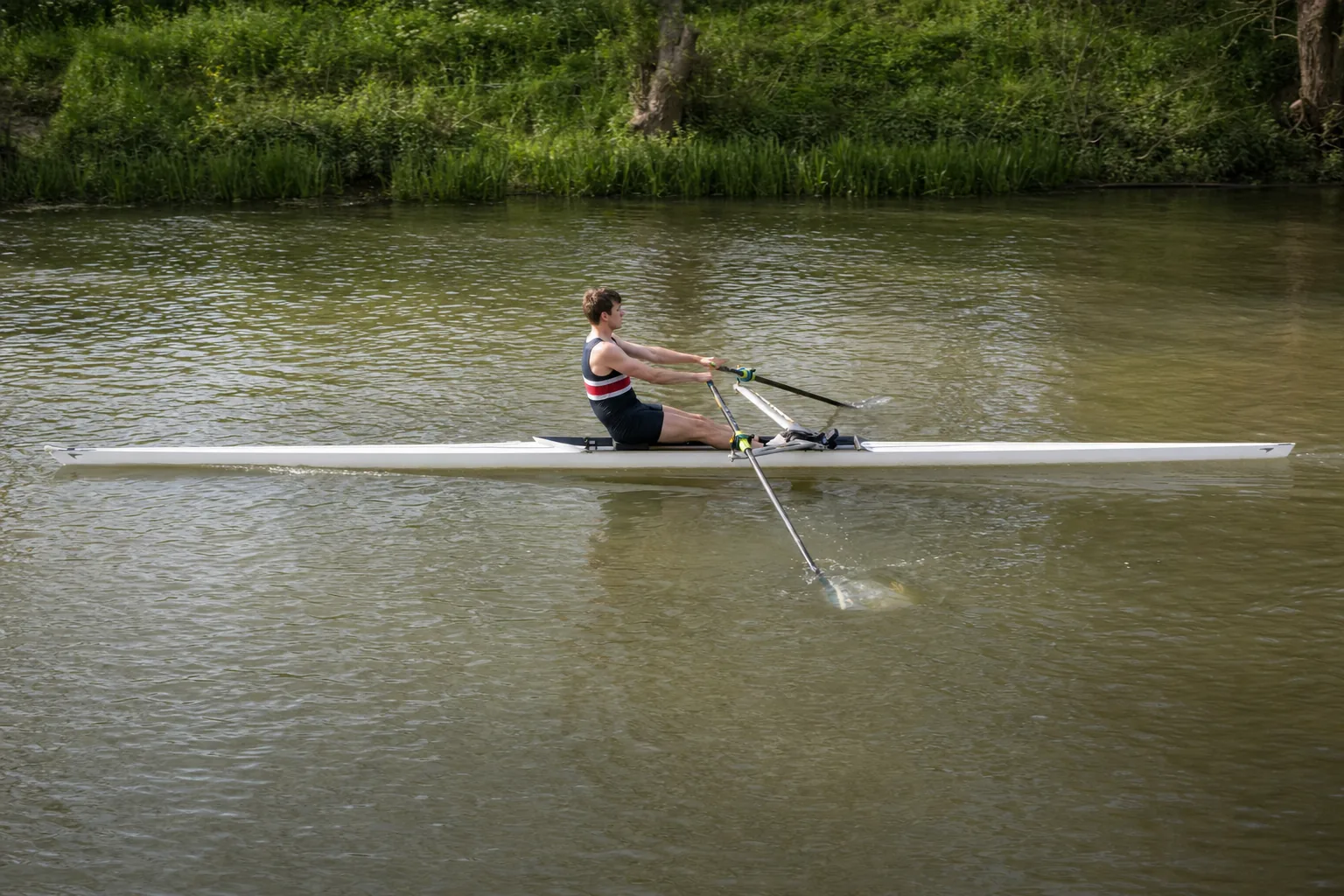
Definition
The drive is the half of the rowing stroke that produces boat speed. It starts the instant the blade is buried at the catch and ends the moment the blade leaves the water at the finish. The rower applies force through the handle, which is transmitted through the rigger and pin to the blade, and the blade levers against the water to push the boat forward.
The drive is the only phase of the stroke that produces propulsion - the recovery is non-propulsive (the boat continues forward by inertia and the rower slides back to set up the next catch). All boat speed is generated during the drive.
The drive sequence
The drive sequence is legs, back, arms - in that order:
- Legs: the legs drive first, pushing the seat back along the slide while the back stays forward and the arms stay straight. The handle moves toward the body purely through leg drive.
- Back: as the legs near full extension, the back starts to open from forward body angle to upright, then continues past vertical into the lay-back position.
- Arms: only at the end of the drive do the arms bend to draw the handle into the body.
Reversing this order (pulling with the arms early, opening the back before the legs are nearly done) is one of the most common drive errors. The legs are the strongest muscles in the body and need to do the heaviest work, with the back and arms finishing the stroke.
Power profile
Power should be front-loaded across the drive - maximum force at the catch when the boat is slowest, tapering through the middle, and trailing off as the blade leaves at the finish. The blade gets the best hold on the water at the catch because the boat is moving slowest relative to the water there.
Beginners often have a back-loaded power profile - they pull harder through the middle and finish than the catch. This is less efficient because the blade has less hold as the boat speeds up. Coaches use force-per-stroke data (from instrumented oarlocks like Empower or BAT logic) to show rowers exactly when they are applying power and where to shift it.
Drive-recovery ratio
The drive-recovery ratio is the time spent on the drive vs the time spent on the recovery. At low rates (18-22 spm in UT2 steady-state training) the recovery is much longer than the drive - typically 1:2 or 1:3. The boat has plenty of time to glide between strokes. At race rate (36-40 spm) the recovery shortens dramatically and the ratio approaches 1:1 - drive and recovery take roughly the same time.
Maintaining a long, controlled recovery at high rates is one of the markers of a fast crew. Crews that rush the slide at race rate end up working harder for less speed than crews that hold the ratio. The erg pace calculator can help convert split times into power output, and many erg monitors show drive time and recovery time separately so rowers can see the ratio live.
Common drive errors
The drive is where most boat speed is made or lost. Common errors:
- Shooting the slide: the legs straighten before the back has engaged. The seat moves back without the handle, so leg power is wasted.
- Opening the back early: the back starts to open while the legs are still driving. The legs and back compete instead of working in sequence.
- Bending the arms early: the arms start to bend during the leg drive. The rower loses the lever advantage of straight arms and the back works against bent elbows.
- Back-loaded power: the rower pulls harder at the finish than the catch. The blade has less hold late in the drive, so power applied there is less effective.
Drive at different stroke rates
The drive itself does not change much with rate - the sequence and power profile stay the same. What changes is the recovery: at low rates the rower has a long recovery to reset, at high rates the recovery is much shorter. Crews train at multiple rates (rate ladders, paddle to firm, etc.) so the drive sequence is automatic at every rate from 18 to 44 spm.
Drive FAQs
What is the drive in rowing?
The drive is the propulsive phase of the rowing stroke - from the moment the blade enters the water at the catch to the moment it leaves the water at the finish. The rower applies force through the blade to move the boat forward. The drive is the only phase of the stroke that produces propulsion; the recovery is non-propulsive.
What is the drive sequence?
The drive sequence is legs, then back, then arms - sometimes called "leg-back-arm" or LBA. The legs drive first while the back stays forward and the arms stay straight. The back then opens through the middle of the drive. The arms only finish the stroke at the end. Doing this in the wrong order (opening the back early, or pulling with the arms before the legs are done) is a major fault that costs power and rhythm.
When is peak power applied during the drive?
Peak power happens around the middle of the drive, when the legs are still driving and the back has just started to open. This is the "front-loaded" power profile that elite rowers aim for - maximum force when the boat is still slow at the catch, dropping off as the boat picks up speed through the drive. Beginners often have a "back-loaded" power profile where they pull harder at the finish than the catch, which is less efficient.
What is the drive-recovery ratio?
The drive-recovery ratio is the time spent on the drive vs the time spent on the recovery. At low rates (18-22 spm in steady-state training) the recovery is much longer than the drive - typically 1:2 or 1:3. At race rate (36-40 spm) the recovery shortens dramatically and the ratio approaches 1:1. Maintaining a long, controlled recovery at high rates is one of the markers of a fast crew.
What does shooting the slide mean?
Shooting the slide is a drive error where the legs straighten before the back has engaged. The seat slides back without taking the handle with it - the rower's back angle stays the same while the legs go flat. The result is that the rower has used leg power without applying it to the boat. Shooting the slide is one of the most common drive faults and is often spotted by the coach as the rower's seat moving faster than the boat handle.
Related
What is the Catch in Rowing?
The catch is the moment in the rowing stroke when the blade enters the water at the end of the recovery, just before the...
What is the Finish in Rowing?
The finish is the end of the drive phase when the blade leaves the water at the rower's body, transitioning into the rec...
What is the Recovery in Rowing?
The recovery is the non-propulsive return phase of the rowing stroke, from finish back to catch, where the rower slides...
What is Stroke Rate?
Stroke rate is the number of strokes per minute (spm) a rowing crew rates. Typical rates range from 18 spm in steady-sta...
Keep learning
Drive sequencing is easier to improve when every crew's feedback stays with the session. Row HQ's rowing club software gives coaches one record for those notes, while the rowing glossary explains the stroke phases around the drive.
Train better drives across the squad.
Row HQ's session planning, coach tools and erg integration give coaches one place to set training, log technique notes and track progress across the squad.