Finish
The finish is the closing fraction of the drive - hands into the body, legs flat, spoon out of the water, blade then rolled flat for the recovery. Tap down, then feather. Reverse that order and you set up a crab.
The Finish: Tap Down, Then Feather
The finish names the closing fraction of the drive - the moment the rower's body has arrived at layback, the handle is into the lower ribs, and the spoon is lifted clear of the water. Extract first by tapping the hands down, then feather by rolling the wrists. Getting that order wrong is the single most common cause of catching a crab at the back end of the stroke, and the second most common cause of lost boat speed at school and club level in Aotearoa after the catch itself.
Also called: Release, Extraction, Stroke Finish
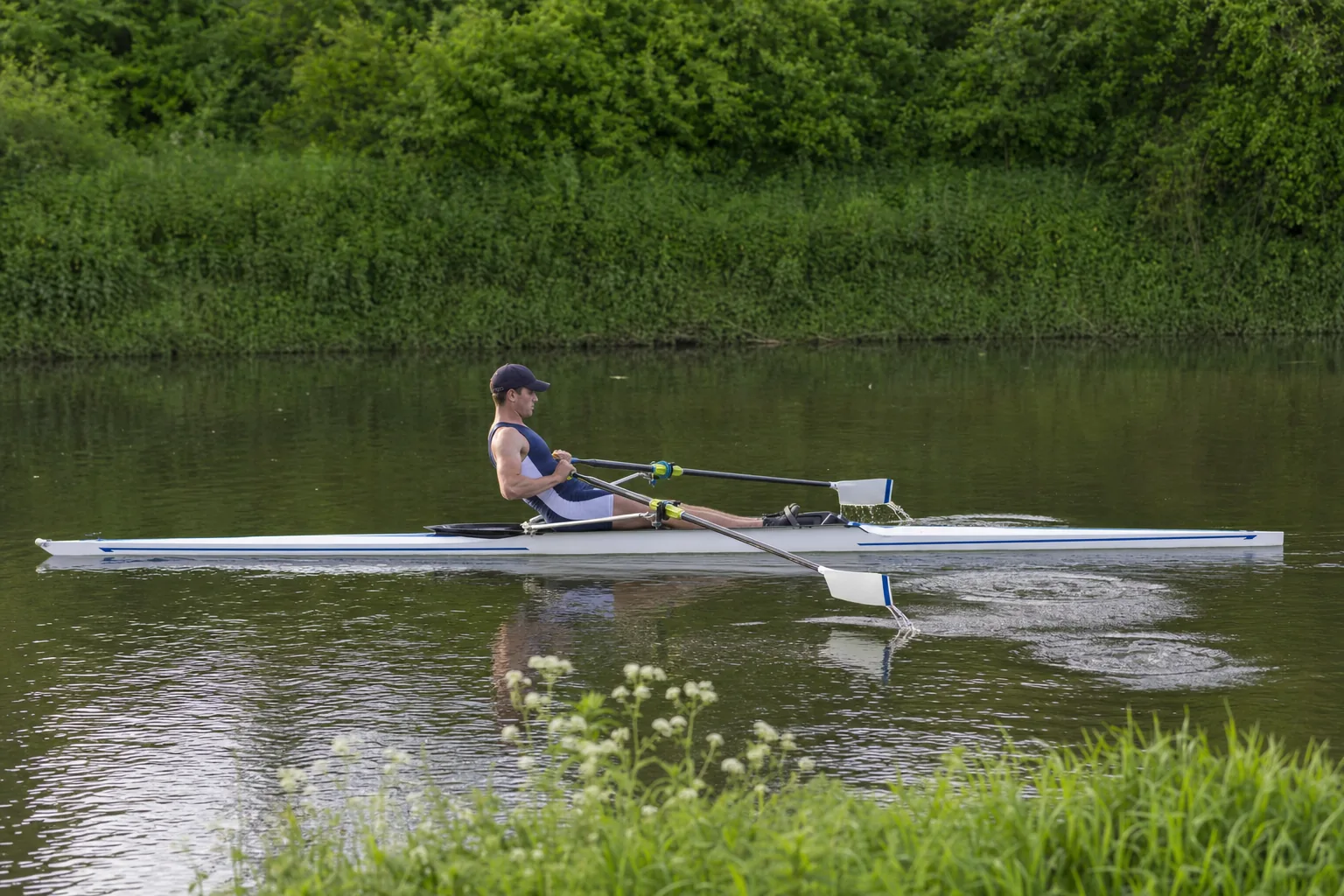
Definition
The finish is the closing moment of the drive. The legs have done their work, the back has swung through to layback, the elbows have drawn the handle into the lower ribs, and the spoon is lifted vertically out of the water. It is the handover point between the propulsive drive and the non-propulsive recovery.
In sweep rowing the handle arrives at the lower ribs, close to the body, with the elbow drawn behind. In sculling the two handles arrive together at the body, inside hand slightly ahead of the outside hand. Coaches sometimes call this moment the release or the extraction - all three terms point to the same phase. The terminology varies by club; the action does not.
Body position at the finish
A controlled finish keeps the hull stable through the recovery that follows:
- Legs: flat, knees fully extended, seat at the backstop. The drive is complete.
- Back: swung to roughly 30 degrees past upright, still actively braced. Not collapsed, not rounded.
- Arms: handle drawn in level with the lower ribs, elbows pulled past the body.
- Wrists: flat and ready to feather the spoon the moment it clears the surface.
Blade extraction
Extraction means lifting the spoon clear of the water. The hands drop sharply - the tap-down - and the spoon levers vertically up out of the surface. The wrists do not rotate during this movement; only the hands move. The blade comes out of the water still square to it.
Once the spoon is clear, the wrists roll to feather it - rotating the blade to lie flat, parallel to the water - for the recovery. The order is non-negotiable: extract first, feather second. Reversing the order means feathering while the blade is still in the water, which angles the spoon under load. That angled blade slices sideways, digs in, and forces the handle back into the rower. It is the most common single cause of a crab at the finish and one of the easiest faults to identify from a coaching launch.
Common finish errors
The finish is where most boat speed gets lost at junior and club level in NZ rowing. The four most common faults:
- Washing out: the spoon leaves the water before the rower has fully arrived at layback. The closing part of the drive loads against air and the final portion of the stroke arc produces no boat speed.
- Late extraction: the blade stays in the water past the finish position, dragging through the early recovery. The boat is actively slowed by the spoon's drag.
- Feathering before extraction: the wrists roll while the spoon is still in the water. The blade angles, digs in, and a crab follows.
- Snatching the hands away: the rower yanks the handle off the body or launches into the recovery before the finish position is reached. The hull checks, balance breaks, and the next catch starts off-rhythm.
Drills that train the finish
Pause-at-the-finish drills - holding the finish position for a two-count with hands at the body before moving - build awareness of exactly where the spoon is when extraction begins. Square-blade rowing strips the feather out entirely, forcing a clean vertical tap-down every stroke and exposing any wash-out before the wrist roll can mask it. Hands-away drills isolate the finish-to-recovery handover by stopping the slide and asking the rower to move just the hands away from the body. Coaching from the launch is more effective than coaching from inside the shell for finish work, because the blade angle at extraction is simply not visible from the rower's seat. Coach tools let coaches log finish notes per rower across the season and track whether the drill work has carried through to racing at the Maadi Cup or the NZ Championships.
Finish FAQs
What is the finish in a rowing stroke?
The finish closes the drive. The legs are flat, the back has swung to layback (around 30 degrees past upright), the handle is drawn into the lower ribs, and the spoon is lifted vertically clear of the water before being rotated parallel for the recovery. Get the order wrong - feather before extraction - and the blade catches the water on its way out, leading to an ejector crab in the worst case and a check in the boat in every other case.
How do you extract the blade cleanly at the finish?
Extraction is vertical. The hands drop (tap down) to lever the spoon straight up out of the water. The wrists do not roll during this part - only the hands move. The blade comes out still square. Once the spoon is clear of the surface, the wrists then roll to feather it parallel to the water for the recovery. The order is non-negotiable: extract first, feather second.
What does washing out mean and why does it matter?
Washing out describes the spoon leaving the water early in the drive, before the rower has reached layback. The cause is usually opening the back too early or letting the handle path drop before the finish position is reached. The final part of the drive then loads against nothing - the blade is already on its way out when there's still pressure to be applied. At club and school level in NZ, washing out is one of the most common single causes of lost boat speed in a stroke that otherwise looks fine.
What does the body position look like at the finish?
Legs flat, knees fully extended, seat at the backstop. Back swung to roughly 30 degrees past upright, still actively braced rather than collapsed. Hands drawn in level with the lower ribs, elbows behind the body. Wrists flat and ready to feather the moment the spoon clears the surface. The rower is in control and balanced, ready to push the hands away and start the recovery without a check.
Why is the order extract-then-feather so important?
A blade that is rotating while it is still in the water angles sideways under load and digs in. The handle is then forced back into the rower's body or, in the worst case, knocks them out of the boat - the ejector crab. NZ school coaches use the tap-down-then-feather sequence as a continuous coaching cue from a rower's first outing because the consequence of getting it wrong scales from a lost stroke to a swim.
Related
The Catch: Where Every Stroke is Won or Lost
The catch names the split-second the blade buries at the front of the slide, a heartbeat before the legs fire. A sharp c...
The Drive: Legs, Back, Arms and Where Boat Speed Actually Comes From
The drive is the only phase of the stroke that moves the boat. Legs fire first, then the back swings, then the arms fini...
The Recovery: Why Slowing Down Makes the Boat Faster
The recovery is the return half of the stroke - blade clear of the water, rower sliding back to the catch. The hull is c...
What is Catching a Crab?
A buried blade. The hull keeps running, the oar does not, and the handle gets hammered back into the rower's chest. The...
Feathering: The Quarter-Turn Between Strokes
Feathering is the quarter-turn rotation of the oar between strokes - blade square during the drive, blade flat during th...
Keep learning
A tidy finish sets up the recovery and helps the boat keep running. Coaches can keep each rower's technique record in Row HQ's rowing club software. Explore the other stroke phases in the rowing glossary.
Track technique notes across coaches and seasons.
Row HQ's coach tools let every coach log finish, catch and drive notes per rower so the technique work compounds across sessions instead of resetting to zero each outing.