Catch
The catch is the moment in the rowing stroke when the blade enters the water at the end of the recovery, just before the drive begins. A clean catch sets up the drive; a slow or missed catch wastes boat run.
What is the Catch in Rowing?
The catch is the moment in the rowing stroke when the blade enters the water at the end of the recovery, just before the drive begins. The legs are fully compressed, the blades are square and at full reach, and the catch needs to be quick and clean. A clean catch sets up an effective drive; a slow or missed catch wastes the boat's run and turns the next drive into damage control.
Also called: The Catch, Blade Entry
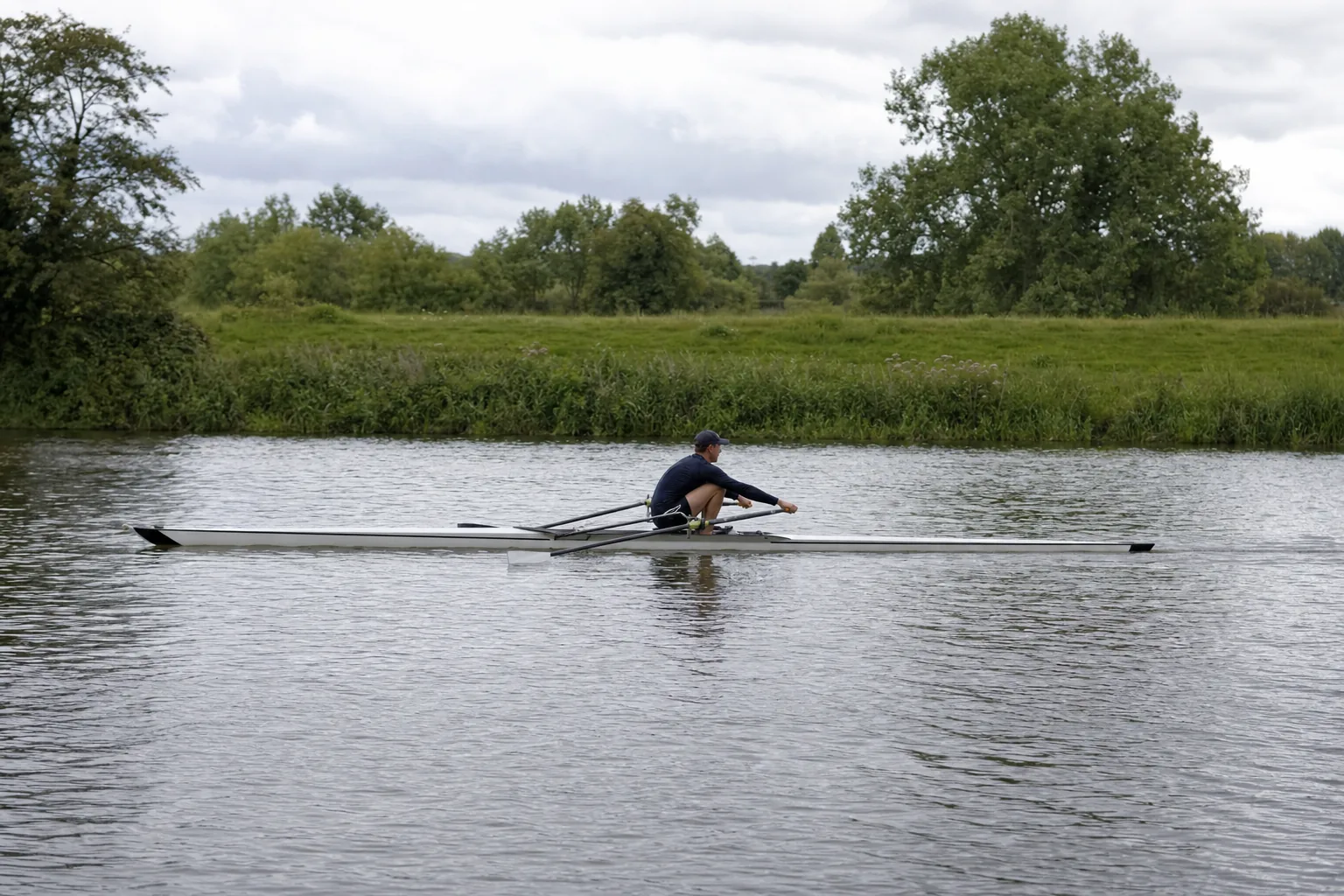
Definition
The catch is the front end of the rowing stroke. The rower has slid all the way forward to the front stop, the legs are compressed to full reach, the back is forward and the arms are straight. The blade is square (perpendicular to the water) and the rower drops the handle to bury the blade in the water.
The instant the blade is fully covered, the catch is over and the drive begins. The catch is not the same as the front turnaround - the turnaround is the change of direction at the front of the slide, the catch is specifically about getting the blade in the water cleanly at that moment.
Position at the catch
A good catch position is the same in every boat type:
- Legs: fully compressed, knees bent, shins vertical (in a single) or close to vertical (in a sweep boat). The rower is at full reach.
- Back: forward, with the body angle set early on the recovery (around quarter slide). The chest is over the knees.
- Arms: long and straight, no bend. The shoulders are relaxed, not hunched.
- Blades: square (perpendicular to the water), at full reach, ready to drop in.
Timing the catch
The catch should be quick and connected. The boat is moving fastest just before the catch because the previous stroke's drive has finished and the boat is gliding. Any delay between full reach and the blade entering the water means the boat is moving but the rower is not applying any power.
Coaches describe a quick catch as "snapping in" or "punching the water". The blade should drop with the natural weight of the handle - the rower does not need to push the handle down hard. A slow catch is sometimes called "missing the catch" or "missing water" because the rower fails to engage the front section of the stroke.
Common catch errors
The catch is the most-coached part of the rowing stroke because errors here propagate through the rest of the drive:
- Missing the catch: the legs start to drive before the blade is in the water. The drive begins with no resistance and the blade enters late, when the rower has already used some leg power without applying it through the blade.
- Washing out at the catch: the blade is not fully buried before the legs drive. The blade slips through the water rather than getting a solid hold, and the rower loses the front of the drive.
- Late square: the blade is still feathered (or partly feathered) when the rower reaches the catch, so blade entry is at an angle. The blade splashes rather than dropping in cleanly.
- Rushed slide into the catch: the recovery is too fast, so the rower arrives at the front stop off-balance and cannot get a clean entry. Always slower on the recovery than the drive.
Drills that train the catch
Square-blade rowing is the gold-standard catch drill - rowing without feathering forces the rower to set up the blade angle in advance and trains a quick blade entry. Pause-at-the-catch drills (slide stops at full reach, hold for two seconds, then catch and drive) train the position. Eyes-closed-on-recovery drills (eyes closed during the slide forward, opening at the catch) train timing without visual feedback. Coaches often use video review and on-water feedback to spot catch errors. Coach tools let coaches log technique notes against individual rowers across sessions and surface recurring issues.
Catch FAQs
What is the catch in rowing?
The catch is the instant the blade enters the water at the front end of the stroke. The rower is at full compression with the legs bent, the back is forward, the arms are straight, the blades are square (perpendicular to the water), and the handle drops sharply to bury the blade just before the legs drive. A good catch is quick and connected - the blade goes from feathered on the recovery to square and buried with no pause.
How quickly should the catch happen?
The catch should be quick - the boat is moving fastest just before the catch (boat run from the previous stroke is at its peak), so any delay between full reach and the blade entering the water means the boat is still moving while the rower is not yet applying power. Coaches call a slow catch "missing water" because the rower fails to use the front section of the stroke. Quick catches feel snappy; slow catches feel laboured.
What are common catch errors?
The most common catch errors are missing the catch (delaying blade entry so the legs start driving before the blade is in), washing out at the catch (blade not fully buried so the drive starts with the blade slipping), late square (not squaring the blade before the catch so it enters at an angle), and rushed slide into the catch (recovery too fast so the rower arrives at the catch off-balance and cannot get a clean entry).
How do you set up a clean catch?
A clean catch comes from a controlled recovery and a square blade. Square the blade about halfway up the slide (at body angle), keep the slide controlled all the way to the front stop, drop the hands sharply when the legs are fully compressed, and let the blade fall into the water under its own weight. The legs only start to drive once the blade is fully buried - never before.
What drills improve the catch?
Square-blade rowing (rowing without feathering, blades square throughout the recovery) is the gold-standard catch drill - it forces the rower to set up the blade angle in advance and trains a quick blade entry. Pause drills (pause at hands-away, pause at body-over) build slide control. Catch placement drills (rowing with the eyes closed on the recovery, then opening at the catch) train timing without visual feedback.
Related
What is the Drive in Rowing?
The drive is the propulsive phase of the rowing stroke, from catch to finish, where the rower applies power through the...
What is the Finish in Rowing?
The finish is the end of the drive phase when the blade leaves the water at the rower's body, transitioning into the rec...
What is the Recovery in Rowing?
The recovery is the non-propulsive return phase of the rowing stroke, from finish back to catch, where the rower slides...
What is Stroke Rate?
Stroke rate is the number of strokes per minute (spm) a rowing crew rates. Typical rates range from 18 spm in steady-sta...
What is Feathering in Rowing?
Feathering is the action of rotating the oar 90 degrees during the recovery so the blade is parallel to the water rather...
Keep learning
A clean catch starts with a controlled recovery and exact blade placement. Coaches can record recurring timing faults in Row HQ, then use the rowing glossary to keep technical language consistent across the squad.
Stop chasing technique notes through email threads.
Row HQ's coach tools let coaches log technique observations against each rower, so the catch issues you spot in Monday's outing are still there for Friday's coach.