Finish
The finish is the back-end transition where the spoon lifts cleanly out of the water at the lower ribs and the drive hands off to the recovery. Tap down to extract, then roll the wrist to feather. Get the order right and the hull runs through into the next slide. Get it wrong and the next thing you hear is the timber crack of a crab.
The Finish: Lifting the Blade Cleanly at the Body
The finish in rowing is the back-end transition of the stroke where the spoon lifts out of the water at the lower ribs and the drive hands off to the recovery. Legs are flat, the back has rocked to roughly 30 degrees past vertical, hands are at the lower ribcage, the wrists tap down vertically to extract before the wrist roll feathers the spoon. A balanced finish keeps the hull running into the next recovery. A scrappy one washes out, drags the spoon through the recovery or sets up the next crab.
Also called: Release, Extraction, Stroke Finish
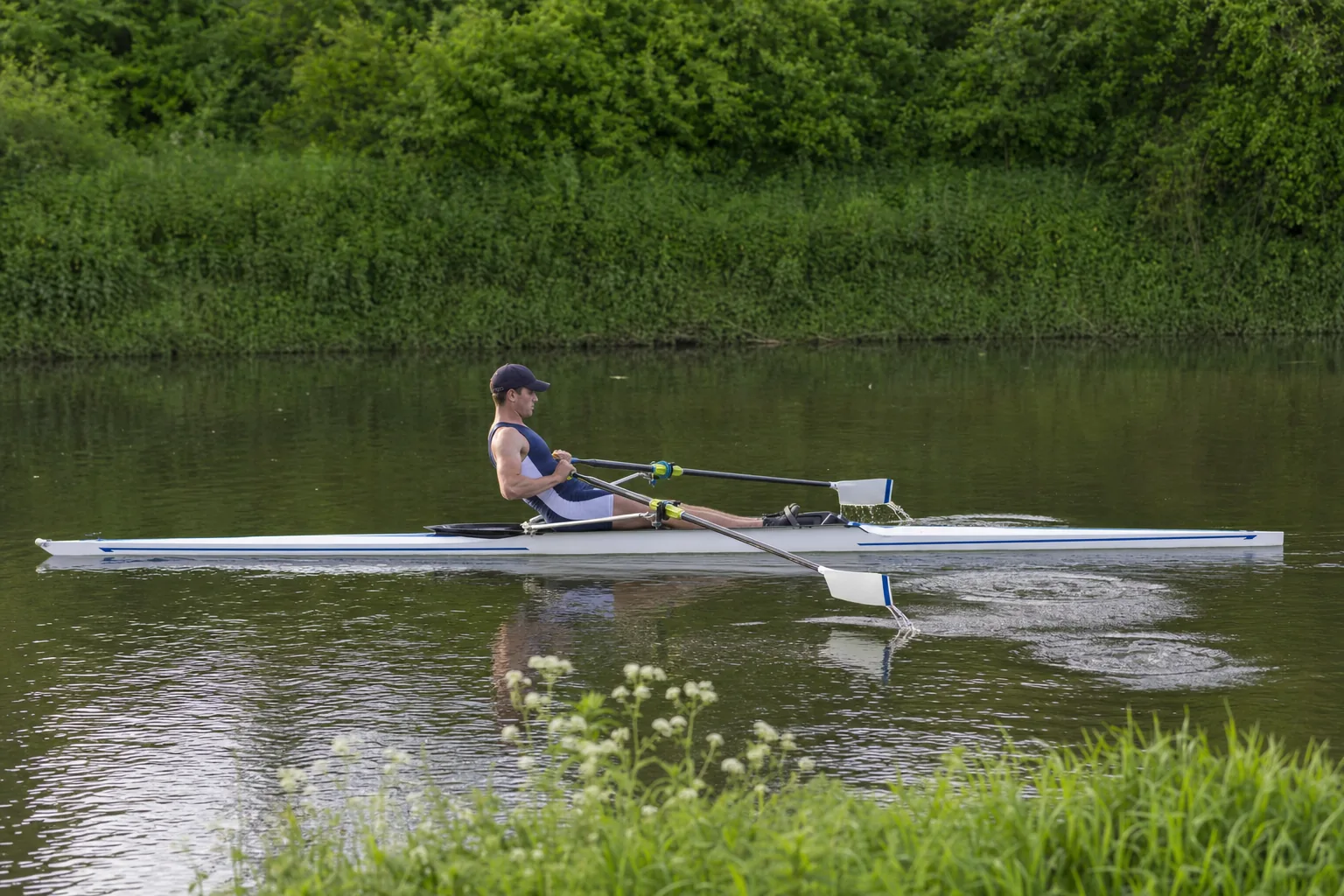
What the finish is
The finish is the back-end transition of the rowing stroke. The legs have driven through, the back has unwound to lay-back, the arms have drawn the handle into the lower ribs, and the spoon now needs to leave the water before the recovery starts. The blade is lifted vertically out of the surface with a sharp tap-down at the wrists, then rotated parallel to the water with a wrist roll. Drive ends, recovery begins.
In sweep boats the handle finishes at the lower ribs with the outside hand on top. In sculling the two handles finish at the body with the inside hand a touch ahead. The terms "finish", "release" and "extraction" are used interchangeably across Aussie sheds, though strictly speaking "extraction" describes the action of lifting the spoon out and "finish" refers to the position.
Body checkpoints at the finish
A balanced finish position keeps the hull stable into the recovery and sets up the next stroke. The checkpoints are the same in a U17 single at the Penrith course or a King's Cup eight on Lake Burley Griffin:
- Legs: flat against the foot stretchers, knees fully extended, seat at the back stop.
- Back: rocked back to roughly 30 degrees past vertical, core engaged, never slumped or dumped.
- Arms: drawn in to the body, elbows past the ribs, hands finishing at the lower ribcage.
- Wrists: flat and controlled, ready to roll once the spoon is clear of the surface.
Blade extraction: tap down, then feather
Extraction is the action of getting the spoon out of the water at the back of the stroke. The hands drop vertically (a sharp tap-down at the wrists) and the spoon lifts straight up out of the surface, still square. The wrists themselves do the dropping; the arms do not lift. The blade leaves the water at the same square angle it had through the drive.
Only once the spoon is clear of the surface does the wrist roll come into play, rotating the blade parallel to the water for the recovery. The order is tap down, then feather, always in that sequence. Reversing it - rolling the wrist while the spoon is still in the water - is the single most common cause of crabs at club and schools level. Easy to spot from the bank or follow tinnie because the puddle behind the blade looks torn and angled rather than clean and round.
The four finish faults that cost the most boat speed
The finish is where most hull speed leaks out at club and schools level. Four faults account for almost all of it:
- Washing out: the spoon leaves the water before the rower reaches the body. The last few centimetres of the drive apply no power, the puddle is shallow and frothy, and the hull decelerates where it should still be accelerating.
- Dragging the spoon: the blade stays in the water past the finish, towed through the start of the recovery. Decelerates the hull at exactly the wrong moment of the stroke cycle.
- Feathering before extraction: the wrist roll happens while the blade is still buried. The spoon slices sideways through the river and can dig in - the textbook way to catch a crab.
- Bailing out of the finish: the rower jerks the hands away or starts the recovery before the finish is balanced. The boat lurches, the next slide opens off-rhythm, and the catch arrives unsettled.
Drills that rebuild a clean finish
Pause-at-the-finish (two-second hold with hands at the body) trains balance and position awareness. Square-blade rowing forces an honest tap-down because there is no wrist roll to hide a scrappy extraction. Hands-away in isolation (stop the slide and just move the hands away from the body, then reverse) drills the finish-to-recovery transition without the rest of the stroke getting in the way. Coaching the finish from the bank or follow boat is far more useful than coaching it from inside the boat - the spoon angle on extraction is invisible from the rower's seat but obvious from the bank at Yarra Boulevard or the Penrith grandstand. Coach tools let coaches log finish issues per rower across outings so the same fault is not respotted week after week.
Finish FAQs
Where does the finish actually happen in a rowing stroke?
The finish is the back-end transition - the half-second between the end of the drive and the start of the recovery. The legs are flat against the foot stretchers, the back is rocked back to roughly 30 degrees past vertical, the handle is drawn into the lower ribs, the elbows are past the body, and the wrists tap down sharply to lift the spoon vertically clear of the water. Once the spoon is above the surface the wrist roll feathers it for the slide forward.
How do you get the spoon out of the water cleanly?
The rule is tap down, then feather - never the other way round. The hands drop vertically (the wrists hinge, not the arms) and the spoon rises straight out of the water still square. Once the blade is clear of the surface, the wrist roll rotates it parallel to the water for the recovery. Reverse the order and the spoon slices sideways through the river while it is still buried, which is the textbook way to catch a crab on the Yarra or any rough stretch of West Lakes.
What does washing out look like from the bank?
Washing out is when the spoon comes out of the water before the drive is done - usually because the rower opens the back too early or lifts the hands instead of dropping them. The last few centimetres of the drive apply no force to the boat, the puddle behind the blade looks shallow and frothy rather than deep and clean, and the hull decelerates exactly where it should still be accelerating. Common at club level, almost universal in Year 8 and 9 rowers, and the first finish fault most Aussie coaches retire.
What is the body shape at the finish?
Legs flat with knees fully extended, back at roughly 30 degrees past vertical and still engaged (never slumped or collapsed), hands at the lower ribs with the outside wrist flat, elbows drawn past the body, head up. The body should look balanced and still ready to support the next recovery rather than dumped backwards. Coaches at AGSV, CAS and GPS schools use pause-at-the-finish drills specifically to expose rowers who collapse the position rather than hold it.
How does a clean finish reduce the chance of catching a crab?
A crab happens when the spoon gets stuck in the water during extraction or recovery, almost always because the rower started the wrist roll before the blade was clear of the surface. A clean finish - tap down vertically first, feather second - keeps the spoon above the water through the whole recovery so it cannot dig back in. Scrappy finishes where the wrist rolls early leave the blade in the water at an angle and the river does the rest. Crabs on the Yarra in chop or downwind at Penrith are usually finish problems, not recovery problems.
Related
The Catch: Blade Entry at the Front of the Slide
The catch is the front-of-slide moment where the spoon drops from above the water to fully buried. Shins go vertical, th...
The Drive: The Only Phase That Moves the Boat
The drive is the leg-back-arm push that runs from the moment the spoon is buried at the catch through to the body at the...
The Recovery: Patient Slide Forward Between Strokes
The recovery is the slide forward between strokes - the section of the stroke cycle that runs from blade exit at the fin...
What is Catching a Crab?
A crab is the moment a blade gets pinned under the surface while the hull keeps tracking forward. Forty kilos of moving...
Feathering: The Wrist Roll That Sits Between Drives
Feathering is the wrist roll that rotates the spoon 90 degrees between drives - parallel to the water through the recove...
Keep learning
Finish work is easier to carry between outings when every coach can see the same technical notes. Keep that record beside each rower in Row HQ's rowing club software. Read on through the rowing glossary for the rest of the stroke.
Track finish faults across the squad without spreadsheets.
Row HQ logs finish, catch and drive notes per rower so the technique work you put in on Wednesday is still in the system for Saturday's outing and ready when selection trials roll around.