Finish
The finish is the back-end moment when the blade comes cleanly out of the water and the stroke hands off into the recovery. Tap down sharply to lift the spoon out, then feather. Get the order wrong and you have a crab waiting to happen.
The Finish: Clean Blade Extraction
The finish in Irish coaching language is the back-end moment when the blade leaves the water cleanly, transitioning the stroke from drive to recovery. Lay-back angle locked at around 30 degrees, hands at the lower ribs, a sharp downward tap from the wrists lifts the spoon vertically out of the surface, and only then does the wrist roll to feather for the slide back. Get this two-step order wrong and the blade slices through the water at an angle, which is the single most common trigger for crabs on a windy day at Castleconnell or in southerly chop on Lough Allen.
Also called: Release, Extraction, Stroke Finish
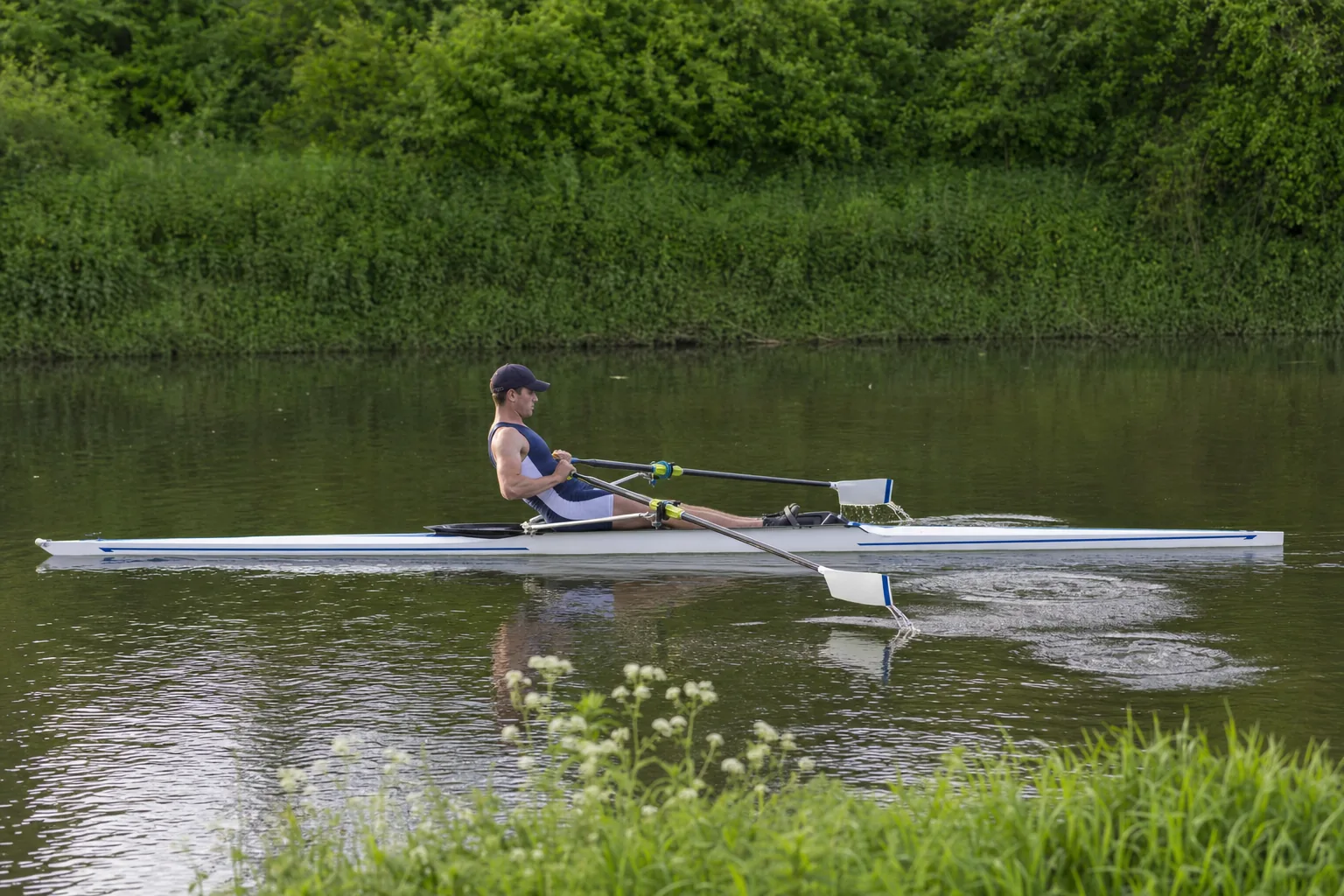
What the finish is
The finish is the handover from drive to recovery. The legs have flattened, the back has swung through to lay-back, the arms have drawn the handle in to the lower ribs. The spoon is still in the water. Then the hands tap down, the spoon comes out of the surface vertically, and the wrist rolls to feather. That whole sequence, from blade in to blade feathered above the water, is the finish.
Sweep rowers finish with one handle at the lower ribs. Scullers finish with two handles at the body, inside hand a couple of inches ahead of the outside hand to keep the spoons clear of each other. The terms release and extraction are used interchangeably in most Irish boathouses for the same instant.
Body position at the back stop
A balanced finish position keeps the hull running through the slide back:
- Legs: flat, knees fully extended, seat at the back stop.
- Back: through to roughly 30 degrees of lay-back, trunk still braced, no collapse.
- Arms: drawn in, elbows past the body, hands at the lower ribcage.
- Wrists: flat, neutral, ready to drop sharply and then roll.
Extraction: down first, then around
Extraction is the action of lifting the blade out of the water at the back end. The hands tap down sharply, the spoon comes vertically clear of the surface, and at this moment the wrist has not rolled. The blade exits the water still square.
Only once the spoon is fully clear of the surface does the wrist roll, laying the blade flat for the slide back. Tap-down then feather. Reverse those two beats and the blade is slicing sideways through the water with no escape route. That is a crab in slow motion. Coaches walking the bank at Skibbereen or watching from the launch at Inniscarra spot this fault almost instantly because the wrist motion is so visible from outside the boat.
Finish faults that cost boat speed (or worse)
The finish is where the most boat speed gets thrown away at Irish club level, and the most safety incidents start:
- Washing out: the blade leaves the water too early on the drive, before the rower reaches the body. The last 15 to 30 centimetres of the arc apply no propulsion at all. Splits go backwards even though heart rate stays high.
- Late extraction: the spoon stays in the water past the lay-back position and drags into the slide back. The hull is actively decelerated by its own oar.
- Feather before extraction: the wrist rolls while the spoon is still in the water. The blade slices, hooks, and locks. This is the textbook crab trigger.
- Rushed finish: the rower jerks the hands away or starts the slide back before the extraction is clean. The hull lurches, the platform shifts, and the next catch is late.
Drills that fix the finish
Pause-at-the-finish drills (hold full lay-back with hands at the body for two seconds, then carry on) build body awareness at the back stop. Square-blade rowing strips out the feathering safety net and forces the rower to commit to a clean tap-down. Hands-away-only drills (stop the slide entirely, move only the hands away from the body to full reach, then return) isolate the finish-to-recovery handoff. A coach on the launch sees finish faults much more clearly than the rower in the seat, because the blade angle at extraction is invisible from inside the boat. Coach tools let those launch-side observations follow the rower into the next outing instead of vanishing into a coach's head.
Finish FAQs
What is the finish in rowing?
The finish is the back-end transition. Legs are flat, the back has swung through to roughly 30 degrees of lay-back, the hands have drawn in to the lower ribs, and the blade is now lifted out of the water with a sharp downward tap. Once the spoon is clear of the surface the wrist rolls to feather, and the recovery starts. In coaching shorthand it is also called the release or the extraction.
How do you extract the blade cleanly?
Two-step, in this order: tap down, then feather. The hands drop sharply to lift the blade straight up out of the surface, the spoon comes out of the water still square, and only after the spoon is clear does the wrist roll to lay the blade flat for the slide back. Feathering before the spoon is clear of the water is the single most common cause of crabs in Irish club rowing, and it shows up in every novice pre-season on the lower Lee.
What does washing out mean?
Washing out is when the blade leaves the water too early on the drive, usually because the back swings open before the legs are finished or because the handle path drops as the rower starts to lay back. The last few inches of the arc apply no power to the boat. Coaches at Garda RC, UCD and Skibbereen all spot this off the launch by watching the spray pattern at the catch and the angle of the spoon as it leaves the water.
What is the body position at the finish?
Knees fully extended, back leaned through to roughly 30 degrees past vertical, hands drawn in to the lower ribs, elbows tucked past the body, wrists flat and ready to feather. The trunk should still be braced. A rower who collapses at the finish on the slide back is fragile in the chop, and that fragility is what makes the next catch late.
How does a clean finish prevent catching a crab?
A crab is the blade getting trapped in the water during extraction or the early recovery, and almost every crab starts at the finish. Feather while the spoon is still in the water and the blade slices sideways, hooks the surface and locks. Tap down first, get the spoon clear, then feather, and the blade is above the surface for the whole slide back and cannot dig in. Cross-link to the dedicated catching-a-crab glossary entry for the full safety drill.
Related
The Catch: Blade Entry at the Front of the Stroke
The catch is the split-second of blade entry at the front end of the slide, before the legs start to push. Get the blade...
The Drive: The Propulsive Half of the Stroke
The drive is the propulsive half of the stroke. Blade buried, legs first, back next, arms last. This is the only half th...
The Recovery: Slide Back with the Blade Out of the Water
The recovery is the slide back between strokes, blade out of the water, from finish to next catch. It produces no propul...
Catching a Crab: The Stuck-Blade Failure
A crab is a blade-stuck failure. The oar locks in the water, the hull keeps moving, and the handle gets driven backwards...
Feathering: The Quarter-Turn That Lays the Blade Flat
Feathering is the quarter-turn wrist roll that lays the blade flat to the water between strokes. Square in the water on...
Keep learning
The finish is a short part of the stroke, but the same fault can follow a crew through several sessions. Clubs can carry coaching notes forward with Row HQ's rowing club software. Continue with the rowing glossary to place it in the full sequence.
Track finish faults from one outing to the next.
Row HQ logs finish, drive and catch notes against the rower they belong to, so the issue you flagged on Tuesday at Commercial RC is still there for whoever takes the Thursday outing.