Finish
The finish is the back end of the drive - the tap-down release at the body that bridges drive into recovery. A clean release protects the run the drive just built. A messy one bleeds boat speed, washes out early, or buries the blade and turns the next stroke into a crab.
The Finish in Rowing
The finish in rowing is the back end of the drive, where the blade lifts cleanly out of the water at the rower's body and the recovery begins. The legs are flat, the trunk has swung into a layback around 30 degrees past vertical, the hands sit at the lower ribs, and the blade extracts vertically with a tap-down before any feather rotation. A clean finish protects the run the drive just built; a messy one bleeds boat speed, washes out early, or buries the blade and turns the next stroke into a crab.
Also called: Release, Extraction, Stroke Finish
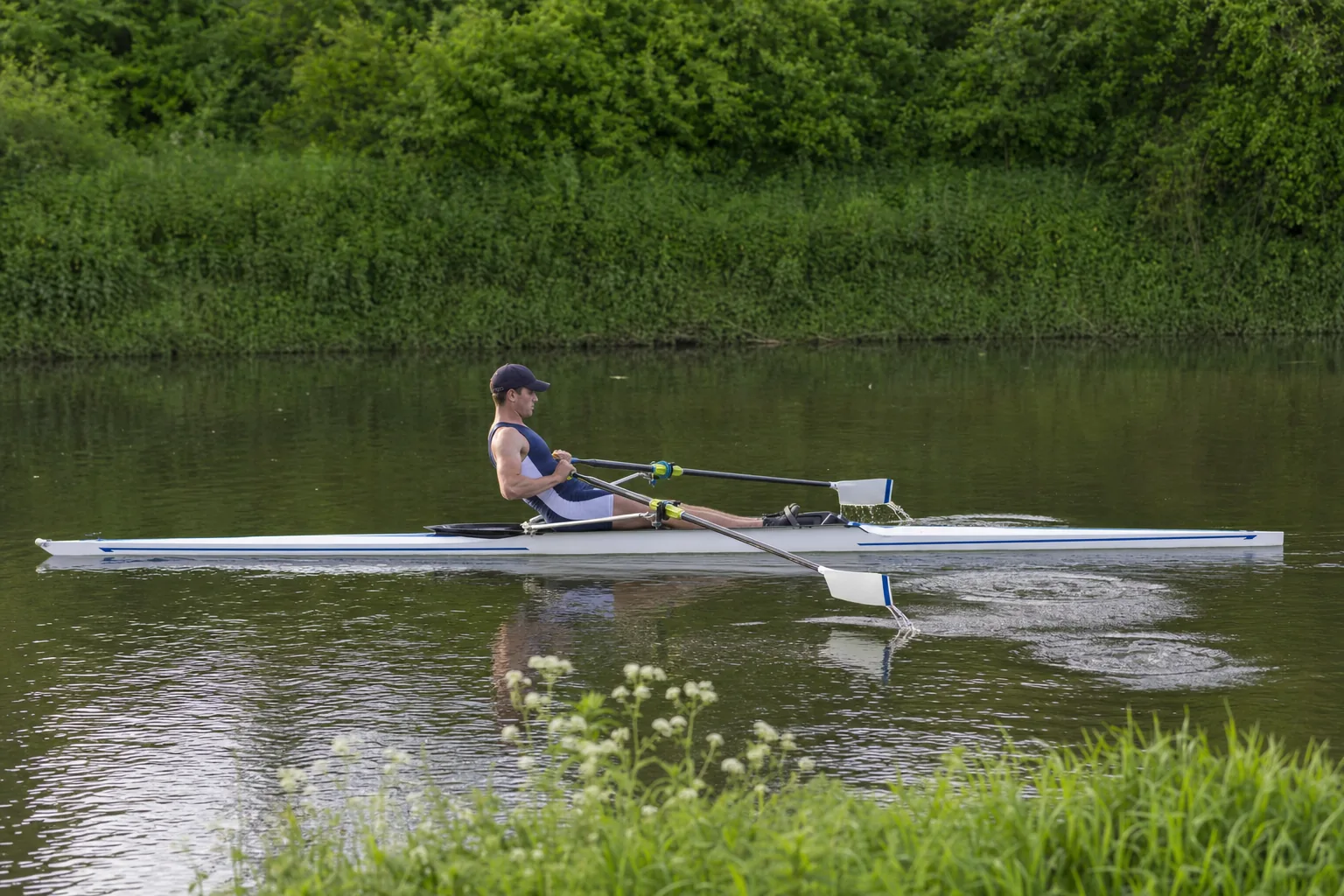
What the finish covers
The finish is the back-end transition of the stroke. The legs have driven through and gone flat, the trunk has swung into layback, the arms have drawn the handle into the lower ribs, and the blade is then lifted vertically out of the water before any wrist roll happens. Once the blade is clear, the wrist rolls to feather and the recovery slide begins.
In sweep, the handle finishes at the lower ribs near the body. In sculling, both handles finish at the body with the inside hand sitting fractionally ahead of the outside. Across NCCP coach education materials and most Canadian club coaching vocabularies, the terms finish, release and extraction all describe the same moment - the instant the blade leaves the water at the back end of the drive.
Body position at the release
A stable finish position keeps the boat balanced through the recovery and sets up a clean catch at the front:
- Legs: flat, knees fully extended, slide at the back stop. The leg drive is complete.
- Trunk: laid back to around 30 degrees past vertical. The back is still engaged and supported - not collapsed onto the seat back.
- Arms: drawn into the body with the elbows tracked past the ribs and the hands at the lower ribcage.
- Wrists: held flat and quiet, ready to feather the blade only once it is fully clear of the water.
Blade extraction: the tap-down
Extraction is the vertical lift that gets the blade clear of the water at the release. The hands drop sharply - the tap-down - to lever the blade up and out. The wrists do not roll during the lift. The blade comes out of the water still square, perpendicular to the surface.
Only after the blade is fully clear do the wrists roll to feather the blade for the recovery. The order is non-negotiable: extract first, then feather. Reversing the sequence - rolling the wrist while the blade is still in the water - is the single biggest cause of crabs at every Canadian club from learn-to-row through to OUA Championship level, and it is one of the easiest faults for a coach to spot from the bank or launch.
Common finish faults in Canadian crews
The release is where most boat speed bleeds out at the club level. The recurring faults across Canadian programs:
- Washing out: the blade lifts out of the water before the drive is finished. Several centimetres of useful arc go unused and the hull is decelerated rather than accelerated through the closing portion of the stroke.
- Late extraction: the blade stays in the water past the release position and drags through the opening of the recovery. The hull is braked by the trailing blade.
- Feathering before extraction: the wrist rolls while the blade is still in the water. The blade slices sideways and digs in. The most common cause of crabs at every Canadian club.
- Rushing the release: the rower jerks the hands away from the body before the finish is settled. The boat lurches, the next stroke starts off balance, and the rhythm of the recovery is broken before it begins.
Drills Canadian coaches use to clean up the finish
Pause-at-the-release drills - the crew pauses for two seconds at the layback position with hands at the body - build positional awareness and remove the rush. Square-blade rowing forces a clean tap-down because the wrist cannot roll early without exposing the fault immediately. Hands-away drills, where the rower stops the slide and just moves the hands away from the body, isolate the release-into-recovery transition. Bankside or launch-side coaching is more useful here than on-water coaching from the seat, because the angle of the blade through extraction is hard to read from inside the boat. Coach tools let coaches log release issues against each rower across sessions and watch them compound or resolve over a season.
Finish FAQs
What is the finish in a rowing stroke?
The finish is the back-end transition point - the moment the drive ends and the recovery starts. By that point the legs are flat, the trunk has swung back into a layback of around 30 degrees past vertical, and the handle has been drawn into the lower ribs by the arms. The blade then lifts vertically clear of the water with a sharp tap-down of the hands before it gets feathered for the slide forward. NCCP coaches and RCA materials use the terms finish, release and extraction interchangeably - they all describe the same instant.
How do you extract the blade cleanly?
A clean extraction is vertical, not horizontal. The hands tap down sharply to lift the blade out of the water, and only then does the wrist roll to feather the blade for the recovery. The order matters: extract first, feather second. Reversing them - rolling the wrist while the blade is still in the water - causes the blade to slice sideways through the water, often catching at an angle. That is the single most common cause of crabs at every Canadian club, from learn-to-row groups at Don Rowing Club through to senior eights at Hanlan.
What does washing out mean?
Washing out is the fault where the blade lifts out of the water before the drive is finished, usually because the trunk swings past the layback position too early or the handle path drops too soon. The blade leaves the water with several centimetres of arc still available, so the final portion of the drive applies no force to the boat. Washing out is one of the most common boat-speed leaks at the club and CSSRA Championship level, and Canadian coaches at Leander Boat Club in Hamilton and across the Welland Canal clubs flag it constantly during morning outings.
What is the correct body position at the finish?
Legs flat with the knees fully extended, trunk laid back around 30 degrees past vertical, hands drawn into the lower ribs with the elbows tracked past the body, wrists held flat and ready to feather, shoulders relaxed and not pulled up into the neck. The trunk is engaged and supported, not collapsed or slumped onto the back of the seat. The position is stable and balanced, set up for the hands-away that begins the recovery. Brentwood juniors and OUA crews drill this position with pause work in nearly every warm-up.
How does a clean finish prevent crabs?
A crab is the result of a blade getting caught in the water during extraction or recovery, almost always because the wrist feathered before the blade was clear of the surface. A clean finish - tap-down to extract, then feather - keeps the blade above the water through the recovery so it cannot dig back in. The reverse order - feather first, then try to lift out - leaves the blade in the water at an angle and the slipstream catches it. Most crabs at Canadian club level trace back to this exact sequence error.
Related
The Catch in Rowing
The catch is the single instant a square blade buries at the front of the stroke cycle. In Canadian rowing it draws more...
The Drive in Rowing
The drive is the propulsive half of the rowing stroke, running from catch entry to release at the finish. Canadian coach...
The Recovery in Rowing
The recovery is the controlled slide back to the next catch. It produces no hull speed - the boat runs on inertia from t...
What is Catching a Crab?
The blade goes in, the boat keeps moving, and suddenly the oar will not come out. That is a crab. The water flowing past...
Feathering in Rowing
Feathering is the 90-degree wrist roll that turns the blade parallel to the water during the recovery, then back to perp...
Keep learning
Small changes at the finish can affect how well the shell runs into recovery. Track each athlete's progress across practices in Row HQ's rowing club software. Use the rowing glossary to review the connected technique terms.
Release notes per rower, not lost between sessions.
Row HQ's coach tools let you log finish, drive and catch observations against each rower, so technique work compounds across the season rather than restarting at every outing.