Finish
The finish is the back-end blade exit, the instant the blade leaves the water at the body and the drive ends. Tap-down then feather. A clean finish protects boat run into the recovery; a sloppy finish washes out, drags the blade or sets up a crab.
What is the Finish in Rowing?
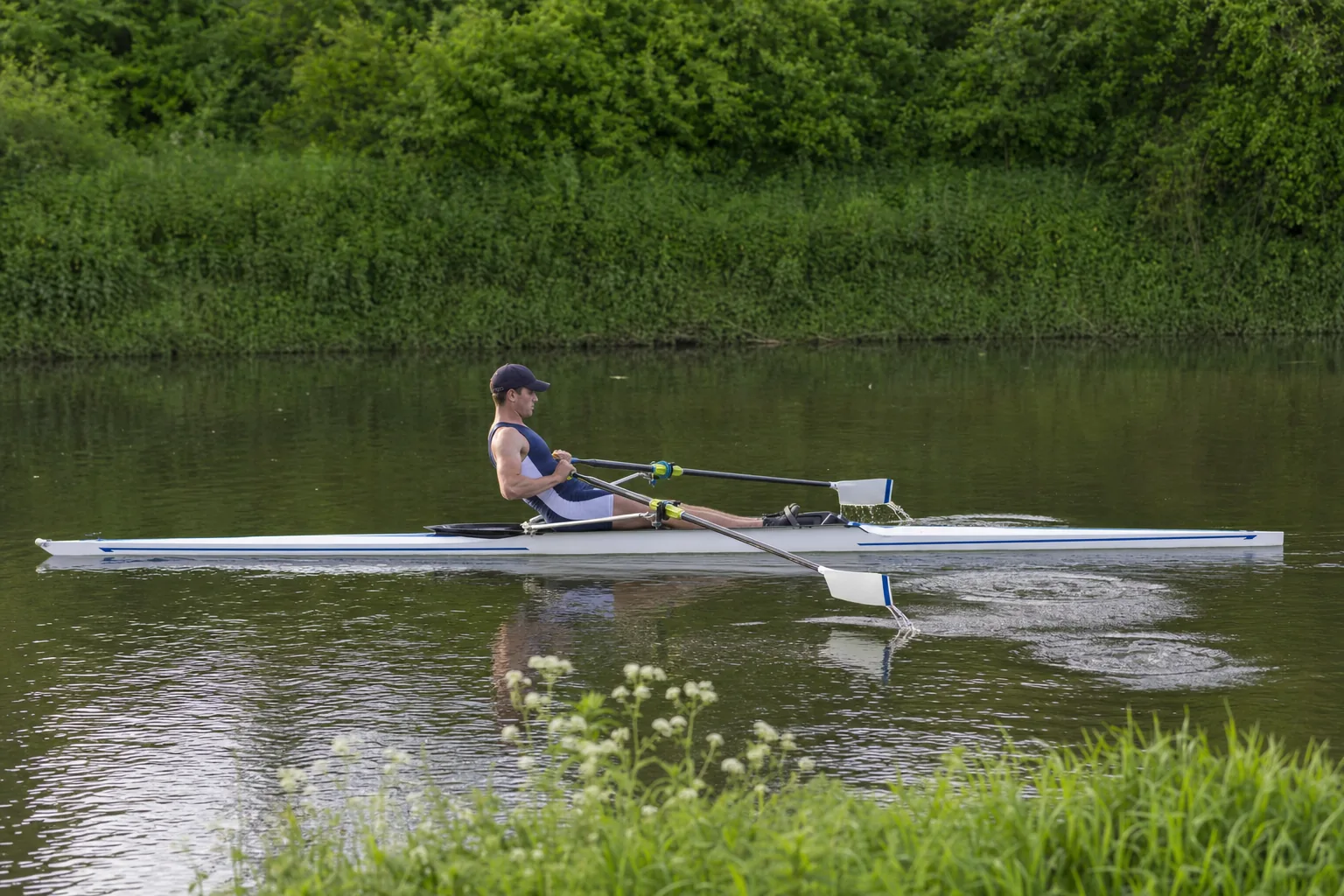
The finish is the instant the blade exits the water at the back end of the drive. The legs are flat, the back has reached its layback position, the hands have drawn into the body, and the blade is lifted clean of the surface by a downward tap of the hands before any wrist rotation. A clean finish protects boat run into the recovery; a sloppy finish washes out, drags the blade, or sets up a crab.
Also called: Release, Extraction, Stroke Finish
Definition
The finish is the single back-end instant when the blade exits the water and the drive phase ends. The athlete has driven the legs to flat, swung the back into layback, and drawn the handle into the body with the arms. The hands then drop sharply to lift the blade clean of the surface, still square to the water.
In sweep rowing the handle finishes at the lower ribs, on the bow side of the body for a starboard rigging and the stroke side for a port. In sculling, both handles finish at the body together with the inside (right, in most US setups) hand slightly ahead of the outside. The terms finish, release and extraction all refer to this same back-end exit moment. The catch is the front-end equivalent at the other end of the slide.
Body position at the finish
Four checkpoints define a balanced finish position from which the recovery can start cleanly:
- Legs: flat, knees fully extended. The slide is all the way back at the back stop.
- Back: at layback, around 30 degrees past vertical. The back stays braced and the ribs stay lifted. Collapsing onto the lap kills the recovery sequence before it starts.
- Arms: drawn in to the body, elbows past the ribcage, knuckles at the lower ribs. The handle is at the body, not floating in front of it.
- Wrists: flat, controlled. Ready to tap down to extract the blade, not yet rotating.
Blade extraction at the finish
Extraction is the action of lifting the blade out of the water at the finish. The hands tap down sharply, the blade pops vertically clear of the surface, and the blade is still square at this point. The wrists do not roll during the tap-down. They just drop.
The wrist rotation that feathers the blade flat for the recovery happens after the blade is clear, never while it is still in the water. Tap-down, then feather. Reversing the order is the dominant cause of crabs across US college and prep school rowing. From the launch the coach sees the blade scything sideways before lifting out. From the seat the athlete feels the blade catch and twist the handle.
Common finish errors
The finish is where US club and college crews leak the most easily recoverable speed. Four faults account for almost all of it:
- Washing out: the blade leaves the water early in the drive, before the rower reaches the body. The last several inches of the drive apply no force and the boat decelerates noticeably between strokes.
- Late extraction: the blade stays in the water past the finish, dragging through the start of the recovery. The boat is actively decelerated by the trailing blade.
- Feathering before extraction: the wrists roll while the blade is still in the water. The blade slices sideways and can dig in. The single most common cause of crabs in any program.
- Rushing the finish: the athlete jerks the hands away or starts the recovery before the finish is complete. The shell lurches and the next catch begins off-balance.
Drills that train the finish
Pause at the finish (sit at full extraction with hands at the body for two seconds, then start the recovery) builds position awareness and exposes any collapse in the back. Square-blade rowing forces the athlete to tap down cleanly before any wrist can roll because there is no feather to hide behind. Hands-away drill (stop the slide entirely and isolate the hands-away action between strokes) cleans up the finish-to-recovery transition. Outside-the-boat coaching is more useful for finish work than inside-the-boat coaching, because the blade angle at extraction is hard to see from the rower's own seat. The Row HQ coach toolkit lets coaches log finish notes against individual athletes across the fall HOCR block, the winter erg trials and the spring sprint season.
Finish FAQs
What is the finish in rowing?
The finish is the back-end blade exit. The athlete has finished the leg drive (legs flat), reached layback (back swung past vertical to about 30 degrees), and drawn the handle into the lower ribs with the arms. The blade is then lifted vertically out of the water by a sharp downward tap of the hands, still square. From that instant the finish is over and the recovery begins. Some coaches call it the release or the extraction. All three terms refer to the same point in the stroke.
How do you extract the blade cleanly?
Vertical, not horizontal. The hands drop sharply, the blade pops up out of the water still square, and only then do the wrists roll to feather the blade flat for the recovery. Tap-down then feather, never the reverse. If the wrist starts to roll while the blade is still in the water, the blade slices sideways and digs in, which is the most common path to a crab. The order is non-negotiable, and US college coaches teach it from the first novice outing.
What does washing out mean?
Washing out is when the blade leaves the water early, before the drive is finished. Usually because the back opened too soon, or the handle path drifted down through the second half of the drive. The last six to twelve inches of the drive run with no blade in the water, so no force gets applied to the shell at the point where the boat is moving fastest and the rower should be finishing the stroke off cleanly. Over a 2k it adds up to multiple boat lengths against a clean-finishing rival.
What is the body position at the finish?
Legs flat with knees fully extended. Back at layback, leaned back roughly 30 degrees past vertical, ribs lifted (not collapsed onto the lap). Hands at the body, knuckles at the lower ribcage, elbows back past the torso. Wrists flat, controlled, ready to drop. The body is in a stable, balanced position from which the recovery sequence (hands away, body forward, slide forward) can start cleanly.
How does a clean finish prevent catching a crab?
A crab happens when the blade gets stuck in the water during the extraction or recovery, almost always because the wrist rolled before the blade was clear. Tap-down then feather keeps the blade above the water all the way through the recovery so it cannot dig back in. Athletes who feather first, then try to extract, leave the blade angled in the water and pick up crabs in any kind of chop on the Charles, the Schuylkill or the Cooper. The feathering entry covers the wrist rotation itself.
Related
What is the Catch in Rowing?
The catch is the single instant in the stroke when the blade enters the water at the front of the slide. The shell is mo...
What is the Drive in Rowing?
The drive is the propulsive half of the rowing stroke, running from the catch at the front to the finish at the body. Po...
What is the Recovery in Rowing?
The recovery is the non-propulsive slide back from the finish to the catch, with the blade out of the water. The boat ke...
What is Catching a Crab?
Catching a crab is the moment an oar fails to release while the shell is still under power. The hull keeps moving, the l...
What is Feathering in Rowing?
Feathering is the wrist rotation that turns the blade flat to the water between strokes. Square during the drive (so the...
Keep learning
The finish gives coaches a clear view of an athlete's extraction and handle path. Record those details after practice with Row HQ's rowing club software. The rowing glossary connects the finish to every other stroke phase.
Track finish technique notes across the squad.
Most US programs lose finish work the moment the practice ends. Row HQ logs technique notes against each athlete so the late-extraction note your varsity coach made on Tuesday is the first thing the JV coach sees on Saturday.