The honest answer in 30 seconds
Building the week's fleet, from 1V 8+ down to a couple of 1x outings, should take a quarter of an hour. Most Canadian clubs spend a Sunday afternoon on it because each lineup gets reconstructed from a blank page. The six-step routine reverses that. Pull availability before the week starts, sort the confirmed list by side, weight and OUA-eligibility band, lock the boat shed first (Hudson eights, Filippi fours, the older training 4x) and slot crews into hulls rather than the reverse, reuse last week's working pairings, push a single lineup at a pre-agreed hour the night before through the channel your squad actually reads, and write down what moved well. Do the planning at the kitchen table, not in the boathouse with the heavyweights watching. Software that holds your lineup library across the season shortens the routine further; a coil-bound notebook and a stubborn weekly habit still gets you there.
A Canadian club fleet on a Saturday morning is rarely a simple thing. A varsity programme like Western, Brock or Trent might launch 1V 8+, 2V 8+, women's 8+, a 4- and a 4+ inside ninety minutes. A smaller club on the prairies might run a 4x, two 2x and a couple of 1x out of one dock with a single coach launch shadowing all of them. Either way, the routine that puts those crews on the water is the same six steps. Run them in order, keep a library of last week's lineups, and the whole job collapses into the fifteen minutes between dinner and the kids' bedtime. The notes below are pitched at the volunteer coach holding a Hudson eight fleet together with one assistant and a strong cohort of masters scullers, but the same routine scales cleanly up to a U SPORTS programme at St Catharines.
The six-step weekly fleet method
What follows is the routine working coaches actually use across Canadian clubs, scaled from twelve-rower masters programmes through to varsity squads of a hundred. Every step pays back hours per week once it is running.
Step 1 - Capture availability before you start
The first failure mode is sitting down to plan the fleet on Sunday afternoon without a clean list of who is rowing. Half an hour disappears immediately into chasing replies. Availability is the membership's job to provide, not the coach's job to extract.
Open the availability ask the Sunday before, for the whole week ahead. Require an active reply (tap, click, single-word yes). Anyone who has not actively confirmed by midnight the day before a given session is treated as unavailable for that session and the lineup is built without them. The first time you enforce this with the squad it feels harsh; by the second week the confirmation rate sharpens noticeably because people learn that silence costs them a seat in the 1V.
The opposite model (assume everyone is in unless they declare otherwise) loads the chasing back onto the coach and breaks the moment the squad climbs past twenty rowers. Active confirmation scales because every rower is responsible for their own status, not for yours.
Step 2 - Group rowers by category
Once the confirmed list is in, sort it before you touch any boat names. The categories that drive Canadian club fleet planning:
- Weight band against RCA thresholds - lightweight (men 72.5 kg, women 59 kg as the standard Rowing Canada Aviron categories) and heavyweight. A handful of clubs add a "near-light" band for athletes within two kilos of the cap.
- Side - bow side, stroke side, or both. Bilateral sweep rowers are the most valuable people on the availability list because they fit any seat in any 4-, 4+ or 8+.
- Eligibility bucket - varsity (OUA, U SPORTS, RSEQ), CSSRA-eligible junior, senior open, masters by age category, novice. Determines which boats they can be put in and which regattas they are pointing at.
- Sweep or sculling - most Canadian clubs run both, and the matrix matters: a sweep rower who can also scull credibly is the difference between launching a 4x and leaving it in the rack.
- Ergo band - winter 2k or recent 6k score, used as a tie-breaker for the marginal seats and a sanity check on the 1V versus 2V split.
Most Canadian clubs end up with five or six working categories that combine in predictable ways. A senior heavyweight bilateral sculler is rowable in almost anything in the shed. A novice lightweight bow-side sweep rower has a much narrower set of options. Knowing the matrix before you reach for the boat names turns lineup work from a creative puzzle into a constraint problem with a small number of valid answers.
Step 3 - Match crews to available boats
Canadian club fleets are usually built around one or two flagship Hudson eights, a couple of Hudson or Filippi fours (some coxed, some coxless), a 4x that doubles as a training quad and a sculling teaching boat, a pair of 2x, the odd 2-, and a row of 1x along the back wall. Every one of those hulls carries constraints. Hudson Eight C-spec rigging tops out around the 90 kg average crew weight that most varsity women's 8+ run comfortably; the older training 4x at the back of the shed will not take the full senior men's squad without complaint; the 4- with the high seat heights is the one the bigger heavyweights actually want.
Write the rowable boats up first, with their constraints next to them, then map crews into them. Choosing crews first and boats second is how three coaches end up reaching for the same 1V 8+ at the same time. The 1V always gets allocated first because it sets every other lineup; the 2V and women's 8+ next; the 4- and 4+ after that; the sculling boats round things out.
Always leave one boat's worth of slack. A late injury, a rigger that snapped at the Friday session and has not been swapped, a varsity rower whose Friday-night plans ran long, one of these will happen most weeks. A spare boat is a buffer. A fleet that is exactly full is a problem that propagates through the morning.
Step 4 - Assign seats with deliberate pairings
Once a crew is in a boat, seat order matters more than most coaches admit on a regular training day. The bow pair of the women's 8+ either sets a rhythm the stern half can follow or makes everyone above them work harder than they should. The stroke pair of the 4- sets the rate the boat actually rows at, regardless of what the coxswain calls. The two and three seats of any eight are where power either lands or scatters. Pairs that have rowed together cleanly will keep doing so; pairs that have rubbed each other up the wrong way will keep doing that, too.
Use what last week told you. If the 1V rowed a clean piece on Wednesday morning with a particular middle four locked in, start Saturday's 1V from that lineup and only swap the seats availability forces you to swap. That is the saved-lineup principle, and it is what makes a season worth of fleet planning compound rather than reset. Coach software that holds the lineup library makes the reuse instant; a hardback notebook on the kitchen table works too, it just takes longer to flip through come February.
Step 5 - Send the lineup once it is final
Pin a release time the night before and hold to it. Most Canadian squads land between 7 and 9 pm on the channel they actually read (WhatsApp at almost every club from Halifax through to Vancouver, Discord at most varsity programmes, the club app at the clubs running one). Post the full fleet at the agreed hour: every boat, every seat, every coxswain, every coach launch assignment. Anything earlier and partial trains the squad to ignore your first message and wait for the "real" one.
Lock the lineup the moment it is up. The only acceptable reasons to change it afterwards are a real injury reported by the rower in question, a boat that came in damaged on the Friday evening row and was not flagged in time, or a coxswain who has actually phoned to say they cannot make it. Everything else holds until the next session's lineup. The discipline pays itself back inside the first month because the cascade of last-minute swaps (one rower out forces a side switch, which forces a 4+ rebuild, which forces a 4- rebuild) disappears.
Step 6 - Record what worked
Five minutes at the kitchen table after the session is the most underused tool in Canadian club coaching. Write down what moved well and what did not: the 4+ that finally found its rhythm at 28, the 2x that needs to swap stroke seats, the masters quad that pulled a personal-best 2,000 metres up the course. Save the full lineup somewhere durable (notebook, spreadsheet, club app, whatever survives an iPhone upgrade) so next Sunday opens with something to start from rather than a blank page.
Run that routine every week through a full Canadian season (fall trial block, indoor winter, spring on-water, Henley build, summer racing) and by the time the calendar reaches Royal Canadian Henley week you hold a working library of a hundred lineups, indexed against weather, water, crew availability and result. Selection at that point becomes a question of choosing from pairings whose behaviour you already know, not a creative-writing exercise on a Sunday afternoon.
Common mistakes that slow this down
A handful of recurring patterns will break the method if you let them. Watch for these specifically in a Canadian club setting:
Assigning boats on the dock. Doing the fleet at 5:45 am with sleepy heavyweights standing around turns every decision into a live negotiation, slides the launch off schedule, and starts the session with the coach already irritated. Do the planning the night before, alone, from the saved lineup. Post the result. Defend it on the dock.
Letting one strong rower veto every pairing. Almost every club has a rower (often the strongest sculler, often a returning varsity athlete) who has firm opinions on who they will and will not row with. Honouring every veto leaves you with no workable lineup within a fortnight. Be willing to put people who do not get on into a 2- or a 4- together for at least one session before deciding the pairing genuinely will not work.
Fleet by committee. Two head coaches plus a varsity assistant plus a senior masters coach all wanting input on every lineup multiplies decision time by ten and diffuses accountability. One coach owns the fleet for the squad. The others give information and advice. The decisions belong to whoever owns the fleet that week.
Treating the 2V as a residual. The 2V 8+ that is just "whoever is left after the 1V is set" never rows well. Treat the 2V as a crew in its own right, with its own stroke pair and its own internal rhythm. Most of the better OUA programmes (Western, Brock and Trent in particular) hold the 2V together with intent because that is where next year's 1V actually comes from.
When to break the rules
The six-step routine above is a training-week tool. It is the wrong instrument for picking a championship 1V 8+ for the Royal Canadian Henley, the CSSRA Schoolboy Championship eight, the OUA Championship lineup at McMaster or Brock, or the U SPORTS final at St Catharines. Championship selection is a different problem: longer planning window, ergo trial blocks, side-by-side seat racing across the spring, weight management, sometimes athlete recruitment from outside the squad. Treated as the same job, it collapses both.
For weekly training the goal is far simpler. Put boats on the water reliably enough that the squad can actually train, lineup after lineup, week after week, through the long Canadian winter and into the spring. The six-step method exists for that and for nothing else. If the question is "who is the 1V 8+ at Royal Canadian Henley", the answer lives in the seat-racing process covered in the sister post linked below.
Tools that help
The method above runs on paper. It runs better on software that handles the data. The three jobs worth automating are availability collection (so confirmations aggregate into one view instead of forty WhatsApp replies), saved-lineup storage (so reuse is instant rather than a flick through a notebook), and lineup release (so the post goes out at the pinned hour through the right channel without you remembering).
Row HQ's coach tools do all three jobs together so the routine collapses from a Sunday afternoon to a fifteen-minute kitchen-table block.
For the harder question of seat racing and how a Canadian club actually identifies its 1V 8+, see the crew selection post. For the related question of session attendance and how to keep the cox-and-rower count predictable across the week, read streamlining training sessions.
Cut weekly fleet planning to fifteen minutes
See how Row HQ's coach tools turn the six-step fleet method into a routine any coach on your Canadian programme can run consistently from one Sunday to the next.
Request a DemoFrom the RowHQ shop
Printable PDFs written for club rowers. Buy once, keep forever.
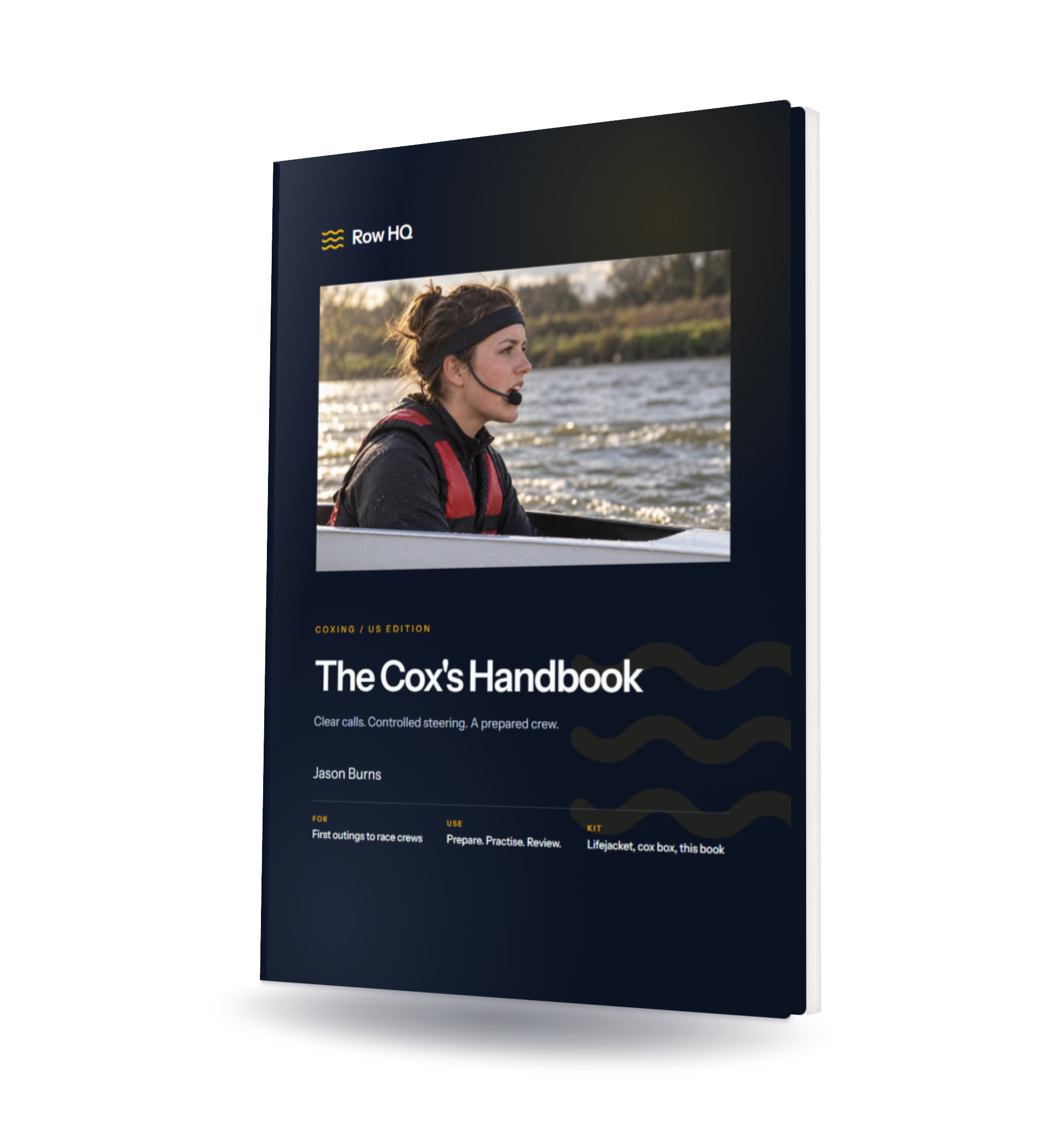
The Cox's Handbook
Practical calls, steering, session drills and race plans for new and improving coxes. Includes five printable worksheets.

The Club Session Library
52 rowing sessions for club coaches, with an illustrated coaching PDF, editable CSV plans, two seasonal blocks and a printable coaching cheat sheet.
Sources & references
- Rowing Canada Aviron - Club and coach resources — Rowing Canada Aviron
- Rowing Ontario - Club resources and regatta calendar — Rowing Ontario
- Rowing BC - Club support and development — Rowing BC
- Canadian Schools Rowing Association (CSSRA) — CSSRA
- Royal Canadian Henley Regatta — Royal Canadian Henley Regatta
- Row HQ - Coach tools feature page — Row HQ
- Row HQ - Training sessions feature page — Row HQ
- Row HQ - Member portal feature page — Row HQ
- Row HQ - Crew selection guide — Row HQ
- Row HQ - Streamlining training sessions — Row HQ