Catch
The catch is the split-second of blade entry at the front end of the slide, before the legs start to push. Get the blade in fast and clean and the boat keeps its run. Miss it by a few hundredths of a second and the squad loses the front of the stroke before the drive has even started.
The Catch: Blade Entry at the Front of the Stroke
In Irish coaching language the catch is the single split-second at the front end of the slide when a square blade is pinned into the water before the legs start pushing. Body is compressed, shins close to vertical, arms long. Skibbereen squads talk about the catch in milliseconds because Olympic medal margins live in that gap between blade entry and leg drive. On exposed water like Lough Ree or the lower Lee in a southerly chop, a sharp catch is the difference between holding boat run and washing through the front five degrees of the arc.
Also called: The Catch, Blade Entry
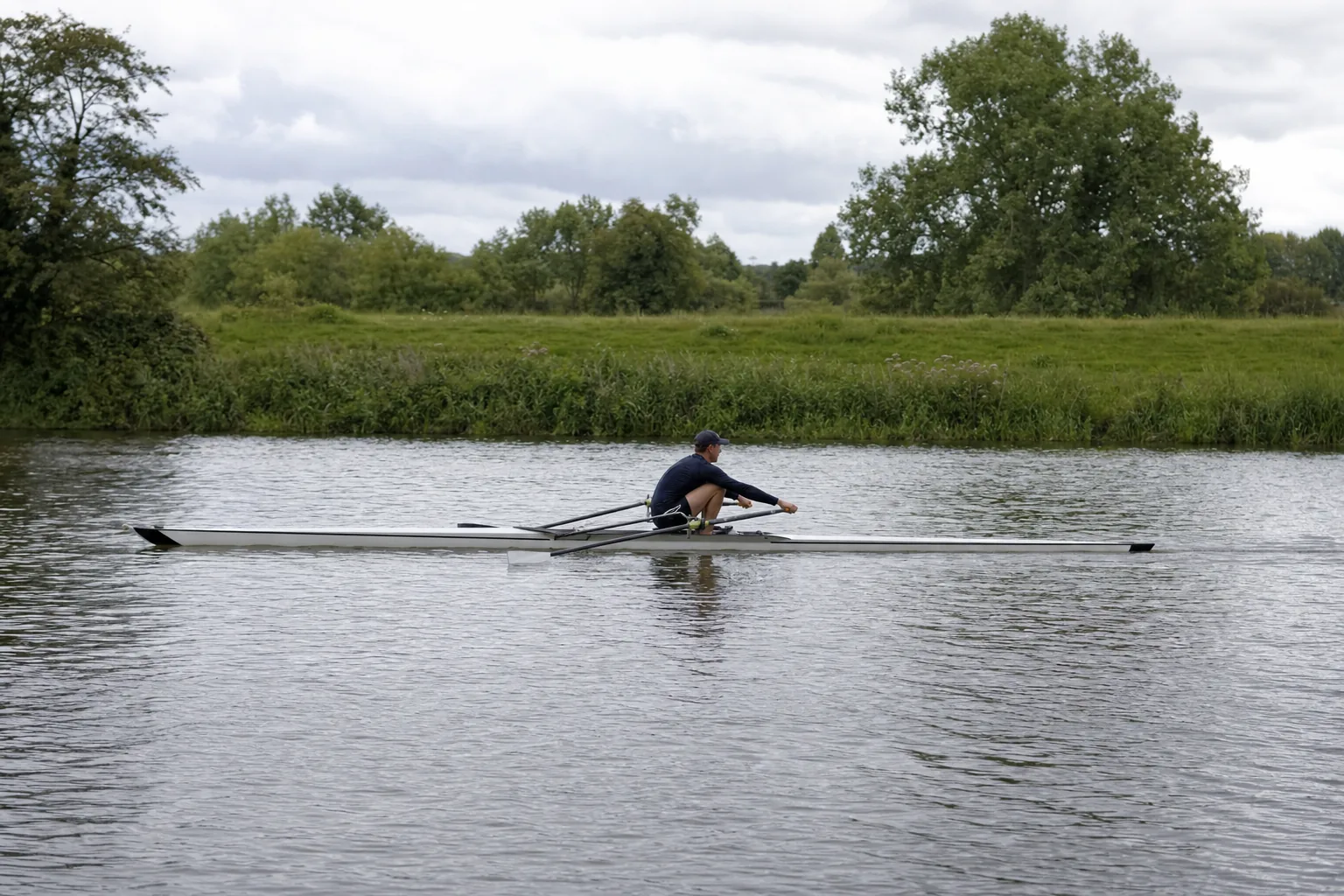
What the catch actually is
The catch is one moment, not a phase. The rower has slid all the way to the front stop, the legs are compressed, the body angle was set back at quarter slide, the arms are long and the blade is square. The hands drop, the blade falls into the water, and the second the spoon is fully covered the catch is over and the drive starts.
It is worth keeping the catch separate from the front turnaround. The turnaround is the change of direction at the seat. The catch is what the blade is doing at that moment. A rower can have a perfect turnaround and still miss the catch by a frame or two if the hands are slow to drop.
Position at the front stop
The same catch position holds across every boat class an Irish squad puts on the water:
- Legs: fully compressed at the front stop, knees up, shins vertical (or as vertical as the rower's mobility allows).
- Back: reaching forward over the knees, body angle set from quarter slide. The chest should be on top of the thighs, not behind them.
- Arms: long and loose, no early bend at the elbow. Shoulders down and relaxed.
- Blade: already square (perpendicular to the water), waiting above the surface for the hands to drop.
Timing: why the hands drop, the legs do not push
The boat is at its fastest in the half-second before the catch, riding the run from the previous stroke. Every frame the rower is at full reach with the blade still in the air is a frame the boat is moving on its own with no one applying power. That is what coaches mean when they call out "missing water" off the launch on Inniscarra: the rower is in position but the blade is late.
In Irish coaching shorthand the cue is "drop and accept". The hands drop, gravity puts the blade in the water, and the rower accepts the connection before the legs fire. Punching the blade into the water with the shoulders is a faster way to bury the spoon, but it lifts the bows and costs more boat speed than the milliseconds saved on the entry.
What goes wrong at the catch
The catch is the single most-coached moment in the stroke because every error at the front carries through the drive that follows:
- Missing the catch: legs fire before the blade is in. The first portion of the leg drive is unloaded, then suddenly loaded as the blade arrives late. Power profile is wrecked.
- Washing in: blade is only half-buried when the legs start. The spoon slips through the water rather than locking on, and the rower loses the front section of the arc.
- Late square: the rower is still finishing the squaring motion as the seat hits the front stop. The blade enters on the slice and splashes rather than dropping in clean.
- Rushed slide into the catch: the recovery is too fast, the rower arrives at the front stop with check on the boat, and there is no settled platform from which to drop the blade.
Drills that fix the catch
Square-blade rowing is the gold-standard catch drill in Irish boathouses. Once the safety net of feathering is gone, every sloppy entry is exposed. Pause-at-the-catch sets (hold full reach for two seconds, then drop and drive) build position awareness and force the rower to feel a still blade above the water. Closed-eye recovery drills strip out visual cues and rebuild timing from feel. Coaches at NUIG, Commercial RC and UCC layer these in over a winter trial block, and most crews can dial in a noticeably sharper front end inside a fortnight. Coach tools let the technique notes from a Tuesday outing follow the rower into Thursday's session rather than vanishing into a coach's notebook.
Catch FAQs
What is the catch in rowing?
The catch is the front-end blade entry: one instant in which a square blade goes from above the water to fully buried, immediately before the leg drive starts. Full compression at the front stop, body angle already set on the slide forward, arms straight, shins close to vertical in a sweep boat and bang-on vertical in a sculling shell. The hands drop sharply, the blade falls into the water under the weight of the handle, and the legs only fire once the blade is covered.
How quickly should the catch happen?
Fast. The hull is moving quickest in the half-second before the catch, riding the run from the previous stroke. Any gap between the rower hitting full reach and the blade locking in is hull speed thrown away. Irish coaches call that gap "missing water", and the boat will tell on a rower who is slow at the front before any cox notices it on the speed trace.
What are common catch errors?
Four show up again and again at Irish club level: missing the catch (legs firing before the blade is in), washing in (blade only half-buried when the legs start), late square (blade still partly feathered as the rower hits the front stop, so the spoon enters on the slice), and rushing the slide (recovery too quick, so the rower arrives unsettled and cannot place the blade cleanly). Most novice crews on the lower Shannon or the Garavogue show all four in the first month.
How do you set up a clean catch?
A clean catch is built on the recovery, not at the front stop. Square the blade by the time the hands cross the knees, keep the body angle locked from quarter slide, let the slide breathe under control all the way forward, and drop the hands the moment the seat hits the front. The blade enters under its own weight. The legs do not fire a frame early.
What drills improve the catch?
Square-blade rowing is the workhorse drill in every Rowing Ireland coach-pathway session because feathering can no longer mask sloppy blade entry. Pause work at hands-away and body-over builds patience on the recovery, which is where most catch faults are actually made. Closed-eye recovery drills (eyes closed from the finish, opening only as the seat hits the front stop) train timing without leaning on visual cues. NRC sessions out of Inniscarra often layer all three across a single 20-minute warm-up.
Related
The Drive: The Propulsive Half of the Stroke
The drive is the propulsive half of the stroke. Blade buried, legs first, back next, arms last. This is the only half th...
The Finish: Clean Blade Extraction
The finish is the back-end moment when the blade comes cleanly out of the water and the stroke hands off into the recove...
The Recovery: Slide Back with the Blade Out of the Water
The recovery is the slide back between strokes, blade out of the water, from finish to next catch. It produces no propul...
Stroke Rate: Strokes Per Minute Cadence
Stroke rate is the cadence of strokes per minute a crew rows. Anywhere from 18 on a long base paddle on Lough Ree to 44...
Feathering: The Quarter-Turn That Lays the Blade Flat
Feathering is the quarter-turn wrist roll that lays the blade flat to the water between strokes. Square in the water on...
Keep learning
A clean catch is easier to build when coaches can spot the same timing issue across several outings. Row HQ keeps those notes with each rower, and the rowing glossary keeps the language consistent.
Stop losing technique notes between the Lee and the launch.
Row HQ pins catch, drive and finish observations to the rower they belong to, so the front-end work you did on Tuesday morning is still there for the coach taking Thursday's outing.