Catch
The catch is the front-of-slide moment where the spoon drops from above the water to fully buried. Shins go vertical, the back stays forward, the handle falls sharply, and the leg drive starts the second the blade is covered. Win the catch and the boat run from the previous stroke carries forward; miss it and the next drive opens on damage control.
The Catch: Blade Entry at the Front of the Slide
The catch is the snapshot frame at the front of the rowing stroke where the spoon goes from feathered above the water to square and buried. Knees are pinned to the chest, shins vertical, body angle set, arms straight off the rigger. The handle drops sharply, the blade falls in under its own weight, and the leg drive begins the instant the spoon is covered. A snappy catch turns the boat run from the previous stroke into the next stroke; a missed one bleeds metres a regatta will not give back.
Also called: The Catch, Blade Entry
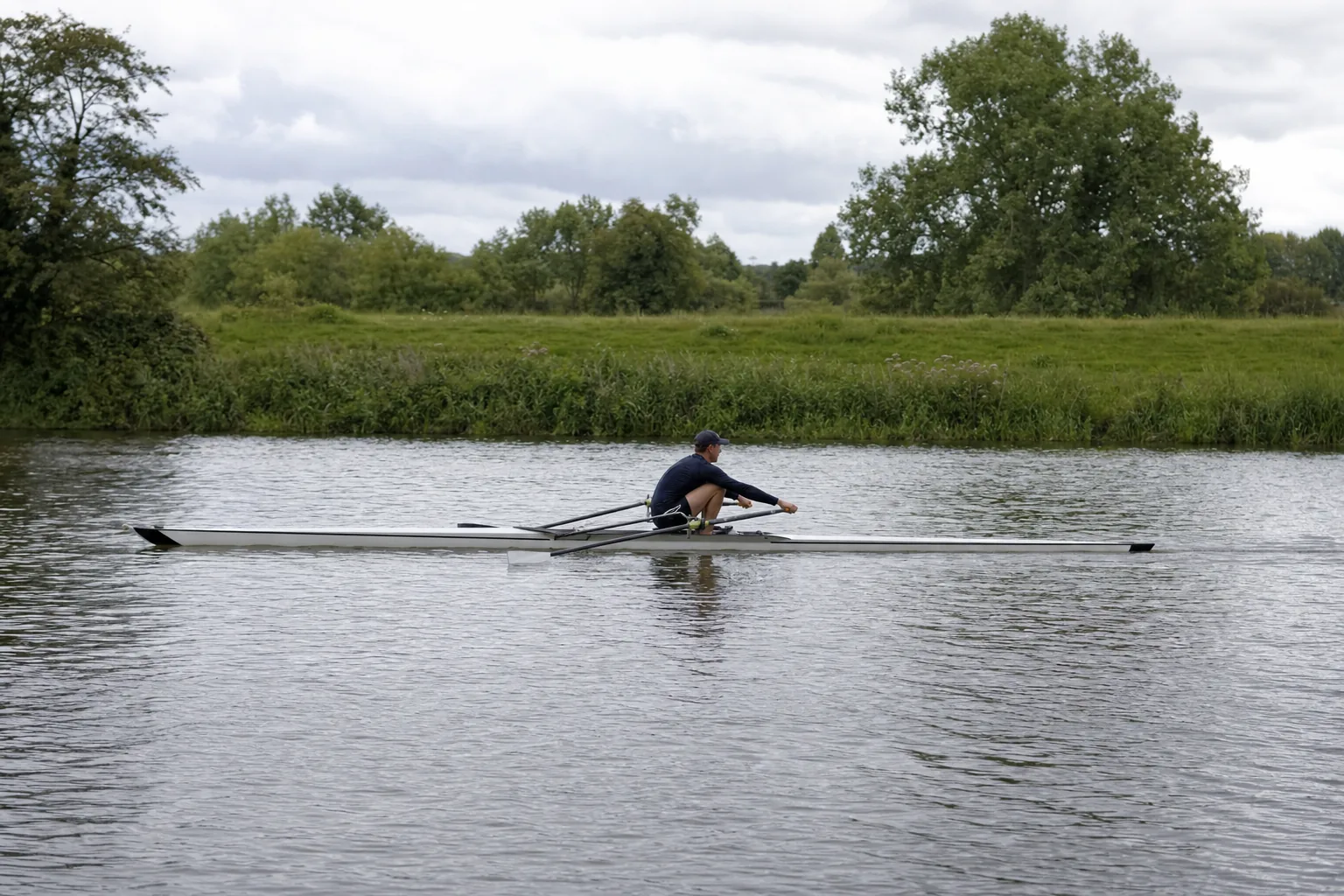
What the catch actually is
The catch is the snapshot frame at the front of the rowing stroke. The rower has slid to full compression against the front stop, shins are vertical (single sculls) or just shy of vertical (sweep rigs), body angle was set back near half slide, and the arms hang long off the pin. The blade is square - perpendicular to the surface - and the spoon hovers above the river ready to drop.
Catch is one specific moment, not the whole front turnaround. The turnaround is the change of direction at the front stop; the catch is the act of getting the spoon in cleanly inside that turnaround window. A rower can hit the front stop without ever taking a real catch, which is why coaches differentiate the two when the boat looks "stopped" at the front.
Body checkpoints at full reach
The position is identical across boat classes from a U17 single at the Penrith International Regatta Centre through to a King's Cup eight:
- Legs: fully compressed against the foot stretchers, shins vertical, knees pinned up under the armpits.
- Back: body angle locked in well before the front stop, chest over the knees, shoulders relaxed and level.
- Arms: long, no bend at the elbow, hands soft on the handle so the wrist roll is free.
- Blade: square and a few centimetres above the surface, ready to drop on a vertical hand movement.
Why the catch has to be quick
Boat speed peaks during the recovery and falls off the moment any blade goes in the water. The half-second around the catch is the most expensive in the stroke - every fraction of a second between full reach and blade burial is hull speed bleeding away.
Aussie coaches describe the action as "drop and connect", "punch the front" or "snap it in". The hands fall under their own weight rather than being pushed down. The lift comes from the leg drive, not from the hands forcing the spoon under. Slow catches get labelled "missing water", "ghosting" or "rowing it in" depending on the shed, and all three mean the same thing: hull speed lost at the most fragile moment of the stroke.
The four catch faults that follow Aussie crews the longest
A catch fault never stays at the catch. Whatever goes wrong at the front sets up errors through the drive, finish and into the recovery, which is why this end of the stroke gets disproportionate coaching attention from junior squads through to King's Cup selection:
- Rowing the catch in: the legs go to work before the spoon is buried. The first portion of the drive applies leg force into thin air, the blade scoops in late, and the connection arrives after the heaviest leg push has already gone.
- Spoon not covered: the blade is barely in when the legs fire, so the drive starts with the spoon slipping rather than getting a hold. Looks like white water alongside the puddle.
- Late square: the wrist roll happens too close to the front stop, so the spoon enters at an angle and splashes rather than dropping in. Most often a recovery problem masquerading as a catch problem.
- Bouncing the front stop: the recovery is rushed, the seat hits the front stop hard, the rower rebounds and the catch is forced. Always slower on the recovery than the drive, even at race rate.
Drills that build a snappy catch
Square-blade rowing is the cornerstone Aussie catch drill because it removes the option of a late square and forces an honest tap-in at the front. Pause-at-the-catch (full compression, two-second hold, then catch and drive) trains the position and exposes any balance loss in the front quarter. Half-slide and quarter-slide rowing isolate the leg connection at the front. Most shed programmes pair these with video review from the bank or tinnie before pieces start carrying any rate. Coach tools let coaches log technique notes against individual rowers so a fault flagged at the Sunday outing is still in the system for the Wednesday session.
Catch FAQs
What does the catch actually mean in a rowing stroke?
The catch is the instant the spoon goes underwater at the front end. Shins are vertical, knees pinned to the chest, the back is over the knees with the arms long off the pin, blades already squared from halfway up the slide. The hands drop, the spoon falls in, and once it is fully covered the legs go straight to work. Aussie schools rowing from AGSV through CAS and the GPS competition drill the catch from Year 8 because it is the one stroke phase where a poor habit shows up on a regatta margin years later.
How sharp does the catch need to be on a moving boat?
Sharp. The boat is travelling at peak speed in the half-second before the spoon goes in, because the previous drive has dropped off and nothing is dragging in the water yet. Any pause between full compression and blade entry is metres the boat travels while the rower is not connected. Coaches call that gap "missing water" or "ghosting the front". A clean catch feels like the handle is pulled down by gravity, not pushed. The same phase trains differently on the ergometer because there is no run to lose, which is why AIS protocols pair shed work with on-water square-blade kilometres before any rate piece.
What does an Aussie coach usually pick up first?
Four faults in roughly this order: rushed slide into the front so the seat hits the stop and the rower bounces, late square where the spoon is still half-feathered at full reach, opening the legs a beat before the spoon is buried (called "rowing it in" or "shooting the catch"), and dragging the spoon across the surface because the handle path lifts instead of dropping. All four are visible from the bank in seconds and all four show up clearly on a follow boat at Penrith or West Lakes.
How do you set up the catch before you get there?
The catch is set on the recovery, not at the front stop. Square the spoon at the body-over position around half-slide, hold the hands light on the handle, let the boat come to the rower rather than the rower lunging at the boat. By full compression the spoon should already be square and floating a few centimetres above the surface, ready to drop. The drop itself is a vertical movement of the hands. The legs never move first.
Which drills do Aussie programmes lean on for catch work?
Square-blade rowing is non-negotiable in most boatsheds because it removes the option of hiding a late square behind a clean feather. Pause-at-the-catch holds the rower at full reach for two seconds before the spoon goes in, so the position has to be balanced rather than rushed through. Eyes-closed-on-recovery drills are popular in Year 11 and 12 squads because they force the rower to feel the boat instead of looking down the slide. Open the eyes at the moment of catch and check the spoon placement matches the timing.
Related
The Drive: The Only Phase That Moves the Boat
The drive is the leg-back-arm push that runs from the moment the spoon is buried at the catch through to the body at the...
The Finish: Lifting the Blade Cleanly at the Body
The finish is the back-end transition where the spoon lifts cleanly out of the water at the lower ribs and the drive han...
The Recovery: Patient Slide Forward Between Strokes
The recovery is the slide forward between strokes - the section of the stroke cycle that runs from blade exit at the fin...
Stroke Rate: Cadence in Strokes per Minute
Stroke rate is the cadence of the rowing stroke in strokes per minute (spm). Aussie training bands run 18 to 22 for stea...
Feathering: The Wrist Roll That Sits Between Drives
Feathering is the wrist roll that rotates the spoon 90 degrees between drives - parallel to the water through the recove...
Keep learning
A rushed slide or late square can spoil the catch before the drive begins. Clubs can track those patterns in Row HQ and use the rowing glossary to keep crews and coaches speaking the same language.
Catch fixes stop sliding off the whiteboard.
Row HQ's coach toolkit logs the catch issue you flagged on Tuesday's outing so the Friday coach sees it before the boat pushes off. No re-spotting, no re-explaining.