Catch
The catch is the single instant in the stroke when the blade enters the water at the front of the slide. The shell is moving at peak speed just before it, so any delay between full reach and blade entry is boat speed the crew will not recover on the next drive.
What is the Catch in Rowing?
The catch is the one instant in the rowing stroke when a square blade is buried at full reach and the athlete is about to apply power. The boat is running at peak speed just before the catch, so any delay between full compression and blade entry is speed the lineup will not get back on the drive. C.R.A.S.H.-B finalists, IRA medal eights and Head of the Charles Championship Eight crews are separated by milliseconds at this single point in the cycle.
Also called: The Catch, Blade Entry
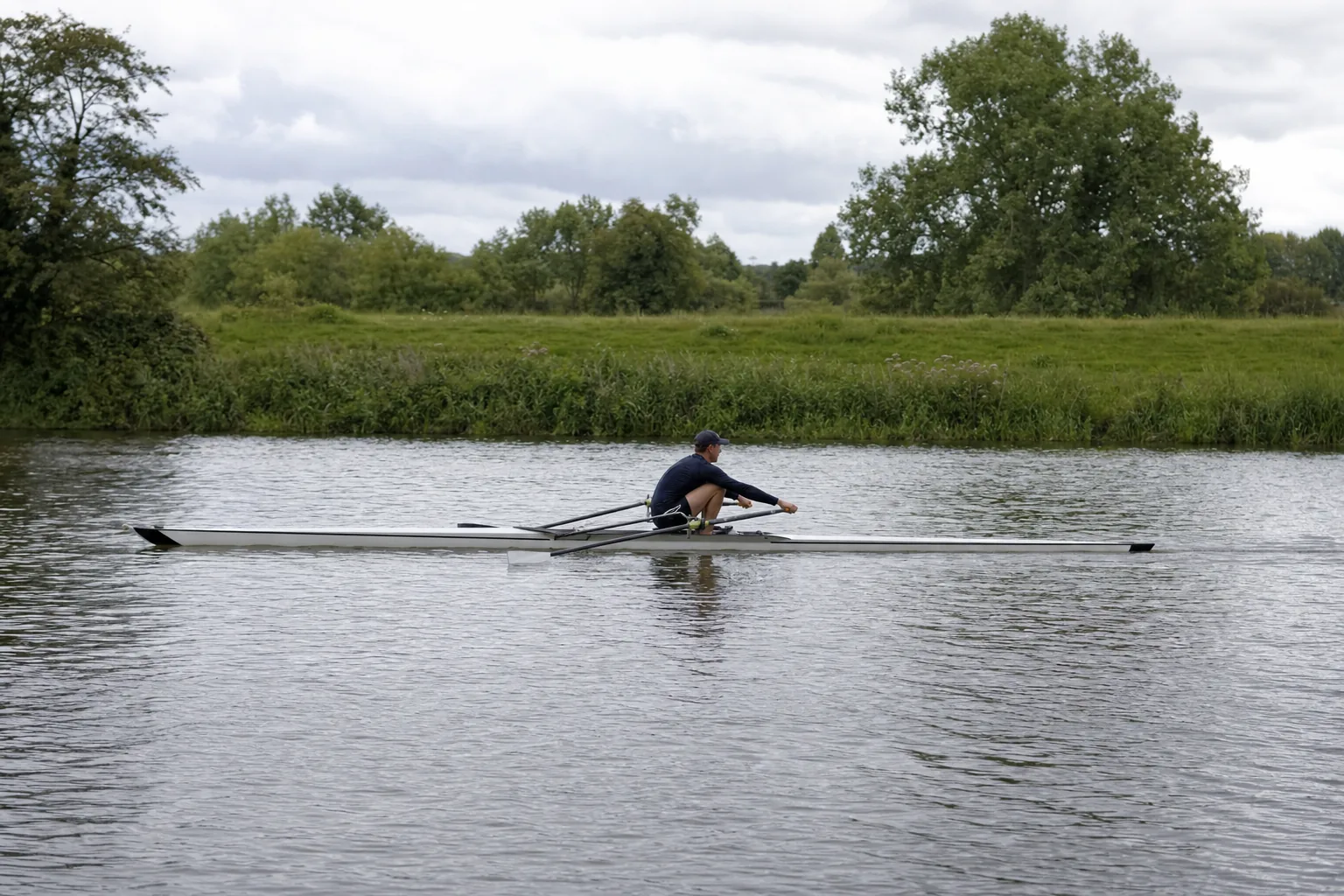
Definition
The catch is the front-end blade entry. The athlete has slid up to full compression, the body angle is set forward over the knees, the arms are extended long, and the blade is already square to the water. With the legs about to change direction, the hands drop and the blade buries. The moment the blade is fully covered, the catch is over and the drive begins.
It is the shortest phase in the stroke (often quoted at under two tenths of a second at race rate) and the most consequential. The catch is what links the four other phases: it follows the recovery, it triggers the drive, and the quality of the entry sets the ceiling for what the leg drive can do next. The drive, finish, recovery, and feathering entries cover the other four cycle stages.
Position at the catch
Body checkpoints at the catch are identical from a single scull on the Charles to a Pac-12 V8+ at Lake Natoma:
- Legs: full compression, knees high, shins close to vertical. The athlete is at maximum reach the slide allows.
- Back: set forward over the knees, body angle established back on the recovery (around quarter slide), chest relaxed over the thighs.
- Arms: extended out long, no bend at the elbow, shoulders dropped.
- Blades: already square, sitting just above the water, ready to drop in under their own weight.
Why the timing of the catch matters
The catch sits at the most counterintuitive point in the cycle. The boat is running at its highest velocity for the entire stroke right before the blade enters, because the previous drive has finished and momentum is carrying the shell forward with no athlete-applied resistance. The instant the blade buries, that velocity peak is over.
A late or soft catch leaves the boat running with no blade in the water. The athlete then starts the leg drive into a shell that is already slowing down, and the first inches of the drive apply force into water that has nothing to push against because the blade is not fully covered. Coaches at Princeton, Cal and Washington describe a clean catch as the blade dropping with the weight of the handle, never pushed in by the shoulders.
Common catch errors
Four faults account for almost every catch issue surfaced at varsity selection or fall HOCR review:
- Missing water: legs unload before the blade is buried. The drive starts into thin air, the boat slows, the blade enters late and the front of the stroke is wasted.
- Washing in at the catch: the blade is partly covered but slipping, often because the athlete buried with the hands rather than letting the blade drop. The first quarter of the drive runs with no purchase.
- Late square: the blade is still feathered, or only halfway between feather and square, at the front of the slide. Entry is angled, the blade splashes rather than drops, and the catch is loud (the giveaway from the launch).
- Rushing into the catch: the recovery accelerated through the second half of the slide, the athlete overshoots the front and lands unbalanced. Once the boat is unbalanced at the catch, there is no clean entry available.
Drills that train the catch
Square-blade rowing is the single most useful catch drill because it exposes every slop in the entry. Most US fall blocks build it into 30 to 45 minutes of every practice through the HOCR build. Pause at the catch (sit at full compression for two seconds, then drop and drive) trains the position itself. Pause at hands-away and pause at body-over fix the recovery sequence the catch depends on. Eyes-closed-on-recovery is the deceptively simple one (close the eyes from finish, open at the catch) that forces an athlete to feel the front of the slide rather than time it visually. Coaches at high school programs from St. Andrews to St. Joe's Prep and college programs from MIT to Stanford log catch notes against individual athletes across the season. The Row HQ coach toolkit stores those notes against the athlete record so the catch problem flagged in October has a paper trail by spring.
Catch FAQs
What is the catch in rowing?
The catch is the single point in the stroke when the blade goes into the water at the front of the slide. The athlete is at full compression (knees high, shins close to vertical), the body angle is set forward over the knees, the arms are long and the blade is already square. The hands drop and the blade buries. From that instant the catch is over and the leg drive starts. The catch is not the front turnaround (which is the change of direction at the front of the slide), it is specifically the blade-in-water moment at the front of the turnaround.
How quickly should the catch happen?
Quick enough that there is no daylight between full reach and the blade being buried. The shell is moving at peak speed in the half-second before the catch, because the previous drive has finished and the boat is gliding. Any pause at the front is boat run the lineup pays for on the next drive. The Yale, Cal, Brown and Harvard programs that consistently medal at IRA train the catch as a single connected action, not a sequence of pause-then-place.
What are common catch errors?
Four show up over and over at varsity selection. Missing water means the legs start before the blade is buried, so the first inches of the drive apply no force. Washing in means the blade is partly buried but slipping, which gives the same useless first inches. Late square means the athlete still has the blade feathered (or partly feathered) at the front, so it enters at an angle and splashes. Rushed slide into the catch means the recovery accelerated, the athlete overshoots the front stop and arrives unbalanced, with no chance of a clean entry.
How do you set up a clean catch?
The catch is built during the recovery. Square the blade about halfway up the slide, hold the slide controlled all the way through full compression, and let gravity drop the hands as the legs change direction. The blade falls into the water with the weight of the handle, not muscle. The legs start to drive the second the blade is fully covered, and not a moment earlier. A clean catch is mostly the consequence of a patient recovery, which is why most catch faults are actually recovery faults in disguise.
What drills improve the catch?
Square-blade rowing is the gold standard because it forces the athlete to set the blade angle on the recovery, exposes any slop in the entry, and is impossible to fake at HOCR speeds. Pause at hands-away and pause at body-over both clean up the recovery sequence the catch depends on. Eyes-closed-on-recovery (close eyes from finish to full compression, open at the catch) trains the athlete to feel the front of the slide without relying on visual cues. Most US college programs build all four into the fall pre-HOCR block.
Related
What is the Drive in Rowing?
The drive is the propulsive half of the rowing stroke, running from the catch at the front to the finish at the body. Po...
What is the Finish in Rowing?
The finish is the back-end blade exit, the instant the blade leaves the water at the body and the drive ends. Tap-down t...
What is the Recovery in Rowing?
The recovery is the non-propulsive slide back from the finish to the catch, with the blade out of the water. The boat ke...
What is Stroke Rate?
Stroke rate is the per-minute cadence the cox box, NK SpeedCoach and Concept2 PM5 monitor display, in strokes per minute...
What is Feathering in Rowing?
Feathering is the wrist rotation that turns the blade flat to the water between strokes. Square during the drive (so the...
Keep learning
Catch timing is easier to fix when every coach records the same fault against the same athlete. Row HQ keeps those practice notes together. The rowing glossary gives the whole program a shared vocabulary.
Catch notes from Tuesday should still be there Friday.
Most catch problems get spotted from the launch and lost in a GroupMe thread. Row HQ logs technique notes against each athlete, so the recurring late-square call the varsity coach made last week is the first thing the JV coach sees this morning.