Catch
The catch is the single instant a square blade buries at the front of the stroke cycle. In Canadian rowing it draws more coaching attention than any other moment in the stroke, because every fault later in the drive can usually be traced back to a poor entry.
The Catch in Rowing
The catch is the single instant a square blade buries at the front of the stroke cycle, with the rower at full slide compression and the body angle already set on the recovery. It is the entry that loads the upcoming drive. NCCP coach education in Canada treats catch quality as a leading indicator of crew speed, and Rowing Canada Aviron squads at clubs from Argonaut RC through Hanlan and out to Burnaby Lake spend more video review here than on any other phase.
Also called: The Catch, Blade Entry
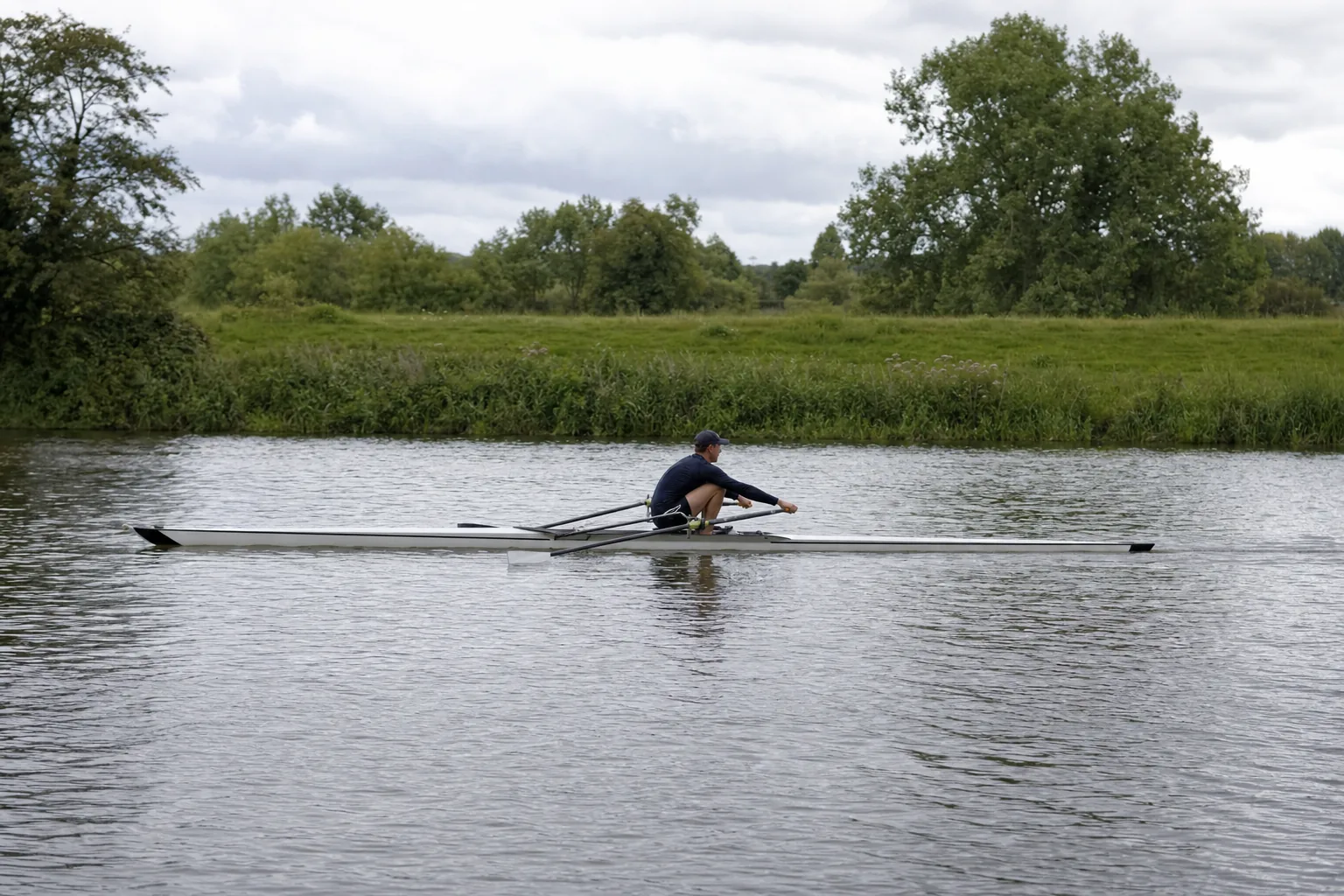
What the catch actually is
The catch is a moment, not a phase. The rower has arrived at the front stop with the slide fully compressed, the body angled forward from the hips and the arms stretched ahead. The blade is square - held perpendicular to the water surface - and the handle drops sharply just before the leg drive engages, so the blade buries cleanly.
The catch is the entry. The drive is what follows once the blade is loaded. The front turnaround - the actual change of direction of the slide at the front stop - is a related but separate event. Confusing the two leads to coaches and rowers talking past each other. The catch is specifically about the blade in the water at the front end, not the body changing direction.
Position checkpoints at the front stop
A correct catch position holds up under any boat class on any Canadian water, from a single sculler on Burnaby Lake to a coxed eight at the Royal Canadian Henley:
- Legs: compressed fully, knees bent, shins stacked as close to vertical as the rigger geometry permits. This is maximum reach for the boat.
- Trunk: rotated forward from the hips at the body angle the rower locked in around quarter slide on the recovery. Chest sits over the knees, not collapsed onto them.
- Arms: reaching long with no elbow bend, shoulders unloaded and tracking with the handle rather than hunching toward the ears.
- Blade: square to the water surface and held just above it, ready to drop in with the natural weight of the handle. No splashing across the surface beforehand.
Catch timing and hull speed
The hull is travelling at its fastest in the stroke cycle in the moment immediately before the blade enters. Every fraction of a second between arriving at the front stop and burying the blade is run leaking away with nothing being added in return. The catch must therefore feel quick rather than careful - the goal is a clean entry, not a soft one.
NCCP coaches in Canada describe the well-timed entry as the blade falling in under its own weight while the rower opens the legs against a loaded blade. The phrase "missing water" is in regular use across Canadian boathouses for the alternative: a late blade entry where the front portion of the available arc passes by with no force applied. A clean catch sounds like a small, distinct splash and feels weighted from the first leg push.
The four catch faults Canadian coaches drill out first
Most catch faults show up in nearly every learn-to-row cohort at a Canadian club. Four account for the majority of the early-season video review work:
- Missing the entry: the leg drive starts before the blade is in the water. The opening fraction of the stroke generates no load, the blade arrives late, and the rower has already used some leg power with nothing to push against.
- Washing in at the catch: the blade is only half covered when the legs engage. The blade skips through the surface rather than holding solidly, and the front of the drive is lost.
- Late square: the wrist roll back to perpendicular happens too close to the front stop, so the blade lands at an angle. The result is a splash across the surface and a messy, sideways entry.
- Rushed slide: the recovery is too quick, the rower arrives at the front stop off balance, and there is no time to place the blade cleanly. The recovery is always slower than the drive in a working Canadian stroke.
Drills that build a Canadian-standard catch
Square-blade rowing is the workhorse drill across Canadian programs - removing the feather forces the rower to build the correct blade angle during the recovery and rewards a quick, clean vertical entry. Pause drills at hands-away and at body-over remove the rush from the slide and stop the catch arriving as a panic. Eyes-closed-recovery work, where the rower closes their eyes from the finish until the entry, trains the timing without the visual landmark of the front stop. Coaches at Western, Brock, Trent and McGill use slow-motion side-by-side video to compare each seat against a reference catch frame. Coach tools store technique observations against each rower across a season, so the entry work logged on a Tuesday outing still informs Friday morning calls.
Catch FAQs
What is the catch in a rowing stroke?
The catch is a single moment, not a phase. It is the instant a square blade drops into the water at the front of the slide cycle. By that point the rower is already at maximum compression, the shins are stacked as close to vertical as the boat geometry allows, the body angle is established forward from the hips, and the arms reach long without tension. The handle drops just before the legs press, the blade enters under its own weight, and the drive begins the moment the blade is fully covered. Canadian programs from CSSRA juniors at Brentwood to OUA crews on the Welland Canal treat the catch as the most coached single event in the stroke.
How quickly should a Canadian rower catch?
Fast. The hull is travelling at its highest velocity in the stroke cycle in the moment immediately before the blade enters - the run carried over from the previous drive peaks at that point. Every fraction of a second between arriving at the front stop and burying the blade is hull speed leaking away with no force replacing it. NCCP coaches call the gap "missing water" because the front section of the available arc passes by while the rower is not loaded against anything. A correctly timed catch feels like the blade falls in on its own; a late catch feels heavy and reactive.
Which catch errors do Canadian coaches see most often?
Four faults turn up in nearly every learn-to-row group at a Canadian club. First, missing the entry, where the legs start to push while the blade is still in the air. Second, washing in, where the blade is only half covered before the leg drive engages so it skips rather than holding. Third, a late square, where the wrist roll back to perpendicular happens too close to the front stop and the blade lands at an angle. Fourth, a rushed slide that delivers the rower into the front stop off balance and with no time to place the blade cleanly. All four show up clearly on slow-motion video.
How do you set up a clean Canadian-style catch?
A clean catch is built on the recovery, not at the front stop. Square the blade earlier rather than later - around the body-over position is the NCCP standard cue. Keep the slide controlled and unhurried right through to full compression. At the front stop, let the handle drop with the natural weight of the blade rather than driving it down with the arms. The blade enters cleanly, the legs engage on a buried blade, and the drive starts loaded. Rowing Canada coaches often cue it as "let the water take the blade," and at Brentwood the same idea gets called "catch with the ears" - listen for the sound of the entry.
Which drills do Canadian programs use for the catch?
Square-blade rowing is the workhorse drill in nearly every Canadian boathouse. Removing the feather forces the rower to set blade angle on the recovery and rewards a clean vertical entry. Pause sequences at the hands-away and body-over positions remove the rush from the slide and stop the catch arriving as a panic. Eyes-closed recovery drills - eyes shut from the finish until the moment of the entry - train timing without visual cues. Many squads at Western, Brock and Trent also use side-by-side video review on the PM5 ergometer with the catch overlay enabled.
Related
The Drive in Rowing
The drive is the propulsive half of the rowing stroke, running from catch entry to release at the finish. Canadian coach...
The Finish in Rowing
The finish is the back end of the drive - the tap-down release at the body that bridges drive into recovery. A clean rel...
The Recovery in Rowing
The recovery is the controlled slide back to the next catch. It produces no hull speed - the boat runs on inertia from t...
Stroke Rate Explained
Stroke rate is the rating a crew holds, measured in strokes per minute. Canadian rating bands run from 18 spm on a UT2 w...
Feathering in Rowing
Feathering is the 90-degree wrist roll that turns the blade parallel to the water during the recovery, then back to perp...
Keep learning
Good catches depend on repeatable timing, not one perfect stroke. Row HQ gives coaches one place to record what each rower needs next, while the rowing glossary keeps the technical terms clear.
Catch notes from Tuesday morning shouldn't evaporate by Friday.
Row HQ logs technique observations against each rower automatically, so the front-end work coaches do on a Tuesday outing is still in the system for the Saturday assistant coach to pick up.