Catch
The catch names the split-second the blade buries at the front of the slide, a heartbeat before the legs fire. A sharp catch loads the run from the previous stroke straight into the next drive. A slow catch gives those metres back to the water and tells the whole boat at once.
The Catch: Where Every Stroke is Won or Lost
In Aotearoa rowing the catch names a single moment: the blade buries at full reach, at the front stop, after a patient recovery, a fraction of a second before the legs push. Get it wrong and the hull check tells the whole boat. Get it right and the boat run from the previous stroke loads straight into the next drive without a gap. The Maadi Cup coaches at Lake Karapiro spend more time on this front-end placement than on any other phase of the cycle.
Also called: The Catch, Blade Entry
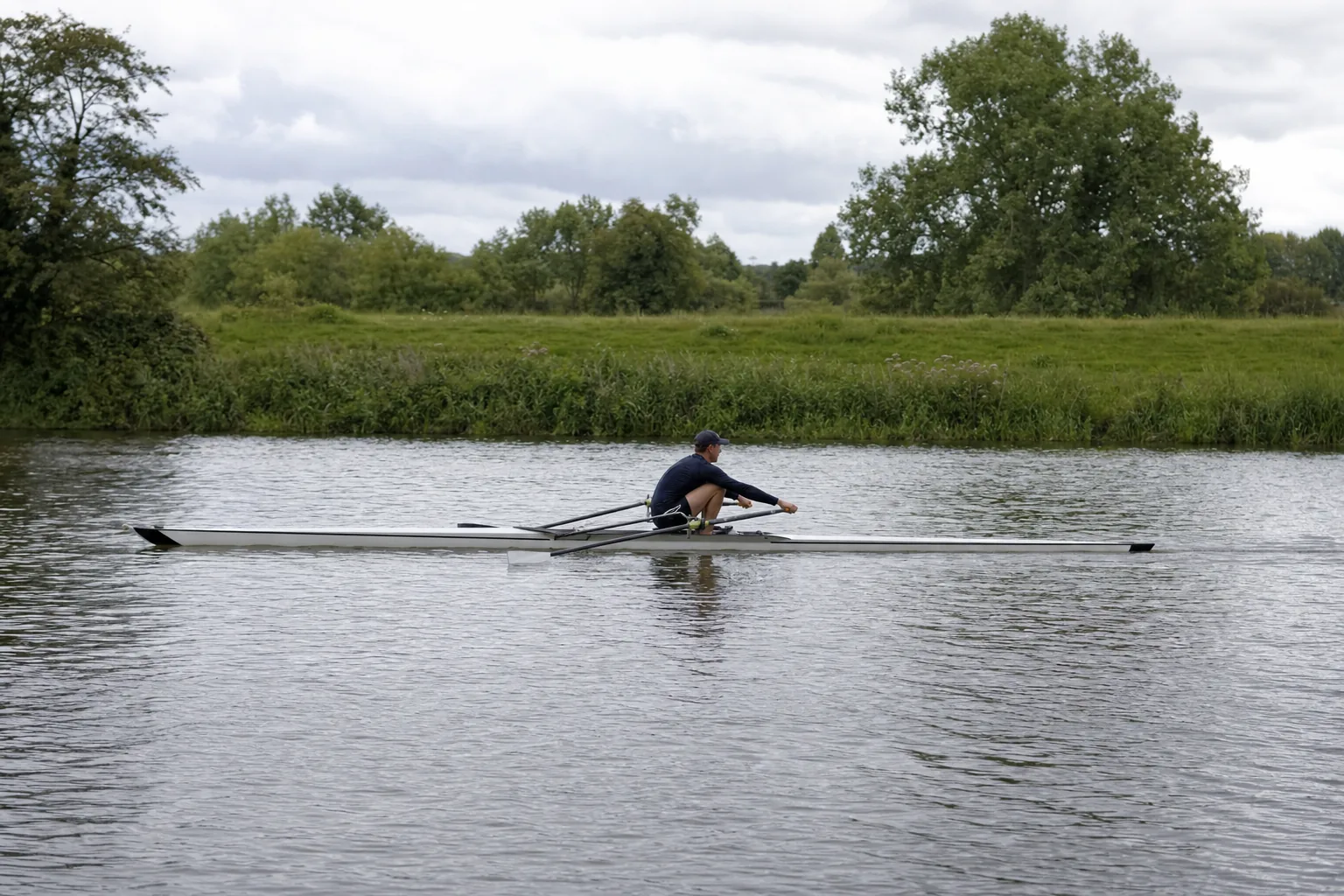
Definition
The catch sits at the very front of the stroke cycle. The rower has slid forward to the front stop, knees up and shins close to vertical, chest pivoted over the legs, arms reaching long. The blade is square, held above the water, and ready to go in. The handle drops, the blade buries.
Once the blade is fully covered, the catch is finished and the drive opens. The catch is not the front turnaround. The turnaround is the change of direction of the seat at the front of the slide; the catch is the specific act of getting the blade into the water at that point. The two events overlap in space but are not the same thing, and confusing them is one of the most common technical misreadings at junior level.
Position at the catch
A correct catch position should look the same whether you are in a single on Lake Karapiro or an under-18 eight at the Maadi Cup final:
- Legs: compressed to full reach, knees bent, shins as vertical as the boat allows. The seat is at the front stop.
- Trunk: pivoted forward from the hips. The body angle was set early on the recovery, around quarter slide. The chest sits over the knees, not collapsed onto them.
- Arms: long and reaching. No elbow bend. Shoulders relaxed and stretching out toward the rigger, not bunched.
- Blade: square to the water surface, held just above it, ready to drop in vertically.
Timing the catch
The catch is the most time-critical moment in the stroke cycle. Just before the blade enters the water the hull is moving at its peak speed - the previous drive's momentum is still carrying everything forward. Every tenth of a second between full reach and a buried blade is a tenth of a second the hull is moving and the rower is contributing nothing.
A good catch is described by NZ coaches as "snapping in" or letting the blade drop. The hand does not push the handle down; the natural weight of the spoon pulls the handle into the entry. A slow catch is called "missing the water" because the rower walks past the front section of the stroke arc without applying load to it.
Common catch errors
The catch draws more coaching attention than any other part of the stroke at Aotearoa club and school level. Errors here cascade through the rest of the drive:
- Missing the catch: the leg drive starts before the blade is in. The first portion of the leg push loads against air. By the time the blade arrives, the power window is half gone.
- Washing in: the blade is only partially buried when the legs engage. Rather than holding firm, the spoon slips through the surface and the front of the drive is lost.
- Late square: the blade is still feathered or only part-squared at the front stop. It enters at an angle, splashes, and never gets clean purchase.
- Rushed slide into the catch: the recovery has been too quick, the rower arrives at the front stop unbalanced, and the entry is forced rather than placed. The recovery should always be slower than the drive.
Drills that train the catch
Square-blade rowing is the gold-standard catch drill at almost every NZ club. Stripping out the feather forces the rower to build the blade angle on the recovery, and a clean placement becomes the only way to keep the boat balanced. Pause drills at hands-away and at body-over rebuild patient slide control after a winter of indoor erg volume. Eyes-shut recoveries - the rower closes their eyes during the slide and opens them at the catch - train timing without visual cues. Slow-motion video from a coaching launch is the fastest way to diagnose exactly which phase of the approach is going wrong. Coach tools let coaches log technique notes against individual rowers across a season so the issues spotted in October are still tracked through to Maadi week in March.
Catch FAQs
What does the catch actually mean in a rowing stroke?
The catch is one moment, not a movement. The slide has reached the front stop, shins are close to vertical, the chest is over the knees, the arms are reaching long, the blade is square and held out over the water. The handle drops, the blade buries, and the catch is over. Coaches at Hamilton Boys' High, Christ's College, Saint Kentigern and St Bede's drill the placement for weeks before the Maadi Cup season opens at Lake Karapiro because a soft catch costs a school crew the bow ball every time.
Why is the timing of the catch so unforgiving?
The shell is travelling at its peak velocity in the half-second before the blade goes in. The previous drive has finished, the run is at its highest, and the rower is poised at full reach. Any hesitation means the hull is moving forward while the rower contributes nothing. Coxes call this the "free metres" - the run you keep when the catch is sharp, the run you give back when it isn't.
What are the four catch faults a coach will spot from a launch?
Missing the catch - the legs push before the blade is buried, so the opening of the drive loads against thin air. Washing in - the blade is only partly covered when the legs fire, so it slips rather than holds. Late square - the blade is still feathered or part-feathered at the front stop, so it enters at an angle and splashes. Rushed recovery - the slide is too quick, the rower arrives unbalanced, the entry is hurried. The fixes for all four start by slowing the slide and squaring earlier.
How is a clean catch actually built?
It is built on the recovery, not at the front stop. Square the blade around the body-over position, well before full compression. Carry the slide unhurried all the way to the catch. At full reach, let the weight of the blade pull the handle down rather than punching the handle into the water. The legs only fire once the blade is fully buried. Rowing NZ coach education frames this as letting the water take the blade.
Which drills do New Zealand programmes use to fix catch problems?
Square-blade rowing is the workhorse. Removing the feather forces the rower to set the blade angle on the recovery and rewards a quick clean entry. Pause drills at arms-away and at body-over rebuild slide control after a winter of indoor erg work. Eyes-shut recoveries train the timing by stripping out visual landmarks. A coaching launch with a phone running slow-motion video is still the fastest way to identify exactly where in the approach the placement falls apart.
Related
The Drive: Legs, Back, Arms and Where Boat Speed Actually Comes From
The drive is the only phase of the stroke that moves the boat. Legs fire first, then the back swings, then the arms fini...
The Finish: Tap Down, Then Feather
The finish is the closing fraction of the drive - hands into the body, legs flat, spoon out of the water, blade then rol...
The Recovery: Why Slowing Down Makes the Boat Faster
The recovery is the return half of the stroke - blade clear of the water, rower sliding back to the catch. The hull is c...
Stroke Rate: The Cadence Number That Doesn't Equal Boat Speed
Stroke rate is the cadence number - strokes per minute (spm). NZ crews run anywhere from 18 spm in winter base work to 4...
Feathering: The Quarter-Turn Between Strokes
Feathering is the quarter-turn rotation of the oar between strokes - blade square during the drive, blade flat during th...
Keep learning
The catch often tells a coach what happened during the whole recovery. Log that feedback in Row HQ, then check the rowing glossary when a crew needs a plain explanation of the term.
Stop losing technique notes between coaches.
Row HQ's coach tools let every coach log catch placement, washout flags and front-end notes against each rower, so the work the Tuesday coach put in is still visible to the Friday coach.