Drive
The drive is the only phase of the stroke that moves the boat. Legs fire first, then the back swings, then the arms finish. All boat speed is generated here; the recovery just resets the rower for the next one. The Kiwi heavyweight tradition was built on this sequence and Rowing NZ coaches still drill it from day one.
The Drive: Legs, Back, Arms and Where Boat Speed Actually Comes From
The drive is the propulsive phase of the rowing stroke. It starts when the blade buries at the catch and ends when it lifts out at the finish. During those few seconds the rower transmits force from legs into back into arms, through the handle, along the loom, into the spoon, and the spoon levers against the water. Everything else in the stroke cycle is preparation. The Kiwi heavyweight tradition - Hamish Bond and Eric Murray winning Olympic gold in the men's pair from 2009 to 2016 undefeated, Mahe Drysdale in the single - was built on a relentlessly disciplined leg-back-arm sequence.
Also called: Drive Phase, Power Phase
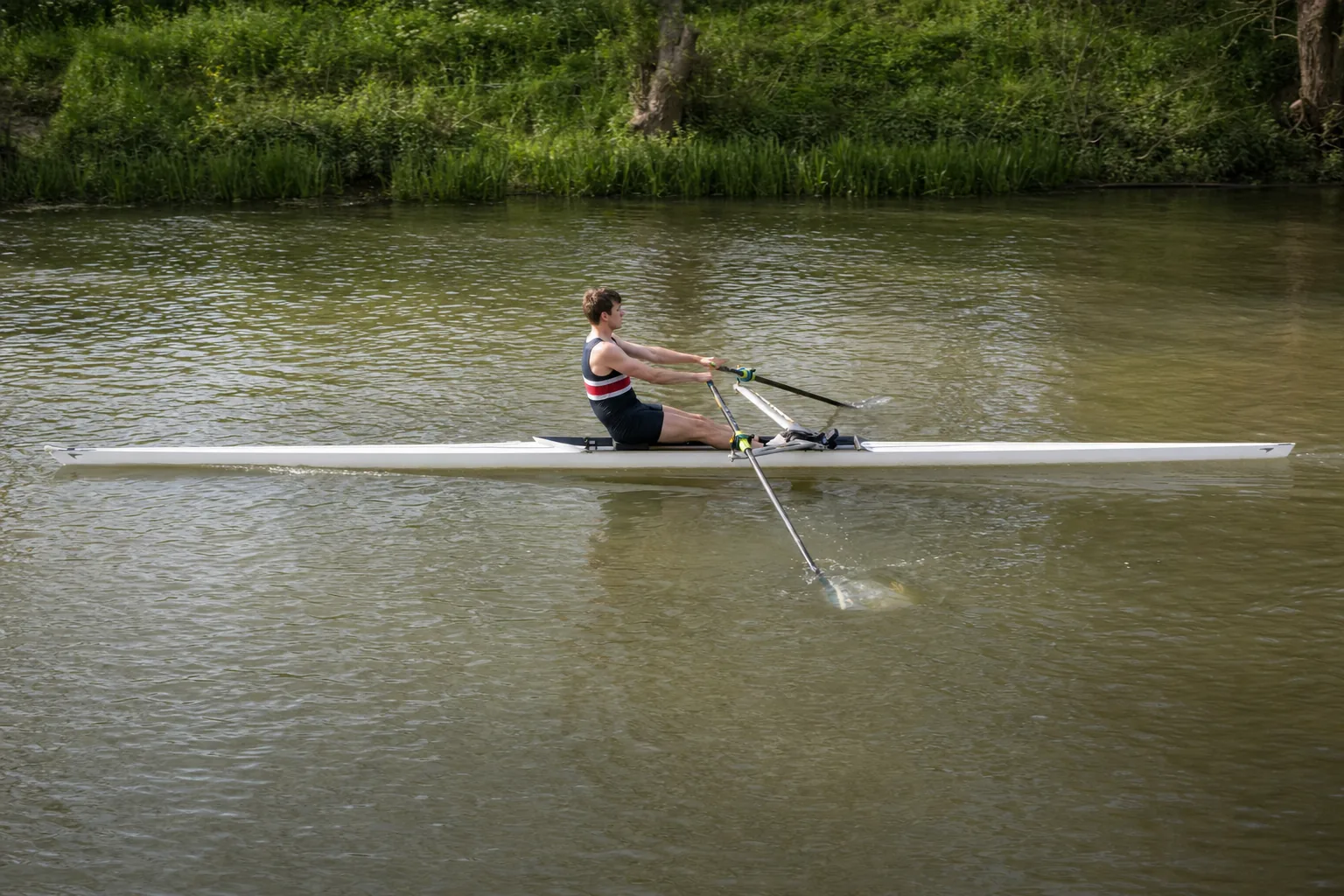
Definition
The drive is the power phase of the rowing cycle. It begins the instant the blade is fully buried at the catch and finishes when the spoon lifts out of the water at the finish. Through those few seconds the rower's force passes from legs into back into arms, through the handle, down the loom, into the blade, and the blade levers against the water to accelerate the hull.
The drive is the only propulsive phase in the cycle. During the recovery the blade is clear of the water and the hull coasts forward on the momentum built in the previous drive. Nothing in the recovery adds speed. Every metre the crew ever travels comes from what happens between bury and extraction.
The drive sequence
Legs, back, arms - in that order, every stroke, every rate:
- Legs: from the compressed catch position the legs extend and push the seat back along the slide. The trunk stays pivoted forward and the arms stay long throughout this opening phase.
- Back: as the legs near full extension, the back begins to swing - from forward lean through upright into the layback position. The arms are still long.
- Arms: only at the end of the stroke do the elbows bend to draw the handle into the lower ribs. Layback is set, legs are flat.
Running the sequence out of order wastes the contribution of each muscle group. The legs are the largest and strongest muscles in the human body and they need to do the majority of the work. The back and arms finish what the legs started - they cannot rescue a failed leg drive no matter how hard they pull.
Power profile
The most efficient power profile is front-loaded - peak force at the catch when the hull is at its slowest and the blade has the deepest grip on the water, tapering as the boat accelerates through the drive. Hamish Bond and Eric Murray, who dominated the men's pair from 2009 to 2016 with seven undefeated seasons culminating in Olympic gold at London 2012 and Rio 2016, were textbook front-loaded drivers. The early catch pressure is the signature characteristic of the New Zealand heavyweight tradition.
Developing rowers usually show the opposite - a back-loaded profile where they pull hardest through the middle of the drive and into the finish, when the blade is shedding hold and the boat is already moving. Coaches use force-curve readouts from instrumented oarlocks (Empower Oarlock, Active Tools) to show rowers exactly where in the drive their pressure is landing and how to move it forward toward the catch.
Drive-recovery ratio
At base training rates (18-22 spm in UT2 aerobic work) the recovery lasts two to three times longer than the drive - a 1:2 to 1:3 ratio. That extended recovery gives the hull time to run and the rower time to set up the next catch cleanly. At 2km race pace (36-40 spm) the recovery compresses sharply and the ratio approaches 1:1.
The crews who maintain a deliberate recovery at race rate consistently beat the ones who collapse it. Rushing back to the catch shortens boat run, breaks balance and forces a hurried, weak entry. The erg pace calculator converts split into wattage so coaches can match what the boat is doing to what the body is producing, and most ergometers display drive and recovery times separately so rowers can track the ratio on the screen during long pieces.
Common drive errors
Drive errors waste more boat speed than any other fault. The four that coaches at Karapiro and at every other major NZ training venue spend the most time fixing:
- Shooting the slide: the legs straighten before the back has begun to swing. The seat arrives at the backstop before the handle reaches the body. Leg power is disconnected from the boat.
- Opening the back early: the back swings upright before the legs have nearly finished. The two muscle groups compete for the same window of time and both lose power.
- Bending the arms early: the elbows break during the leg drive. The arms shorten the lever, and the back has to work against an already-compromised arm position.
- Back-loaded power: maximum force is applied at the finish rather than the catch. The blade has least grip when the boat is fastest, so late pressure goes where it does the least work.
Drive at different stroke rates
The drive sequence and power profile should stay constant across every rate the crew uses. What changes with rate is the recovery: at low rates there is ample time between strokes to reset and build into the next catch, at high rates the recovery is compressed and the sequence must execute faster without skipping steps. Rate ladders - paddling through 18, 20, 22, 24 spm in sequence on a winter morning at Lake Karapiro - drill the LBA pattern until it is automatic from warm-up paddle through to the sprint at the line.
Drive FAQs
What is the drive in a rowing stroke?
The drive is the propulsive half of the stroke cycle. It runs from the moment the blade is buried at the catch to the moment it is lifted out at the finish. During those few seconds the rower converts leg, back and arm force into hull acceleration through the lever of the oar. The drive is the only phase that adds boat speed; the recovery is non-propulsive. Every metre of speed the crew ever carries is generated here.
What is the leg-back-arm sequence?
Legs fire first. The seat pushes back along the slide while the trunk stays pivoted forward and the arms remain long and locked. As the legs near flat, the back begins to open from forward lean through upright into layback. Only at the end of that swing do the elbows bend to draw the handle into the lower ribs. Coaches abbreviate it as LBA - leg, back, arm. Running the sequence out of order, especially breaking the arms early, wastes the strongest muscle group in the body. Rowing NZ's coach development pathway hammers LBA from a rower's first session.
Where in the drive should peak force land?
At the front of the drive, near the catch, when the hull is moving at its slowest and the blade has the deepest hold on the water. This front-loaded power profile is what every NZ programme trains for and what biomechanics traces from elite scullers show. As the boat accelerates and the blade approaches the stern, the lever arm drops. Force applied late in the drive is force applied where it does the least. Novice rowers typically pull hardest at the finish - a back-loaded profile that feels strong but loses speed at the catch.
What is the drive-recovery ratio?
It is the fraction of each stroke cycle spent driving versus recovering. At UT2 base training rates (18-22 spm at Lake Karapiro or the Whanganui River) the recovery occupies two to three times the duration of the drive - a 1:2 or 1:3 ratio. At 2km race pace (36-40 spm at the Maadi Cup or the NZ Championships at Lake Ruataniwha) the ratio compresses toward 1:1. The crews that protect a long, deliberate recovery under race-rate pressure outrun the ones that collapse it.
What does shooting the slide mean and why does it matter?
Shooting the slide is the classic drive fault. The legs straighten before the back has begun to swing. The seat races to the backstop without taking the handle with it. The result is that leg power fires off into nothing - the rower's mass slides back, but the boat is barely affected. Coaches spot it from the launch when the seat clearly arrives at the backstop ahead of the handle. The fix is connection drills and back-emphasis pieces that retrain the timing.
Related
The Catch: Where Every Stroke is Won or Lost
The catch names the split-second the blade buries at the front of the slide, a heartbeat before the legs fire. A sharp c...
The Finish: Tap Down, Then Feather
The finish is the closing fraction of the drive - hands into the body, legs flat, spoon out of the water, blade then rol...
The Recovery: Why Slowing Down Makes the Boat Faster
The recovery is the return half of the stroke - blade clear of the water, rower sliding back to the catch. The hull is c...
Stroke Rate: The Cadence Number That Doesn't Equal Boat Speed
Stroke rate is the cadence number - strokes per minute (spm). NZ crews run anywhere from 18 spm in winter base work to 4...
Keep learning
The drive has to stay connected when the rate climbs, not just look tidy at low intensity. Row HQ's rowing club software keeps technique notes with the right rower and session. The rowing glossary gives crews a quick reference for the rest of the stroke cycle.
Train better drives across the squad.
Row HQ's session planning, coach tools and erg integration put training plans, technique notes and erg numbers in one place across every coach and every rower in the squad.