Cox Box
A cox box is the compact electronic unit a coxswain runs to amplify their voice through hull speakers, read live stroke rate from the stroke seat sensor, time pieces, and on modern GPS units display boat speed, 500m split and distance covered. Nielsen Kellerman has been the Canadian standard since the late 1980s.
The Cox Box
A cox box is the compact electronic unit a coxswain runs to amplify their voice through speakers fitted along the hull, read live stroke rate from a slide sensor on the stroke seat, and time pieces or full sessions. Modern GPS-enabled cox boxes from Nielsen Kellerman, Coxmate and Empacher add boat speed, 500m split and distance covered, often with session logging for post-outing review. NK has been the dominant brand on Canadian club, university and Royal Canadian Henley shells since the late 1980s.
Also called: CoxBox, Cox Amplifier, Cox Box GPS
What is inside a cox box
A cox box is a compact handheld unit roughly the size of a paperback book, holding a battery, an amplifier, a microcontroller and a display screen. It connects to:
- A headset microphone the cox wears, plugged directly into the unit.
- Hull speakers spaced down the spine of the shell - usually one per rower in a coxed eight, fewer in a four.
- A stroke rate sensor: a small magnetic switch on the stroke seat's slide that triggers each time the seat reaches the catch position.
- A power button, mode selector and timer controls on the front face of the unit.
GPS-enabled units add a satellite antenna inside the case and pull live boat speed, 500m split and distance covered directly from GPS. Some also log full session data for review on a laptop after the outing.
Models and Canadian pricing
Nielsen Kellerman (NK) is the dominant manufacturer on Canadian club, university and Royal Canadian Henley shells. The current NK product line:
- CoxBox Mini: entry-level voice amplifier with stroke rate and timer. Smaller and lighter than the Pro. Typically around CAD 700.
- CoxBox Pro: the standard senior club model. Larger display, storable presets, longer battery life. Typically around CAD 900.
- CoxBox GPS: Pro features plus GPS-derived boat speed, 500m split, distance covered, and session logging for post-outing review. Typically around CAD 1,000 to 1,100.
Competing brands stocked through Canadian dealers include Coxmate GPS (Australian-made and widely used at smaller Canadian clubs), NK Speedcoach GPS 2 (a smaller GPS-only unit popular in sculling shells and used as a backup display in eights), and various Empacher and StrokeCoach amplifier units. The majority of Canadian club and university shells run NK CoxBoxes as standard issue.
How Canadian crews use a cox box
In training, the cox uses the box to call drills, manage rate during rate-ladder pieces, and time intervals between work blocks. The live rate display lets the cox verify that the crew is at the prescribed rate during steady-state UT2 outings or pace-locked threshold pieces, and adjust calls if the rate is drifting off target.
In racing, the cox box is the cox's tactical instrument. Race plan calls - rate changes, pressure shifts, the call for the sprint - go through the microphone, and the display confirms the crew has actually executed each call. On a Royal Canadian Henley course at the back end of a tight final, the rate display is the difference between calling a rate push correctly and guessing. Coach tools let the coaching staff review session data from GPS-enabled units after the outing and tie it back to the seat assignments.
Maintenance in a Canadian climate
Cox boxes live in a wet, dirty environment - rivers, the occasional brackish stretch at the Royal Canadian Henley, mud, frost and snowmelt. Maintenance basics for a Canadian boathouse:
- Rinse connectors with fresh water after every outing - silt builds up fast on the multi-pin plug.
- Charge on a regular cycle - modern cox boxes are lithium-ion with 8 to 10 hour run time. Battery life drops below freezing, so units should be brought indoors between outings in winter.
- Replace headset microphones when they crackle, cut out or pick up wind badly. Cold and condensation accelerate microphone failure.
- Store dry - never leave a cox box in a wet kit bag overnight, especially through a Canadian winter.
Most Canadian clubs maintain cox boxes alongside the shell fleet, with a tracking system for which unit is in which shell, the current charge status, and any known faults. Boat booking software can extend to cox box assignment, so coxes know which unit they have and whether it is charged before they leave the dock.
Origin and history
The first cox box was developed by Nielsen Kellerman in 1985, replacing the megaphones and battery-powered amplifiers Canadian coxes had used since the 1960s. The original CoxBox combined voice amplification with the first electronic stroke rate display, and it transformed coxing on Canadian water - rate calls became precise rather than estimated, and every rower in the eight could hear the cox clearly even in the wind off Lake Banook or across the Welland Canal. The CoxBox brand has dominated competitive Canadian rowing ever since, and the NK CoxBox remains the default unit on the vast majority of OUA, U Sports and senior club shells.
Cox box FAQs
What does a cox box do?
A cox box runs three jobs in parallel. It amplifies the coxswain's voice through speakers fitted along the spine of the hull so every rower in the eight can hear clearly. It reads live stroke rate from a small magnetic sensor on the stroke seat's slide and shows the figure on the display. And it doubles as a piece and session timer. Modern GPS-enabled cox boxes - the NK CoxBox GPS, Coxmate GPS, NK Speedcoach - add boat speed, 500m split and distance covered, with the option to log full session data for post-outing review on a laptop.
How much does a cox box cost in Canada?
Roughly CAD 700 to 1,100 for new Nielsen Kellerman units depending on model, with significant variation across Canadian distributors and shipping. The NK CoxBox Mini is the entry-level unit, the CoxBox Pro is the standard club model, and the CoxBox GPS adds boat speed and distance from GPS. Coxmate and Empacher units sit at similar price points. Most Canadian clubs maintain a fleet of cox boxes assigned to specific shells and managed alongside boat maintenance through the boathouse manager.
How do you connect a cox box to a shell?
The cox box plugs into a wiring loom built into the shell. The loom runs from speakers spaced down the spine of the hull back to a multi-pin connector near the cox's seat. The cox box clips into that connector directly. The cox wears a headset microphone that plugs into the box itself (older setups use a handheld mic). The unit also reads stroke rate from a small magnetic sensor mounted on the stroke seat's slide, which is wired separately into the loom.
What is the difference between the CoxBox Mini, Pro and GPS?
The Nielsen Kellerman CoxBox Mini is the basic unit - voice amplifier, stroke rate and timer in a smaller, lighter package than the Pro. The CoxBox Pro adds a larger display, storable presets for race-plan calls, and longer battery life. The CoxBox GPS adds GPS-derived boat speed, 500m split and distance covered, plus the ability to log full session data for review on a laptop after the outing. Most Canadian senior club and university programs run Pro or GPS units; learn-to-row and junior school programs more often run Minis.
How do you maintain a cox box in a Canadian boathouse?
Rinse the connectors with fresh water after every outing - silt and corrosion build up fast on the multi-pin plug. Charge the battery on a regular cycle (modern cox boxes are lithium-ion with 8 to 10 hour run time). Store dry, never in a wet kit bag. Replace headset microphones when they crackle or cut out. Cold-weather considerations matter at Canadian clubs - battery life drops sharply below freezing, so units should be brought indoors between outings during a Welland Canal or Burnaby Lake winter season. Many Canadian clubs assign cox boxes to specific shells and run a written maintenance log to track which units are out of service.
Related
The Coxswain
The coxswain is the non-rowing crew member who sits in a coxed shell to steer, call rate and direct race strategy. The c...
What is an Ergometer?
Every boathouse in Canada has a row of them along one wall. Concept2 RowErgs - the indoor rowing machines that translate...
Stroke Rate Explained
Stroke rate is the rating a crew holds, measured in strokes per minute. Canadian rating bands run from 18 spm on a UT2 w...
What is the Stroke Seat?
Stroke is the rower at the stern end of the boat - the seat closest to the coxswain in coxed crews. The whole boat times...
Rowing Boat Types
Eight racing shell classes are contested at Canadian regattas: the single (1x), double (2x), pair (2-), quad (4x), coxle...
From the RowHQ shop
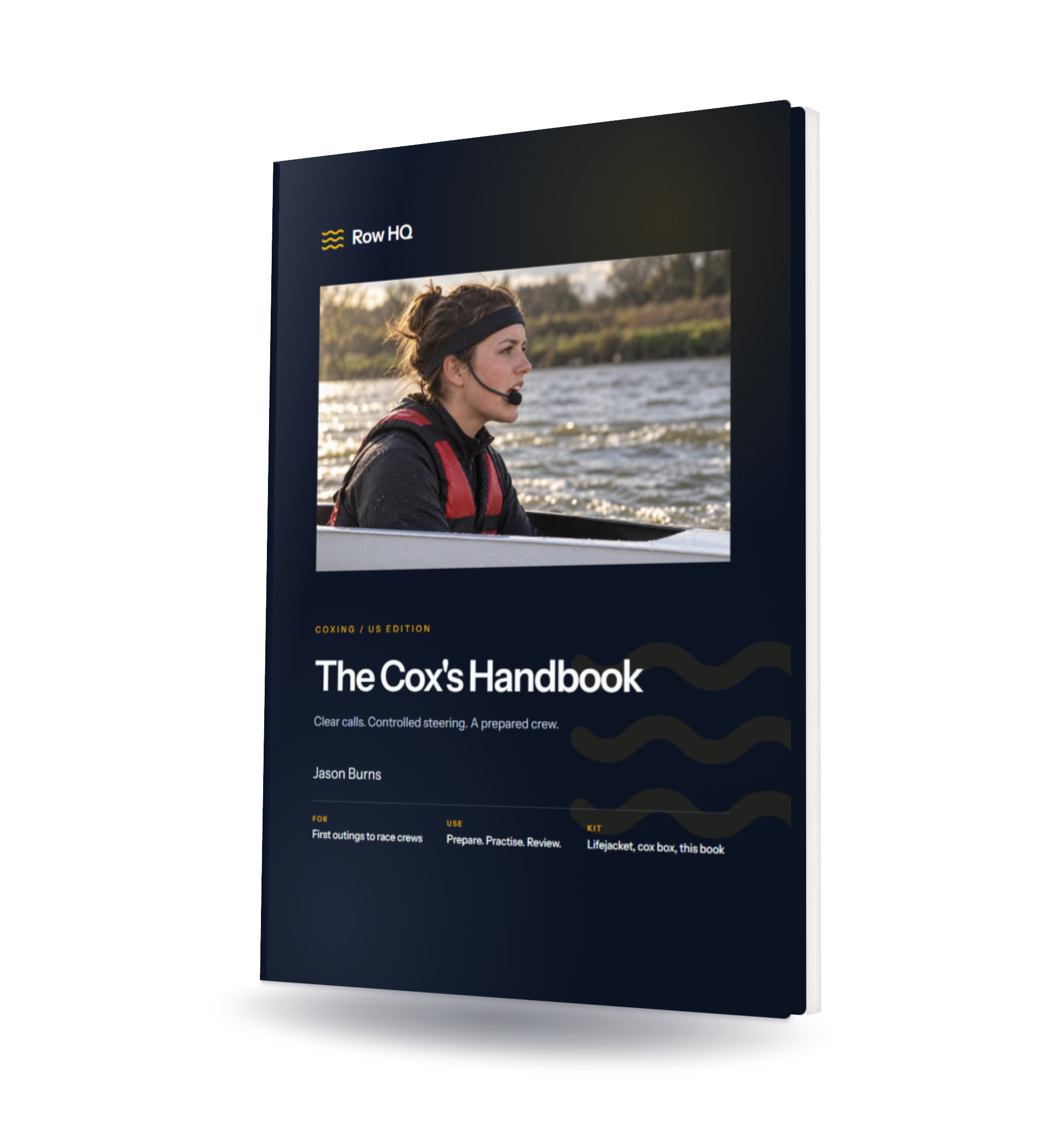
Printable PDFs written for club rowers. Buy once, keep forever.
Keep learning
Cox box batteries, headsets and boat assignments all need a clear owner. Clubs can record them in rowing club management software before a crew finds a dead unit at launch. The rowing glossary explains the other equipment and crew terms around it.
Tracking the cox box fleet shouldn't need a spreadsheet.
Row HQ tracks shells, equipment, faults and assignments across the club. Built by rowers, used at Oundle Town Rowing Club.