The honest answer in 30 seconds
Record four numbers from the PM5 and ignore the rest: 2k time, 500m split, watt output and stroke rate. Sit athletes on the same Concept2 RowErg fleet each test day, hold drag factor steady (110-130 for openweight men, 100-115 for openweight women), and pair every result with a body-weight reading and a one-line athlete note. Read the trend across the OUA fall block, the winter base, and the Royal Canadian Henley build. Rowing Canada Aviron uses the Olympic 2k, the 6k winter benchmark and a 30-minute trial inside the NCCP framework, so your numbers translate straight into UT2, UT1, AT, TR and AN training zones a coach can prescribe from.
A typical OUA squad runs 30 to 50 athletes through a Concept2 fleet of 8 to 20 ergs across a fall trial block. Brock, Western, Trent, McGill, Queen's, U of T and McMaster all face the same problem in mid-October: a wall of PM5 numbers, a deadline before Brock Invitational, and a coach trying to decide who rows what. Ergo data, captured properly, is what turns that stack of LogCard files into a defensible selection. Used well it also shapes the training blocks running through to spring camp and CSSRA Championship week. The same approach works at Argonaut RC, Don Rowing Club, St Catharines RC and Burnaby Lake RC, and at the high-school programmes feeding athletes up through Ridley, Brentwood and Trinity.
Why ergo testing matters
A 2k on Burnaby Lake in October tells you about the headwind, the launch wake from the powerboats, and whether the bow seat caught a crab. A 2k on a Concept2 tells you about the athlete. The flywheel does not care about weather, oar rigging, or who happens to be sitting behind. That is the entire point of erg testing at club level, and it underwrites three jobs every Canadian coaching staff has to do:
-
Benchmarking: Establish a clean fitness floor across the squad before crew selection for Head of the Trent, Brock Invitational, the OUA Championship, CSSRA, or Royal Canadian Henley qualifying.
-
Progress tracking: Confirm the training programme is doing what it is supposed to. If December watts look the same as October watts, the programme needs a rethink before March camp, not after Henley.
-
Goal setting: Replace "get fitter" with a target a 19-year-old novice can chase. A novice woman holding 2:15 in October aiming at sub-2:00 by April is a real conversation. "Just push harder" is not.
The scale of the Concept2 dataset Canadian programmes plug into. In 2025 alone, the Concept2 Logbook recorded:
The four metrics that matter
The Concept2 PM5 shows more numbers than any rower can usefully process inside a piece, and it spits half of them onto the LogCard or your Concept2 Logbook account afterwards. Four are worth tracking with discipline (and see our ergometer glossary entry for the definitions):
Key ergo metrics explained
2k time
The piece every Canadian programme calibrates against, from CSSRA novice through to senior national team trials. Captures aerobic ceiling and the willingness to pace correctly through the third 500. Record to the tenth.
500m split
Pace expressed per 500 metres. Splits show where in the piece an athlete cracked or held - first 500 too hot, third 500 collapsed, or a steady rip from gun to line. Read each quarter individually.
Watts
Power output off the flywheel. Watts let you compare an 85kg openweight man to a 59kg lightweight woman in a way splits never will, and they map cleanly onto the watts-per-kilogram numbers the RCA selection sheet uses.
Stroke rate
Strokes per minute on the monitor. Same split at rate 28 versus rate 34 is two different athletes. Lower rate at the same pace means more work per stroke and usually a more transferable result to the boat.
It's the best all-round fitness machine in the world, and suitable for anybody, not just international athletes. No matter how hard I tried, I could never beat it. It never broke and it never let me down.
How Row HQ makes ergo tracking easy
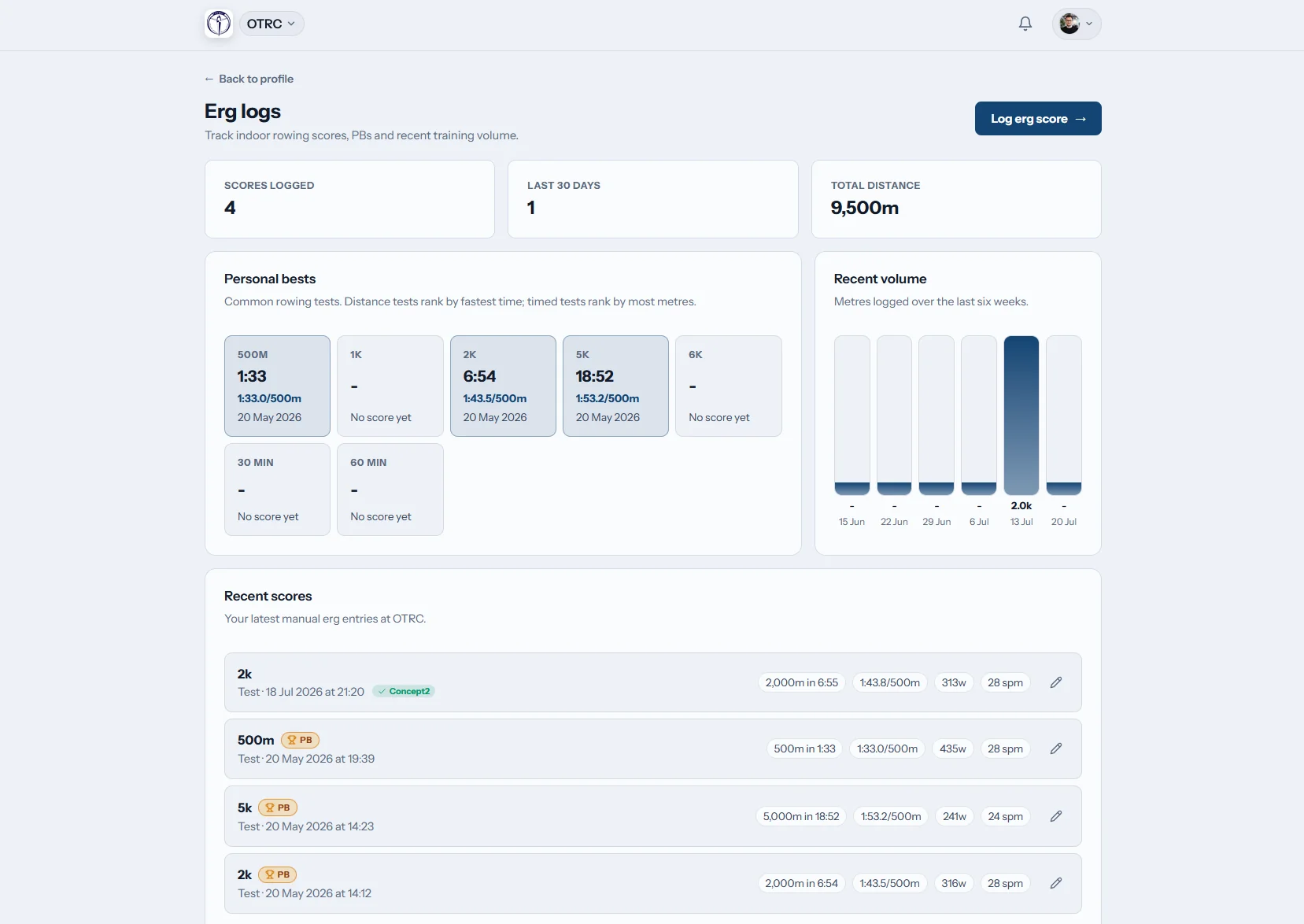
Getting a score off the screen is not the hard part. Keeping coherent records for 40 athletes across a full Canadian season, then surfacing the right slice for an April selection meeting, is what breaks most clubs. Coaches end up text-messaging novices for last week's score, fishing for the paper log that lived in a binder somewhere in the gym, or rebuilding a colour-coded Excel sheet that broke when the assistant coach changed a column. Row HQ's ergo log, part of our coach tools, takes that admin off the head coach. Athletes upload Concept2 scores via the member portal or CSV import today, and a direct Concept2 Logbook sync (the same data layer the Concept2 World Rankings sit on) is on the near-term roadmap, so PM5 files flow in automatically off LogCard or an ANT+ phone pairing through ErgData.
-
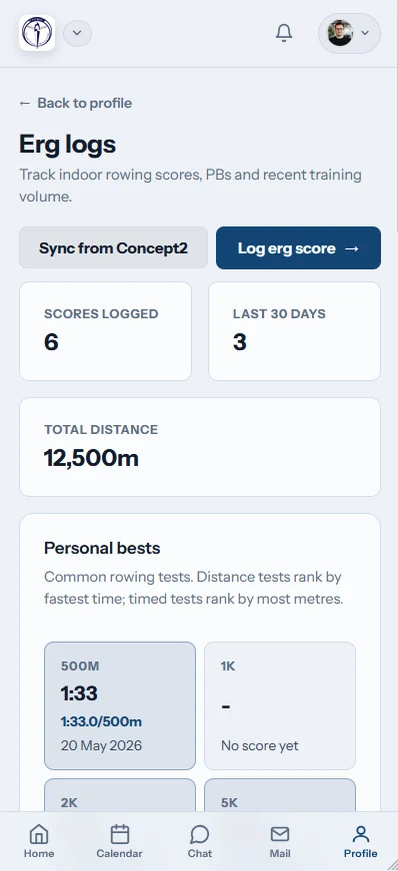
Athlete self-logging: Each rower enters scores from a phone via the member portal the moment they step off the erg. No paper sheet pinned to the bulletin board, no shared Excel file that keeps overwriting itself.
-
Full historical record: Every test stored against the athlete forever. Pull a single rower's trajectory from her novice year through to senior, compare November watts across the openweight men, or look at how the squad responded to last winter's programme block. Two clicks.
-
Coach review: A consolidated squad view through the admin dashboard. Sort by watts per kilogram for OUA boat selection, sort by FISA-cutoff body weight (72.5kg men, 59kg women) for lightweight pool decisions, sort by age-graded score for the masters squad.
-
Personal best tracking: The system flags PBs automatically and shows each athlete the next number to chase via the member portal. A 4-second drop on a junior 2k is the kind of thing a 16-year-old will train for, if she can see the line.
Using data to motivate and improve
A spreadsheet of 2k times changes nothing on its own. What the coaching staff does with the numbers is what matters. The patterns that actually move squads forward at Canadian club and university level:
- Recognise real progress: A novice dropping from 8:10 to 7:42 over a fall trial block is a genuine result and worth calling out. Build a culture where improvement gets acknowledged in the boathouse, not only the headline times at the top of the leaderboard. That is what keeps the bottom half of a 40-athlete squad showing up to the third winter session of the week.
- Surface squad rankings: A live leaderboard - openweight men, openweight women, lightweight and masters, broken out properly - taps the competitive instinct that brought every one of them into the boathouse. The training session tools then connect the ergo line back to the on-water work, so the squad can see how winter pieces translate to a Lake Banook spring camp.
- Read the splits, not the time: A positive split of 6 seconds across a 2k is a pacing problem and a conversation about the first 500. Low watts at a strong split is a technique problem and a video session. Data points the coach at the right fix for the next training session, instead of generic "row harder" feedback.
- Watch for accumulating fatigue: When January watts drift downward while training volume sits flat, the squad is carrying load that needs unloading before the OUA Championship build. Numbers spot it before the athletes complain about it.
Real progress: sample athlete journey
2k baseline
14s improvement
New PB
5.7% faster
Five tips for effective ergo testing
A useful test programme depends on conditions that hold steady across the season. When the warm-up, drag factor, time of day or even the specific erg in the corner of the gym keeps changing, the data measures the conditions as much as the athlete. The habits that keep Canadian squad data clean:
- Hold drag factor steady: Set the same number every test day - 110 to 130 for openweight men, 100 to 115 for openweight women - and check it off the PM5 menu before each piece. Same warm-up protocol, same time of day, same erg fleet. Our drag factor calculator covers the band each rower should sit in.
- Build a test calendar: A monthly 2k through fall and winter gives enough data to read a season-long trend. The RCA-aligned 6k goes in November as a winter benchmark; a 30-minute trial in February measures aerobic base. Resist the urge to test every fortnight - the recovery cost outweighs the data value.
- Capture context, not just the headline number: Log every 500m split, the stroke rate, body weight on the morning of the test, and a one-line athlete note. "Felt fuelled, paced even" reads very differently from "blew up at 1k, slept four hours". Both are useful to know in the post-test review.
- Set the testing environment carefully: An all-out 2k is one of the harder things an athlete will do voluntarily in a Canadian winter. Squads that frame test day as a measurement, not a ranking exercise, and recognise effort alongside time, get better quality performances out of the whole boat house.
- Run one-to-ones after every 2k: Twenty minutes per athlete with the splits printed, the next target agreed, and the following training block sketched in is where ergo data earns its keep. When only a 5k or 6k is available, the 2k prediction calculator back-fills a realistic target.
Once an athlete can see the actual line - 7:42 in September dropping to 7:15 ahead of the spring Lake Banook camp - the winter ergo work stops feeling like a punishment and starts feeling like a project. The number is no longer a verdict on whether she belongs in the top boat. It becomes a target with a specific distance to close before April.
The bottom line
Ergo data is not a replacement for a Canadian coach who has run twenty seasons of fall trials. It is evidence behind the call. Numbers via the coach tools let the coaching staff defend an OUA boat list to the squad, give each athlete a concrete read on her own season, and surface programme problems before a regatta does.
Row HQ takes care of collection, organisation and presentation, so none of it falls to the head coach the evening before selections. No vanished result sheet, no Excel rebuild, no scrolling through six months of text messages chasing a missing 6k. Just the squad's numbers, in one place, when the selection meeting starts. Need to convert a split off the screen on the way out of the boathouse? Our free erg pace calculator turns any 500m split into watts, calories per hour and projected finishing times from 500m through 10k. Browse the screenshot gallery to see the ergo log in action, check our pricing in CAD, or get started today. The FAQ covers the questions that come up most often.
Behind the ergo log sits the rest of Row HQ: the sessions the tests happen in, the squads the numbers feed and the records they build.
- The Row HQ Team
Sources & references
- Rowing Canada Aviron - High Performance programme and national testing pathway — Rowing Canada Aviron
- NCCP Rowing - National Coaching Certification Programme framework — Rowing Canada Aviron
- Concept2 PM5 monitor reference and LogCard documentation — Concept2
- Concept2 Online Logbook (ANT+ ErgData sync, world rankings dataset) — Concept2
- Concept2 age-graded calculator for masters scoring — Concept2
- Concept2 2025 Year in Review (141,735 new athletes, 79.7B m logged, 210+ countries) — Concept2 (accessed May 17, 2026)
- New 2k world record 5:35.8 (Josh Dunkley-Smith) — Concept2
- Trends in indoor rowing records — World Rowing
- Why Sir Steve Redgrave uses the Concept2 rower — Fitness Etc
- Row HQ erg pace calculator (split to watts, calories, projected times) — Row HQ
- Row HQ 2k prediction calculator (extrapolate from 5k or 6k pieces) — Row HQ
- Row HQ drag factor calculator (sets the per-session band by category) — Row HQ
Related articles
From the RowHQ shop
Printable PDFs written for club rowers. Buy once, keep forever.
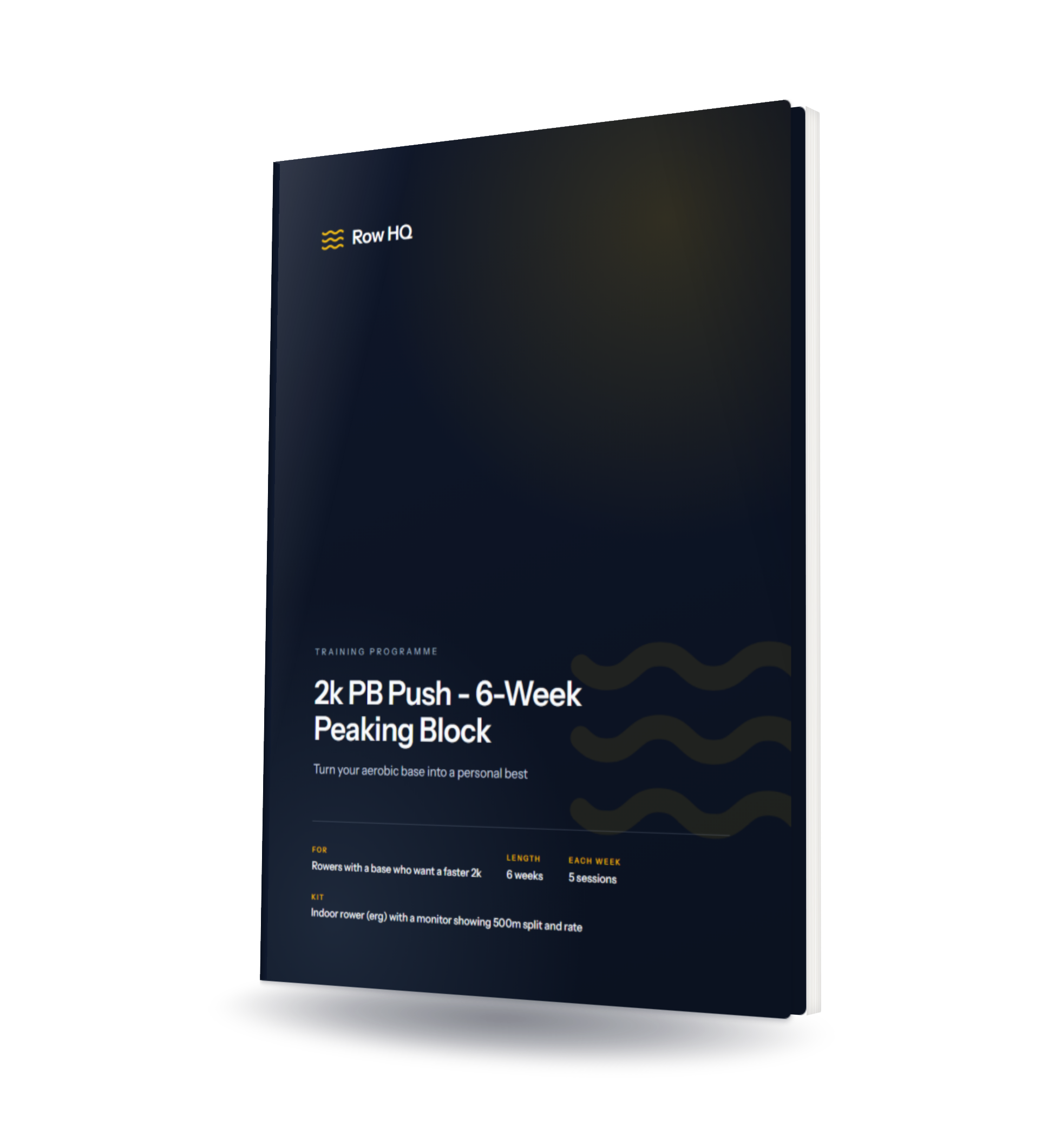
2k PB Push - 6-Week Peaking Block
Six weeks that turn an existing aerobic base into a 2k personal best - race-specific work, a proper taper, every pace scaled to your own time.
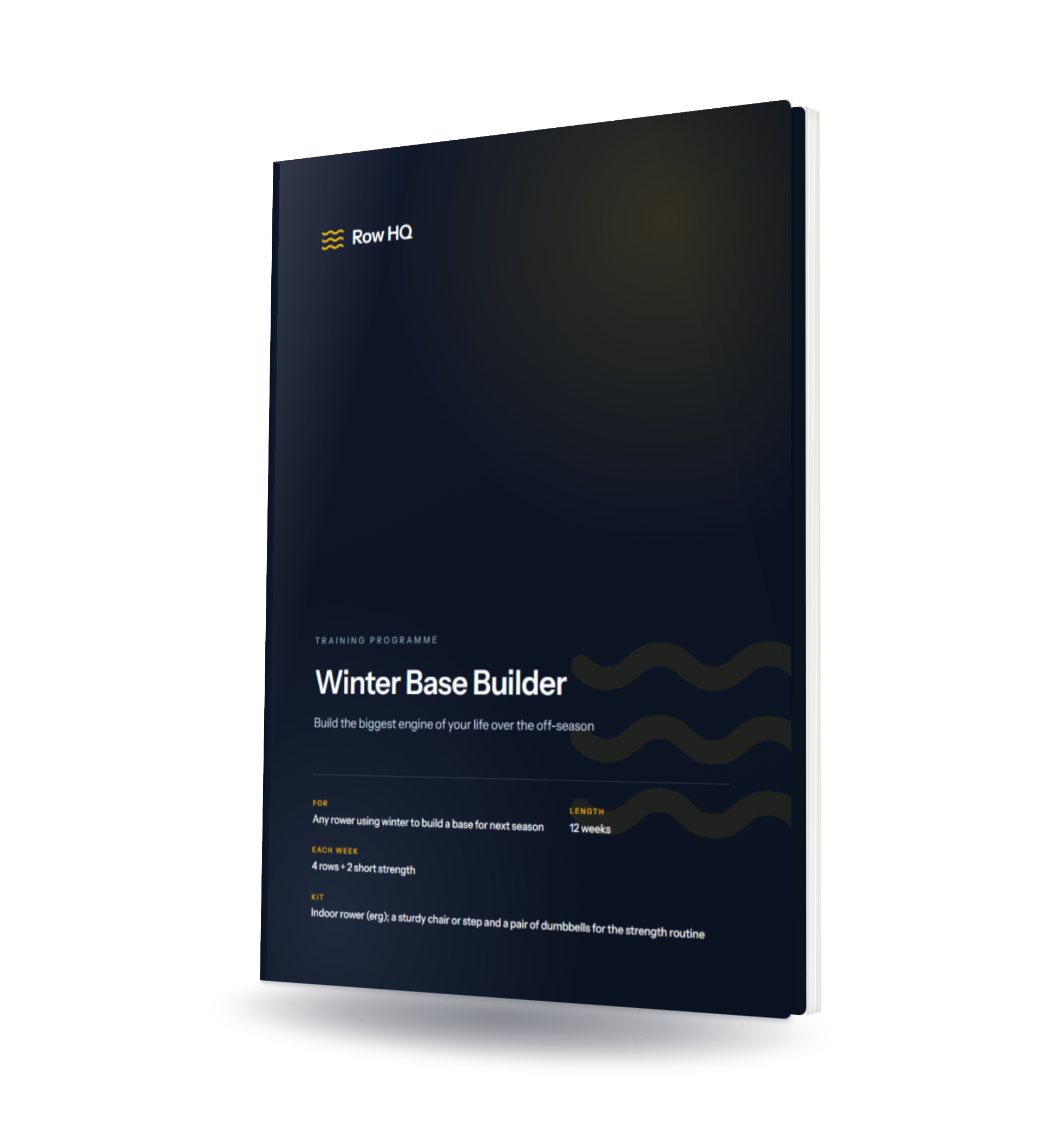
Winter Base Builder
Build the biggest engine of your life over the off-season - 12 weeks of mostly-easy volume plus a strength routine, so you arrive at spring fast.
The Club Session Library
52 rowing sessions for club coaches, with an illustrated coaching PDF, editable CSV plans, two seasonal blocks and a printable coaching cheat sheet.