Recovery
The recovery is the return half of the stroke - blade clear of the water, rower sliding back to the catch. The hull is coasting on momentum from the last drive and the rower contributes nothing to speed in this phase. A patient, sequenced recovery is almost always faster than a rushed one.
The Recovery: Why Slowing Down Makes the Boat Faster
The recovery is the return half of the stroke - blade clear of the water, rower sliding from the finish position back up to the front stop ready for the next catch. Hands away, body forward, slide forward, in that order. The hull is coasting on momentum from the previous drive; the rower contributes nothing to forward speed during the recovery. The crews that protect a patient, sequenced recovery at race rate are reliably faster than the ones who collapse it under fatigue. Winter base training at Lake Ruataniwha (Twizel) and Lake Karapiro is built around slide control.
Also called: Recovery Phase, Slide Forward
Definition
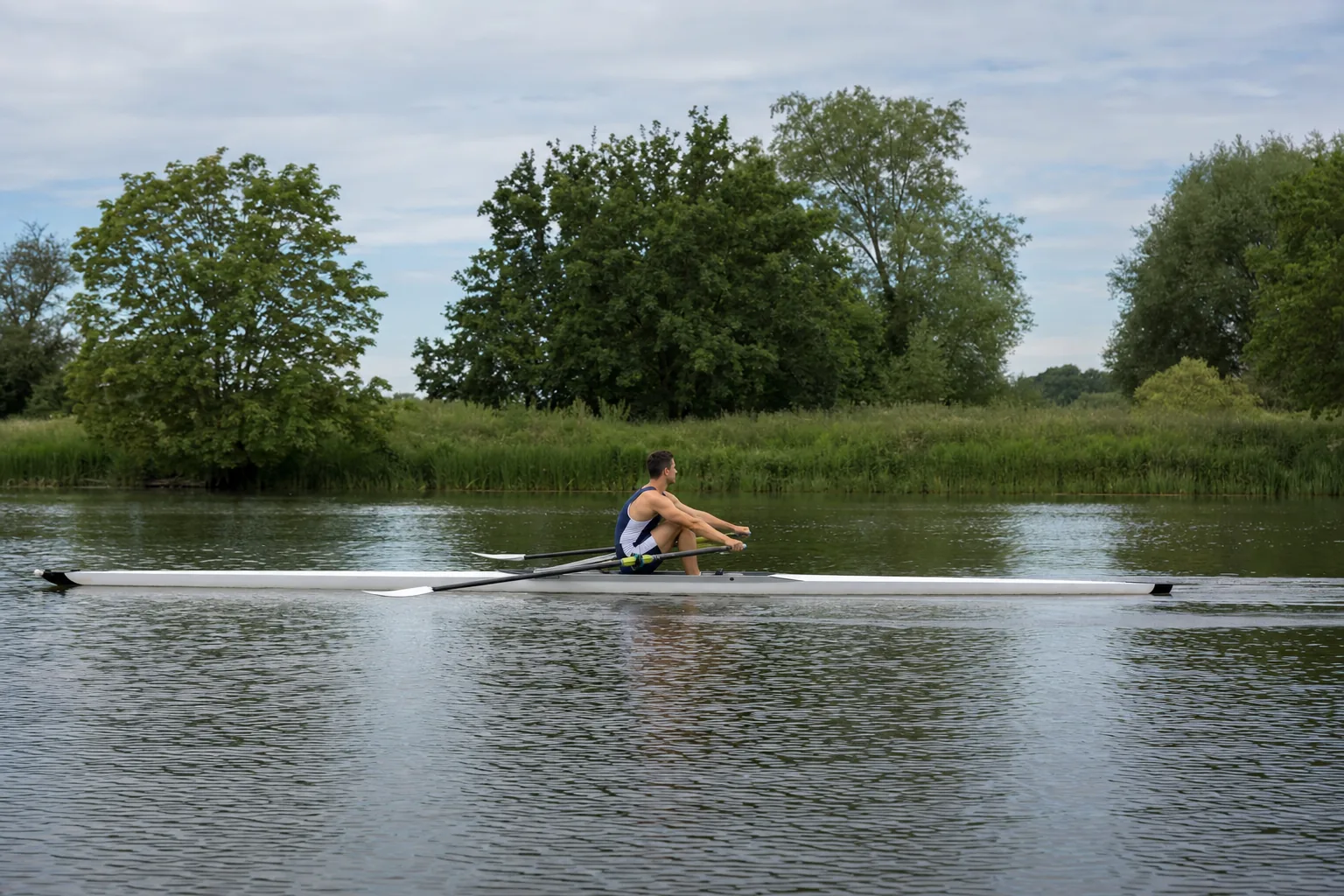
The recovery is the time between drives. The blade has been extracted at the finish and the rower needs to return to full compression at the front stop for the next catch. Throughout the recovery the spoon is clear of the water and the rower applies no force. The hull travels forward on momentum left over from the drive that just finished.
Some coaches call this phase the slide forward or the return. It is the only part of the stroke cycle in which the rower is not adding directly to boat speed, but how it is executed sets up everything that follows - how cleanly the next catch can be placed, how much run the boat carries between strokes, and how stable the crew stays under fatigue.
The recovery sequence
A controlled recovery unfolds in three parts - hands away, body forward, slide forward:
- Hands away: directly after the finish the arms extend forward, pushing the handle away from the body. The rower stays in layback until the arms are fully long.
- Body forward: the back swings forward from layback through upright into the forward lean. The seat stays anchored at the backstop while the body pivots.
- Slide forward: only once the body angle is set does the seat begin moving up the slide toward the catch. The slide starts gradually and builds pace as the rower nears full compression.
Recovery pace and ratio
The recovery should always be slower than the drive. In base training at 18-22 spm the recovery occupies two to three times the duration of the drive - a 1:2 to 1:3 ratio. That window allows the hull to glide and the rower to place the next catch without hurry.
At race rate (36-40 spm at the Maadi Cup on Lake Karapiro or the NZ Championships at Lake Ruataniwha) the recovery compresses and the ratio approaches 1:1 - but the sequence and the control should look the same. Crews that protect a patient recovery under race-rate fatigue beat the ones who collapse it. Use the stroke rate calculator to turn rate and split into distance per stroke and see how recovery length translates into hull run.
Why slow recovery is faster than fast recovery
Newer rowers want to rush the recovery because more strokes feels like more speed. It is the wrong instinct. The hull only accelerates during the drive. Shortening the recovery just means less time for the boat to run between strokes, and the rower arrives at the next catch in a rushed, unbalanced position that costs more boat speed than the extra cadence ever buys.
A patient recovery does three things at once: it lets the hull carry full run between drives, it gives the working muscles a real moment of relative rest before the next effort, and it sets up a controlled catch where full force can be applied from the first instant of the drive. NZ international scullers Brooke Donoghue and Olivia Loe, whose double won World Championship medals, demonstrate exactly this disciplined, almost unhurried recovery even at international race rates.
Common recovery errors
Recovery faults cost balance and rhythm. The most common ones at NZ school and club level:
- Rushing the slide: the seat begins moving up before the body angle is fully set. The recovery collapses into a single jerky surge toward the front stop and the hull lurches as the rower's mass moves forward too fast.
- Lurching the body: the back is thrown forward aggressively, usually paired with a rushed slide. The hull is knocked off balance and the catch position is compromised before the rower even arrives.
- Hitting the front stop: the rower carries too much momentum into the front of the slide. The seat slams against the stop and the catch becomes a jab rather than a placement.
- Over-reaching at the front: the rower pushes the slide past natural full compression chasing extra reach. The seat runs past the front stop position and the lever arm at the catch is lost in the search for one more centimetre of length.
Drills that train the recovery
Pause drills are the primary recovery training tool at clubs across Aotearoa - from the boatsheds on the Avon River in Christchurch to the long stretches of Lake Karapiro. The pause-at-hands-away drill stops the rower for one to two seconds after the arms extend but before the body swings - it isolates the first phase and forces patience. The pause-at-body-over drill stops the rower once the body angle is set but before the slide begins - it trains the handover between body swing and slide. Square-blade rowing is the third standard tool: keeping the spoons upright through the recovery means any sequence error catches the water immediately and the whole crew feels it. Winter base camps at Twizel make slide control the single biggest technical focus before race season opens.
Recovery FAQs
What is the recovery in a rowing stroke?
The recovery is the non-propulsive return phase. It starts the instant the blade is extracted at the finish and ends the instant the blade is buried at the next catch. The rower pushes the hands away, swings the body forward, then slides the seat up toward the footstretcher. The blade is clear of the water throughout. The hull coasts on momentum built in the previous drive - the rower adds no propulsion during this phase.
What is the recovery sequence?
Hands away, body forward, slide forward - in that exact order. The arms extend first while the rower stays in layback. The back then pivots forward while the seat stays at the backstop. Only once the body angle is set does the seat begin moving up the slide toward the catch. Starting the slide before the body is set is the recovery fault NZ club coaches spend the most time fixing. Boatsheds across Aotearoa call it rushing the slide or lurching, and the cure is pause drills.
Why is a patient recovery faster than a rushed one?
All boat speed comes from the drive. The recovery contributes none. Rushing the slide back to the catch does not let the crew take an extra stroke that meaningfully changes the time on the clock - it just cuts short the hull's glide between strokes and dumps the rower at the catch unbalanced and out of sequence. A patient recovery lets the boat carry full run, gives the muscles a real moment of relative rest, and sets up a clean entry where peak force can be applied from stroke one.
What is the drive-recovery ratio?
It is how the total stroke cycle time divides between the drive (blade in water, force applied) and the recovery (blade clear, sliding forward). At steady-state training rates (18-22 spm on the Avon, the Whanganui or the long stretches of Lake Karapiro) the recovery is two to three times longer than the drive - a 1:2 or 1:3 ratio. At 2km race pace (36-40 spm at the Maadi Cup or the NZ Championships at Lake Ruataniwha) the ratio compresses toward 1:1. Crews that hold a longer recovery at race rate carry more boat run between strokes and reliably go faster.
How do you train a patient recovery?
Pause drills are the standard tool. Pausing at hands-away - stopping for one to two seconds after the arms have extended but before the body swings - isolates and rebuilds the first step. Pausing at body-over - stopping once the body angle is set but before the slide begins - trains the handover between body swing and slide. Square-blade work also develops recovery discipline because any timing error makes the upright spoon catch the water and the whole crew feels it.
Related
The Drive: Legs, Back, Arms and Where Boat Speed Actually Comes From
The drive is the only phase of the stroke that moves the boat. Legs fire first, then the back swings, then the arms fini...
The Catch: Where Every Stroke is Won or Lost
The catch names the split-second the blade buries at the front of the slide, a heartbeat before the legs fire. A sharp c...
The Finish: Tap Down, Then Feather
The finish is the closing fraction of the drive - hands into the body, legs flat, spoon out of the water, blade then rol...
Stroke Rate: The Cadence Number That Doesn't Equal Boat Speed
Stroke rate is the cadence number - strokes per minute (spm). NZ crews run anywhere from 18 spm in winter base work to 4...
Keep learning
Recovery rhythm needs the same message on every outing, even when the coach changes. Row HQ stores the rower's technical notes for the whole coaching team. Follow the stroke from finish to catch in the rowing glossary.
Stop reminding rowers to slow the slide every single session.
Row HQ's coach tools log technique notes per rower across sessions, so the recovery work you put in on Tuesday is still recorded against the rower on Saturday.