Recovery
The recovery is the non-propulsive slide back from the finish to the catch, with the blade out of the water. The boat keeps moving by inertia from the previous drive while the athlete sets up the next catch. Patience here is the marker that separates a HOCR Championship Eight from the field.
What is the Recovery in Rowing?
The recovery is the non-propulsive return phase of the rowing stroke. The blade is out of the water, the athlete extends the arms, swings the body forward, then slides up the seat to set up the next catch. The boat continues forward by inertia from the previous drive. Patience on the recovery, especially as race rate climbs into the high thirties, is the marker that separates the fastest US college eights from the field.
Also called: Recovery Phase, Slide Forward
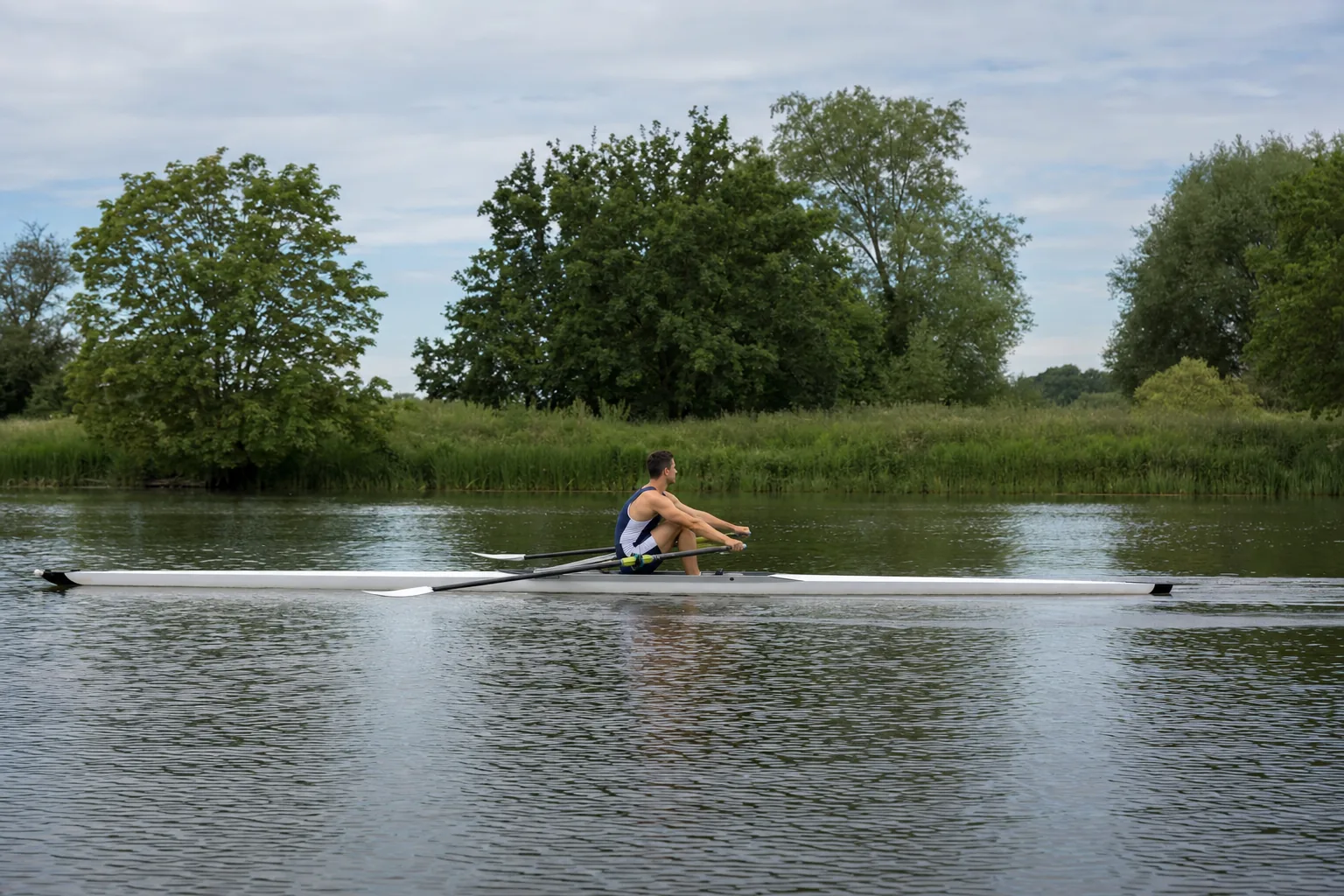
Definition
The recovery is the half of the stroke that runs between strokes. The blade has cleared the water at the finish, the athlete is now sliding back forward to the catch, and the cycle is non-propulsive throughout. No force is being applied to the blade. The shell continues forward by inertia from the previous drive and gradually decelerates against water drag until the next catch loads it again.
Some US coaches call it the slide forward or the return. Both terms mean the same phase. The recovery is the only point in the cycle when the athlete is not producing boat speed, but it is critical for boat run, for muscle reset between drives, and for setting up the next catch in a balanced, square-bladed, full-compression position. Compare to <a href=":drive_url">the drive</a>, which is the propulsive half on the other side of the catch.
The recovery sequence
Three discrete actions, run in strict order:
- Hands away: the arms extend forward from the body while the athlete stays leaned back in layback. The handle moves out until the arms are straight. The seat does not move yet.
- Body forward: the back swings from layback through vertical to forward body angle. The seat still does not move; the swing is a hip hinge with the back braced.
- Slide forward: only after the body angle is set does the slide start. The seat moves toward the stern as the knees rise. The slide accelerates gradually so the catch is reached under control, not coasted into off-balance.
Recovery pace and drive-recovery ratio
The recovery should always take longer than the drive. At UT2 (18 to 22 spm in long aerobic pieces) the recovery runs two to three times the drive length, giving a 1:2 or 1:3 ratio. The shell has plenty of glide time between strokes and the athlete has plenty of time to sequence hands-body-slide cleanly.
At 36 to 40 spm in the middle of an IRA 2k or a HOCR Championship Eight run, the recovery shortens dramatically and the ratio runs close to 1:1. The fastest crews keep their recovery as long as physically possible at race rate, because every extra tenth of a second on the recovery is boat run banked. Use the stroke rate calculator to convert rate and split into distance per stroke and see how much run different recovery patterns produce.
Why patience on the recovery is faster
Novices and walk-on freshmen in US college programs almost always assume the recovery should be fast. The logic feels obvious: more strokes per minute equals more boat speed. The logic is wrong. Boat speed is produced on the drive and only on the drive. Hurrying back to the catch does not add propulsive strokes, it just shortens the gap between propulsive strokes, and the shortened gap costs three things at once.
A patient recovery gives the shell time to glide on the inertia of the previous drive (higher distance per stroke), gives the legs and back a brief reload before the next drive (higher available force on the next stroke), and lets the athlete arrive at the front of the slide in a balanced, square-bladed, full-compression position (cleaner catch, no missed water). All three compound across a 2k or a 5k HOCR run. The recovery is recovery in both senses of the word: it is when the boat recovers run and when the rower recovers force.
Common recovery errors
Recovery faults are the most coachable category in US college rowing because they are visible from the launch and they cascade into catch faults:
- Rushing the slide: the slide starts before the body has come forward. The recovery collapses into a single jerky motion, the shell surges and the catch arrives off-balance.
- Lurching the body: the back swings forward fast, usually combined with rushing the slide. The bow check (the deceleration the shell takes from a fast body swing) is visible from the launch.
- Hitting the front stop: the athlete coasts into the front stop with too much momentum and the seat slams against the rear stop, jamming the catch.
- Over-reaching at the front: the athlete pushes past natural full compression trying to find extra reach. The slide goes past optimal and the lever arm at the catch is lost.
Drills that train the recovery
Pause drills are the standard recovery training tool in every US program. Pause at hands-away (pause for two seconds after the arms extend, before the body swings) trains the hands-away phase in isolation. Pause at body-over (pause after the body angle is set, before the slide starts) trains the body-forward phase in isolation. Both pauses force the athlete to sequence the recovery actions instead of blurring them into one motion. Square-blade rowing also trains a controlled recovery because the wind catches a square blade and the boat will not sit flat unless every athlete is patient and balanced. Build a 20-minute pause block into the first practice of every week through the fall HOCR build and most recovery faults clean up before winter trials open.
Recovery FAQs
What is the recovery in rowing?
The recovery is the half of the stroke between the finish and the next catch, when the blade is out of the water and the athlete is sliding back forward to take another stroke. It is non-propulsive: the shell continues forward by inertia from the previous drive and the athlete is applying no force to the blade. The recovery is not wasted time. It is when the boat runs, when the muscles rest, and when the next catch is set up cleanly.
What is the recovery sequence?
Hands away, body forward, slide forward. In that order, every time. The arms extend first while the athlete stays leaned back. The body swings from layback to forward body angle while the seat stays planted at the back stop. Only when the body angle is set does the slide start, and the slide accelerates gradually into the catch. Reversing this (sliding before the body has come forward) is the single most coachable recovery fault in US college rowing and is usually called rushing the slide or lurching.
Why is a slow recovery faster than a fast recovery?
Boat speed is generated on the drive, not the recovery. Hurrying the slide back to the catch does not produce more strokes per minute of useful work, it just compresses the gap between strokes and arrives the athlete at the catch unbalanced. A patient recovery lets the shell glide on the run from the previous drive (more distance per stroke), gives the legs and back a few extra tenths of a second to recover before the next load, and lets the athlete set up a clean catch position. All three are wins, which is why coaches at every level from a high school novice 4+ up to a Championship Eight at HOCR drill recovery patience constantly.
What is the drive-recovery ratio?
The proportion of cycle time spent driving versus recovering. At UT2 steady state (18 to 22 spm) the recovery runs two to three times longer than the drive, so the ratio is 1:2 or 1:3. At a C.R.A.S.H.-B 2k race pace of 36 to 40 spm the recovery shortens dramatically and the ratio runs close to 1:1. Crews that hold the longest recovery they can at race rate keep more boat run per stroke than crews that rush the slide, and that shows up as a faster split for the same drive force.
How do you train a controlled recovery?
Pause drills are the standard tool, used in every US program from prep school to the IRA. Pause at hands-away (after the arms extend, before the body swings) trains the hands-away phase. Pause at body-over (after the body angle is set, before the slide starts) trains the body-forward phase. Square-blade rowing also trains a controlled recovery because the wind catches a square blade and any rushing or unevenness shows up immediately as a shell that will not sit flat. Build pause drills into the fall HOCR block and most of the recovery faults clean themselves up before winter trials.
Related
What is the Drive in Rowing?
The drive is the propulsive half of the rowing stroke, running from the catch at the front to the finish at the body. Po...
What is the Catch in Rowing?
The catch is the single instant in the stroke when the blade enters the water at the front of the slide. The shell is mo...
What is the Finish in Rowing?
The finish is the back-end blade exit, the instant the blade leaves the water at the body and the drive ends. Tap-down t...
What is Stroke Rate?
Stroke rate is the per-minute cadence the cox box, NK SpeedCoach and Concept2 PM5 monitor display, in strokes per minute...
Keep learning
Recovery timing can fall apart when athletes hear a different cue at every practice. Row HQ keeps technique notes attached to each athlete, giving the next coach the same starting point. Continue through the rowing glossary for the phases around the recovery.
Stop calling for a slower slide every single practice.
Recovery work compounds when the notes from Tuesday are still there on Friday. Row HQ logs technique observations against each athlete across the season, so the patience work the JV coach put in last week is the first thing the varsity coach sees this morning.